Stick Boy: Bazooka Ragdoll makes the first puzzle readable at a glance
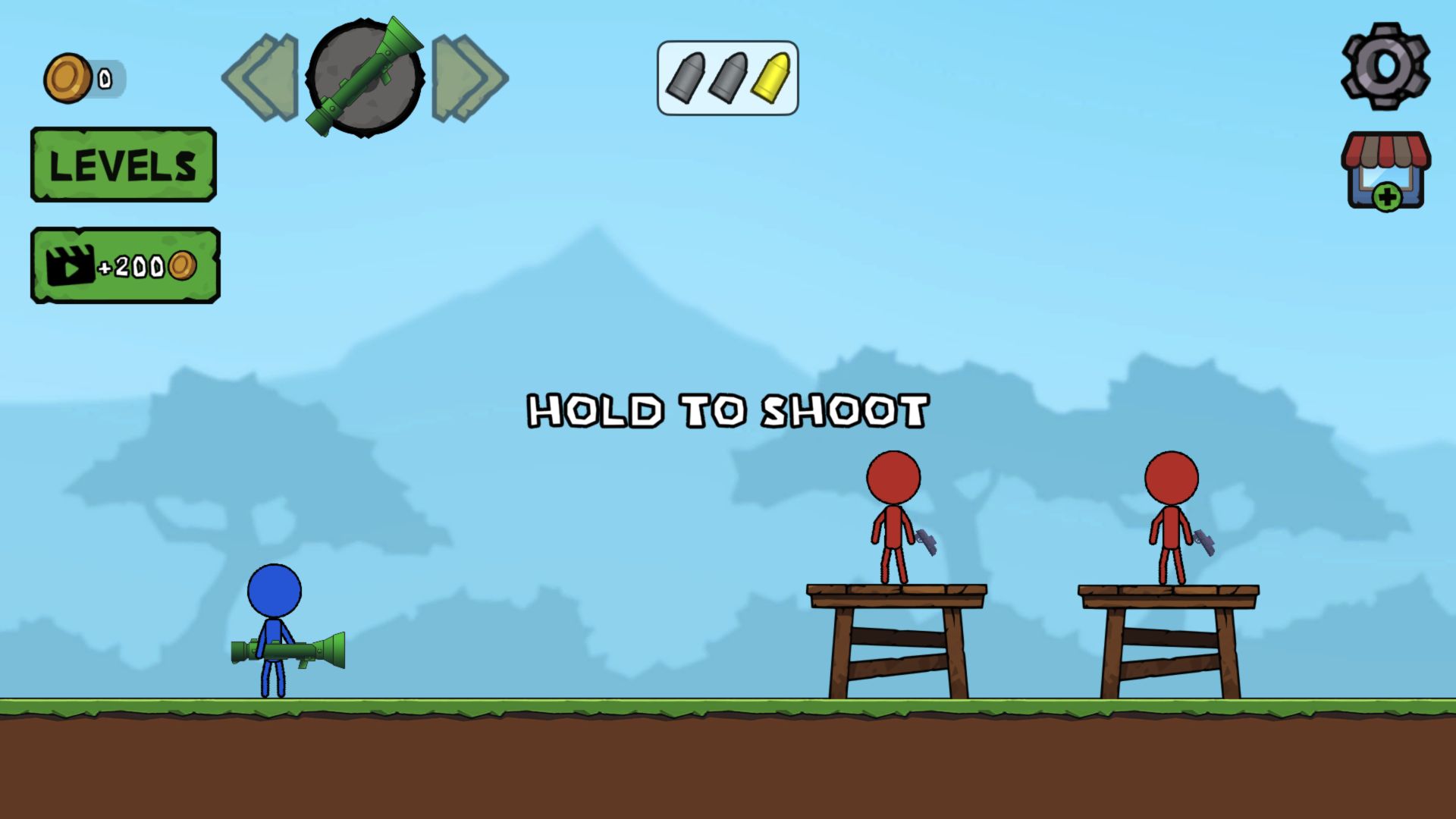
The first screen wastes no time on a story. A blue stick figure stands at the far left with a green bazooka, two red gunmen wait on wooden platforms, and the ammunition panel shows exactly three rockets. The center instruction says Hold to Shoot. That composition communicates the entire opening problem before the first input: two targets must be removed with one spare shot, and both the enemies and their supports are potential impact points.
The interface adds Levels, a weapon selector, settings, a shop, and a fixed video-marked offer for 200 coins. I left the video offer alone and entered the action with a zero balance. The hand-drawn outlines and flat colours are rough, but they serve the puzzle well. Enemies are red, the player is blue, the wooden geometry is brown, and the dotted trajectory is white. Nothing important blends into the background, which matters more here than detailed character art.
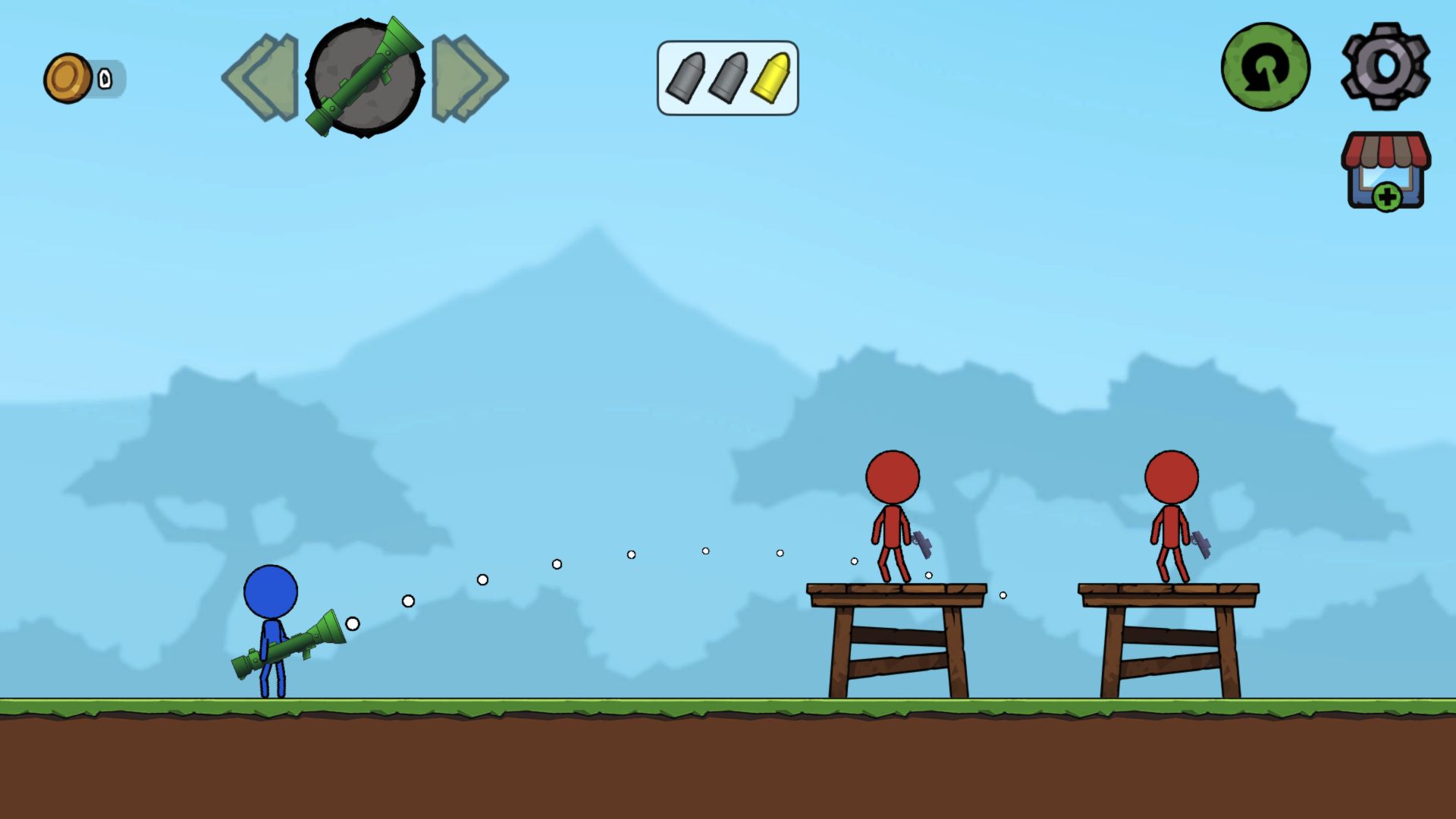
A dotted arc separates aiming from firing
My first brief input did not immediately spend a rocket. It raised the launcher and displayed a chain of white dots tracing the expected arc. A second input committed the shot. That two-stage rhythm is more deliberate than the short Hold to Shoot prompt suggests, but it is also the game's best design choice. The preview makes distance, height, and gravity visible, so a miss feels attributable to the chosen line instead of hidden physics.
The arc is not just decoration. On the second target, a low preview clearly ended beneath the platform. I fired anyway to see what the world would do, and the explosion damaged the support instead of defeating the enemy. For a newcomer, the practical lesson is to treat the dots as an impact forecast: the last visible points should reach the target, the platform beneath it, or another surface whose collapse will carry the enemy down.
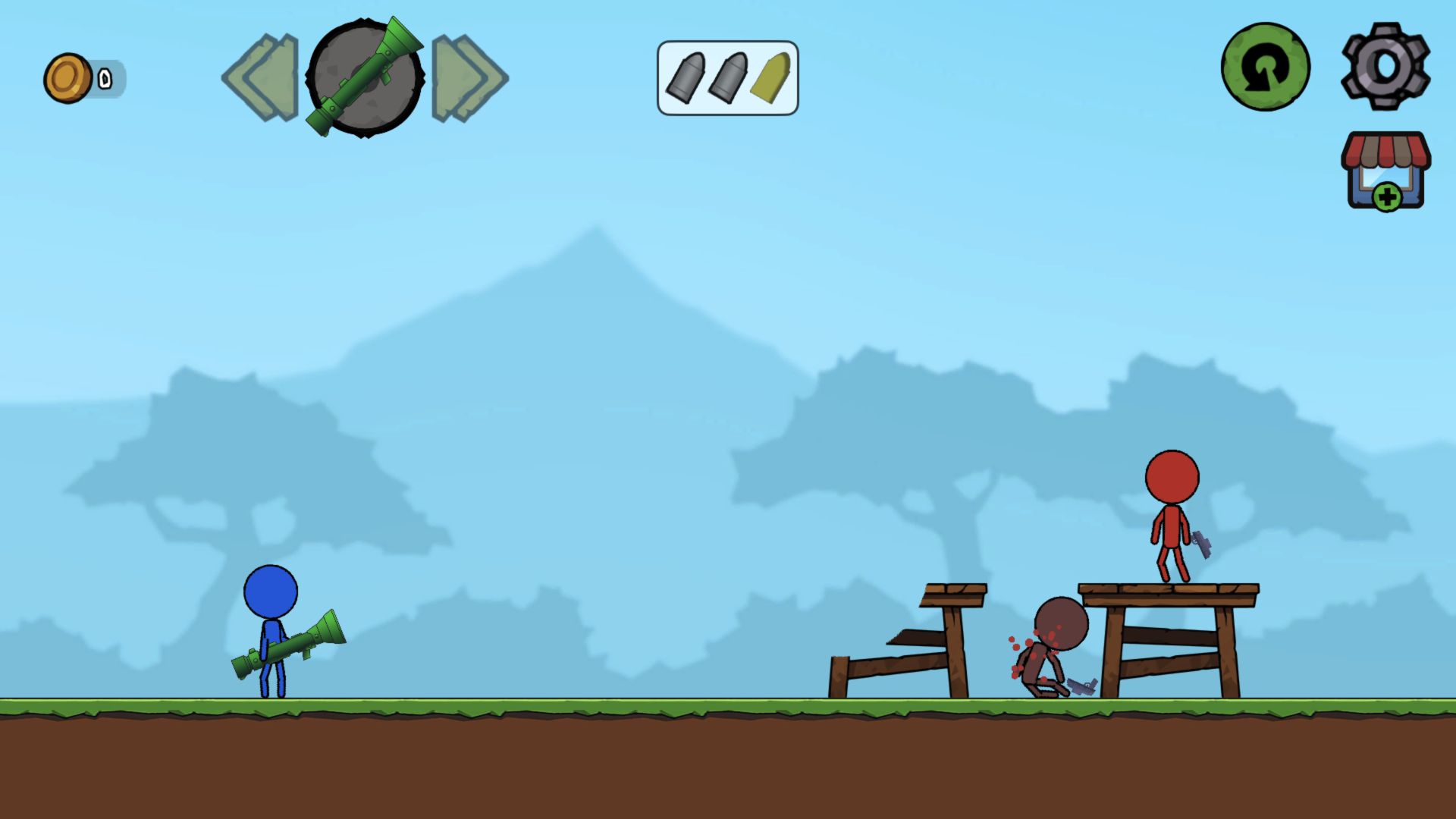
The first direct hit delivered the promised ragdoll payoff
The first rocket connected near the left enemy. The red figure folded into a seated ragdoll, the platform split, and loose pieces settled at different angles. The animation is exaggerated without becoming gory; small red impact particles appear, but the presentation stays in cartoon territory. That makes the result readable and energetic while fitting the simple stick-figure style.
More importantly, the world remembered the damage. The defeated enemy remained slumped and the broken wood stayed in the scene while I lined up the next shot. Persistent debris turns each attempt into a small evolving physics problem. The result will not satisfy players looking for realistic destruction, yet it provides exactly the feedback this compact puzzle needs: the shot landed, the structure changed, and one of the two threats is gone.
A bad second rocket still changed the solution
My second rocket followed the low arc I had already recognized as imperfect. It blasted the ground and tore apart the left side of the remaining platform, but the gunman stayed upright. That was a genuine mistake, and the three-shell limit made it meaningful. With only one rocket left, I could not simply repeat random angles. I raised the next preview so its descending dots approached the enemy's position rather than disappearing under the structure.
The third blast toppled the final figure and completed the objective. Because the failed shot had already removed part of the support, the last scene looked substantially different from the start: one enemy lay on the ground, the other folded across a damaged platform, and wood filled the gap between them. Stick Boy is at its best when an inaccurate shot is not empty failure. It changes the geometry and asks the player to read a new board with fewer resources.
The clear exposes a reward ladder and an optional ad multiplier
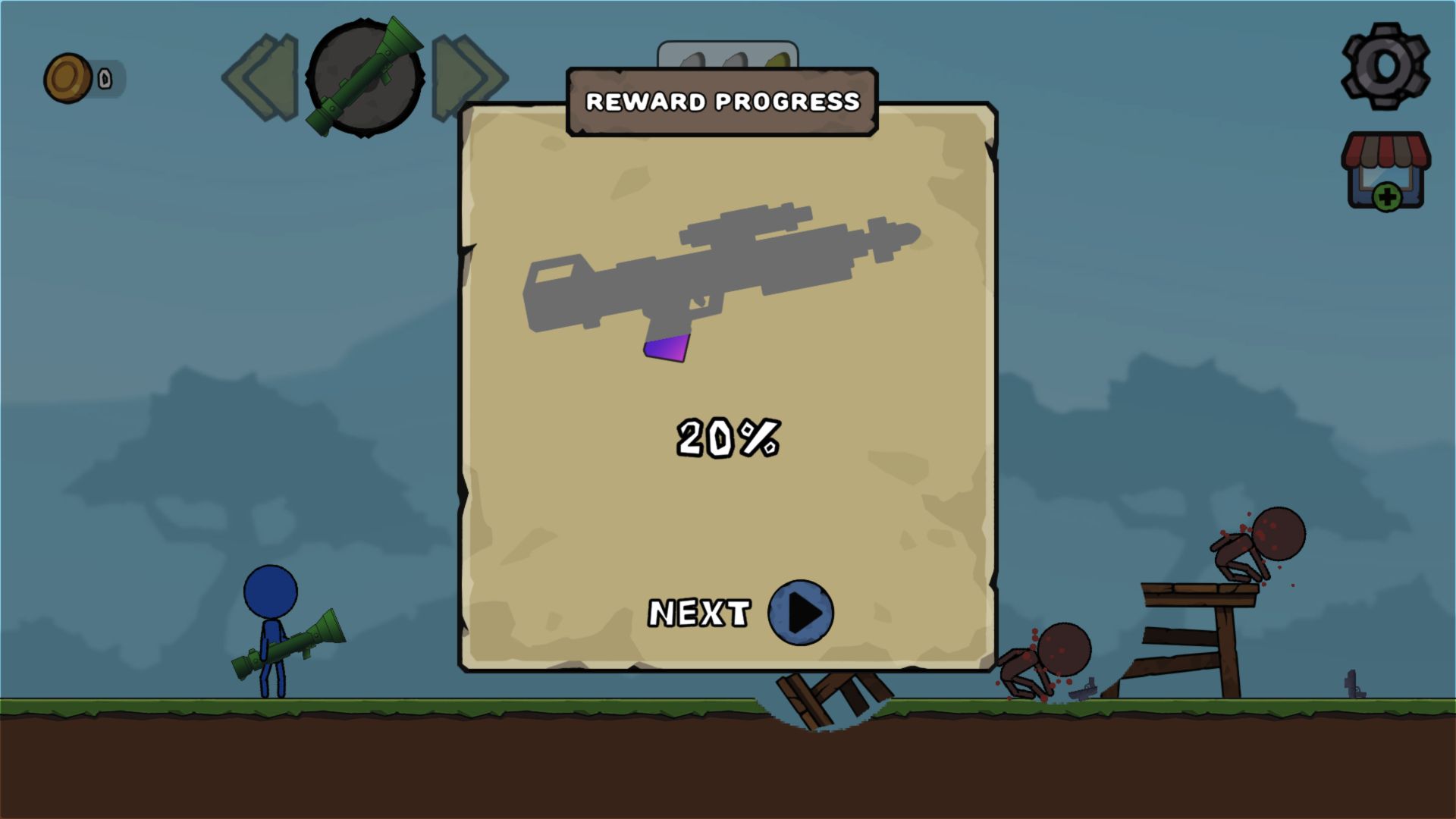
After both enemies were down, a Reward Progress card appeared with the silhouette of a larger weapon and a visible 20 percent value. Continuing revealed a Level Complete panel with one earned star and a base reward of 100 coins. A moving multiplier strip ranged from x2 to x5, while a green video-marked button offered 200 coins. I ignored the video option and used the ordinary blue Next button; no ad was required to reach the following level.
This distinction matters because the shop and reward economy are prominent from the opening screen. The game encourages faster unlocking through video offers, but the representative loop remained playable without accepting one. The one-star result also implies that ammunition efficiency matters: I cleared the targets, yet spending all three rockets was not a perfect performance. That gives the simple physics an immediate replay goal—solve the same layout with cleaner aim and preserve more shells.
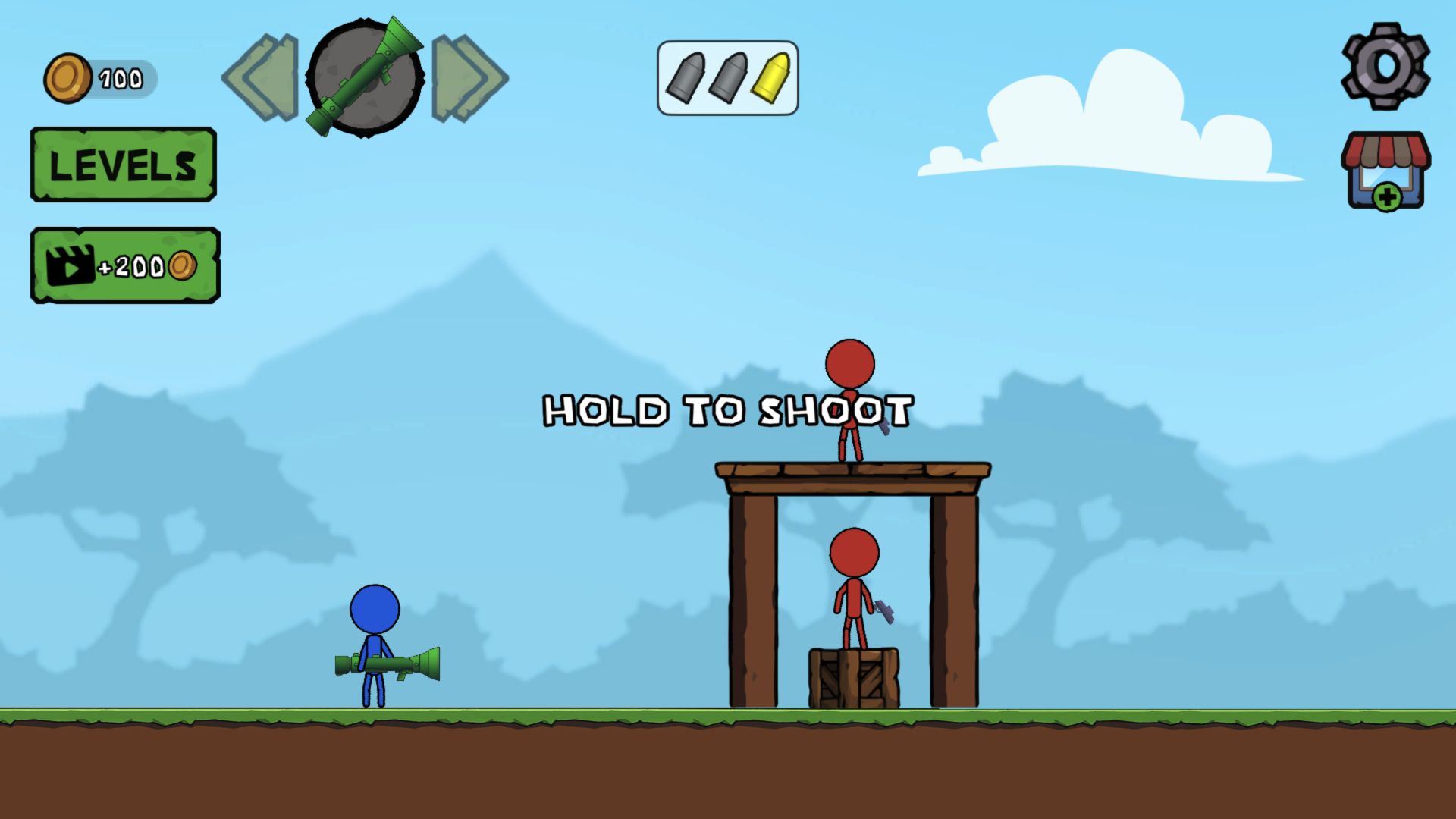
Level 2 confirms the idea has room to develop
The next level kept two red targets and three rockets but changed their protection. One enemy stood on top of a tall rectangular frame; the other stood inside it on a crate. That vertical arrangement immediately raises different questions. A direct line to the lower target is obstructed, the roof can potentially be broken, and an explosion near the crate may affect both the occupant and the frame. I did not complete Level 2 for this review, so I am not claiming its optimal solution, but entering it confirmed that progression rearranges cover rather than merely adding another exposed gunman.
My verdict is positive with limits. Stick Boy: Bazooka Ragdoll is a clear, quick ballistic puzzle whose trajectory preview and persistent destruction produce better decisions than its rough art initially suggests. The three-shot budget makes mistakes consequential, while ragdolls keep successful hits playful. Restart and level-selection controls stay visible, so an inefficient clear can become an immediate accuracy challenge instead of a dead end. Its economy is busy and the video offers are conspicuous, so younger players should understand that those buttons are optional. This review verifies the full desktop Level 1 loop at 1920 by 1080 and the start of Level 2. I did not complete a comparable mobile full-viewport loop, so the control verdict and screenshots apply to desktop play only.