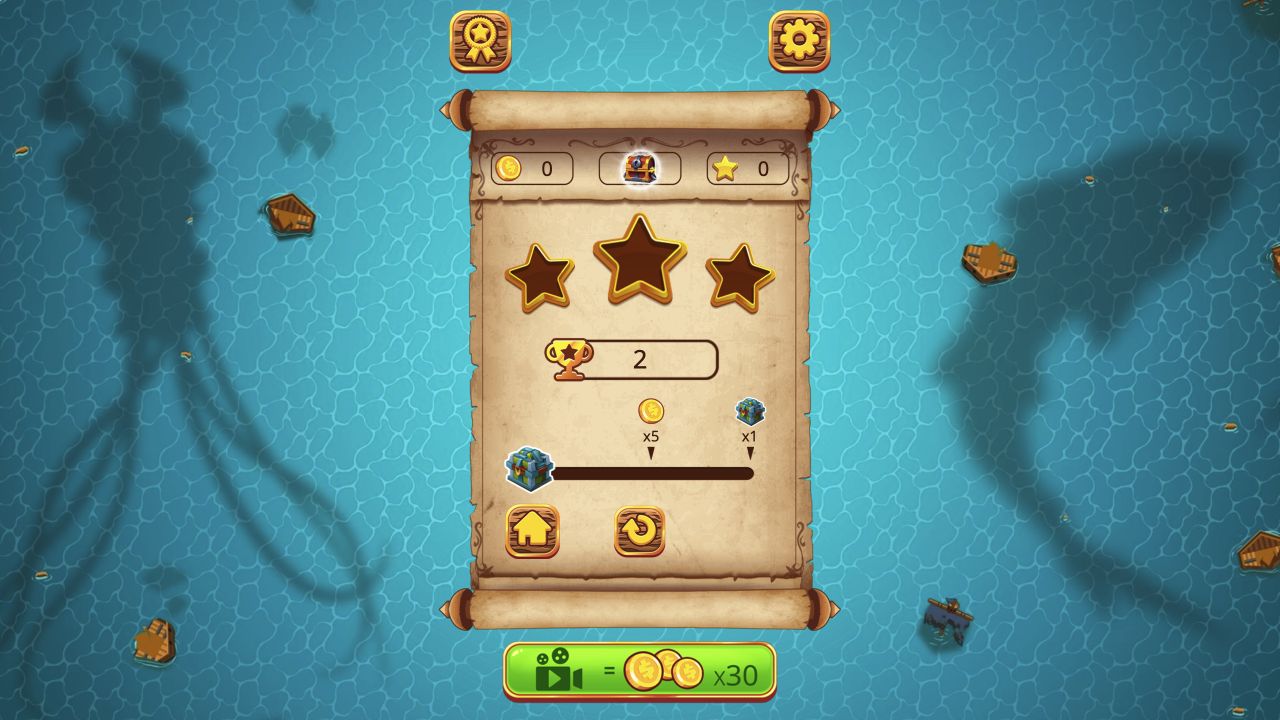
Level 1 Cleared with Two Trophies but No Stars
My first completed run of Pirate Cannon A Mega Battle ended with a large trophy count of 2, three unfilled stars, and a zero coin balance. That combination is more revealing than an uncomplicated victory banner: clearing every target is enough to finish the stage, but it does not automatically award the better rating. Home and retry buttons make the next choice immediate, while a progress strip underneath points toward a five-coin reward and a later chest.
The result was consistent in my desktop and recorded 390-by-844 portrait runs. I did not buy anything or use the video offer to alter the outcome. The clean comparison makes Level 1 a useful tutorial: learn the cannon, see how volleys interact with numbered targets, and accept that completion and mastery are separate goals. A second attempt would be about efficiency rather than discovering a different rule set.

The Cannon Fires a Four-Shot Fan
The input is a drag-and-release gesture. Pulling from the cannon creates a long guide line, and letting go launches the volley. The ammunition display read 4 in my opening attempt, but the balls spread into a fan rather than traveling as one projectile. That makes a perfectly centered line less important than understanding where the outer shots will land after the group expands.
A useful opening habit is to aim through the widest cluster instead of chasing a single boat on the edge. The first screen leaves enough empty sea to read the shot without pressure, so take one deliberate drag and watch the spacing. Short, improvised flicks make the trajectory harder to judge; a longer pull gives a clearer guide and is especially helpful on the narrower portrait canvas.

Numbered Boat Rings Reveal the Real Puzzle
Level 1 initially looks sparse, then the first successful shot reveals two circular groups of eight blue boats. Every boat in this opening formation showed 1, so a hit removed it without a longer damage cycle. The puzzle comes from coverage: a narrow line can waste most of a four-ball fan, while a better angle lets several balls pass through separate targets during the same release.
The presentation is readable because the targets are color-coded against the sea and the hit requirement sits directly on each hull. Later stages may use larger values, but I did not test far enough to claim their exact structure. For this first level, treat the two rings as areas to sweep. Clearing the lower or more central pieces first also keeps the next aiming line visible instead of firing through leftover clutter.
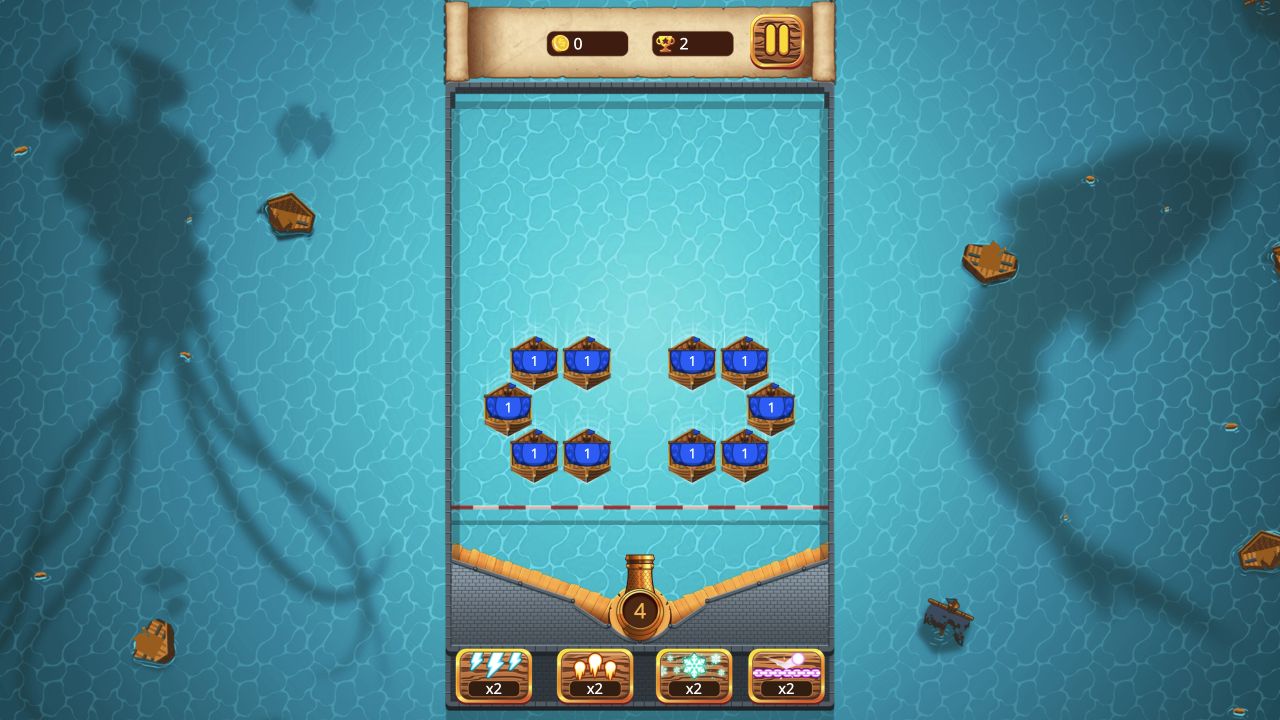
Four Boosters Appeared After the First Progress
Once the run registered progress, four booster buttons appeared along the bottom edge. I left them untouched and cleared the level with ordinary volleys, which confirmed that the opening stage does not require a power-up. That is the better way to learn the baseline physics: if every correction is covered by a booster, it is difficult to tell whether the next clean shot came from improved aim or an extra effect.
The fixed result-screen offer promised 30 coins for watching a video. A provider advertisement also appeared before the recorded portrait session began. I skipped the ad when the interface allowed and did not use the rewarded option. Those surfaces are material to the experience, so this review treats the game as playable but keeps its page outside automatic advertising eligibility.
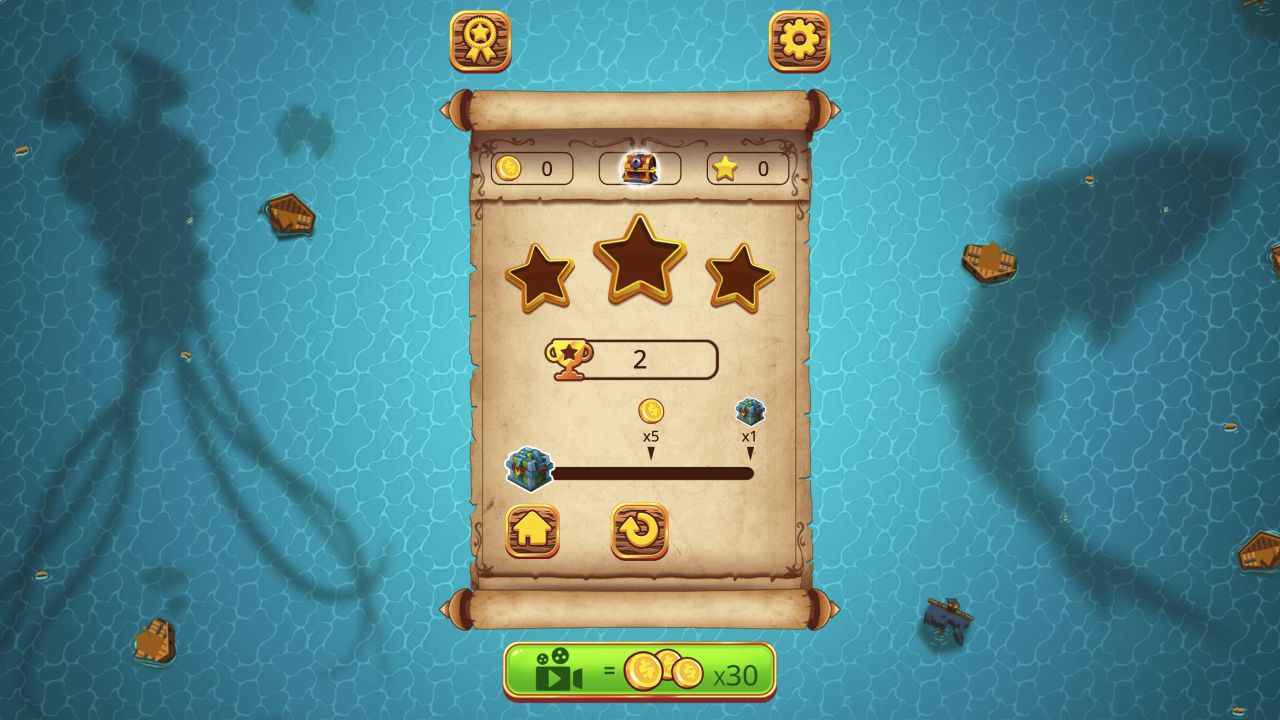
Desktop Gives More Sea; Portrait Keeps the Controls Clear
Desktop gives more sea around the target rings, leaving more room to study the formation and aiming line. The recorded portrait layout compresses the horizontal view, but the cannon, ammunition number, targets, and booster row remain visible. These captures support a layout comparison; they do not establish how dragging feels under a thumb.
The 390-by-844 record does not establish physical-phone hardware or its input method. I therefore make no claim about real-phone touch responsiveness, performance, battery use, or which device plays better. The narrower observation is that both recorded layouts reached the same two-trophy result.
For another attempt, aim through target density, watch the spread of all four balls, and save boosters until a layout blocks a clean path. The first clear is short, but the zero-star result gives a concrete reason to replay instead of treating the two trophies as the final answer.
