The First Route Leads from Grandpa's Cabin to the Mailbox
Max opens inside a log cabin and gives one direct instruction: check the mailbox outdoors. I walked the wolf cub across the room, pushed through the wooden door, crossed the lawn, and aligned with the red mailbox post outside. The route is short in distance but useful as a control test because it includes indoor collision, a doorway transition, open ground, and a clear visual landmark.
This first look covers the opening instruction, movement out of the cabin, the inventory presentation, and arrival beside the outdoor mailbox. The coin counter remained at 0. I did not verify a completed mailbox interaction, collect the full household checklist, or reach the treasure. The recorded desktop view and 390-by-844 portrait browser view support a comparison of this opening route only.
The Town Is a Landmark Puzzle Before It Is a Treasure Hunt
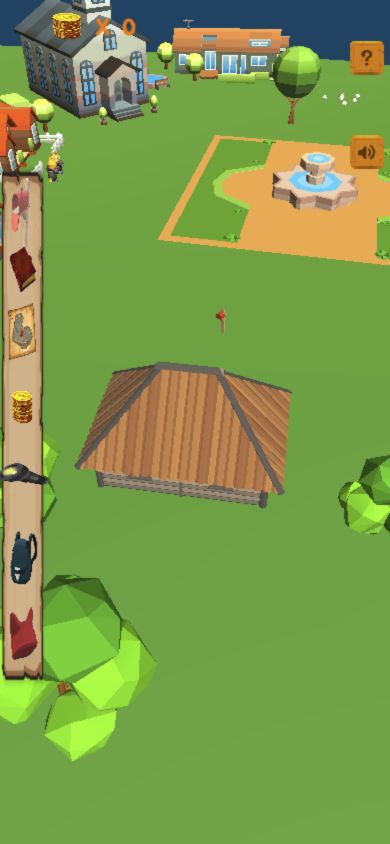
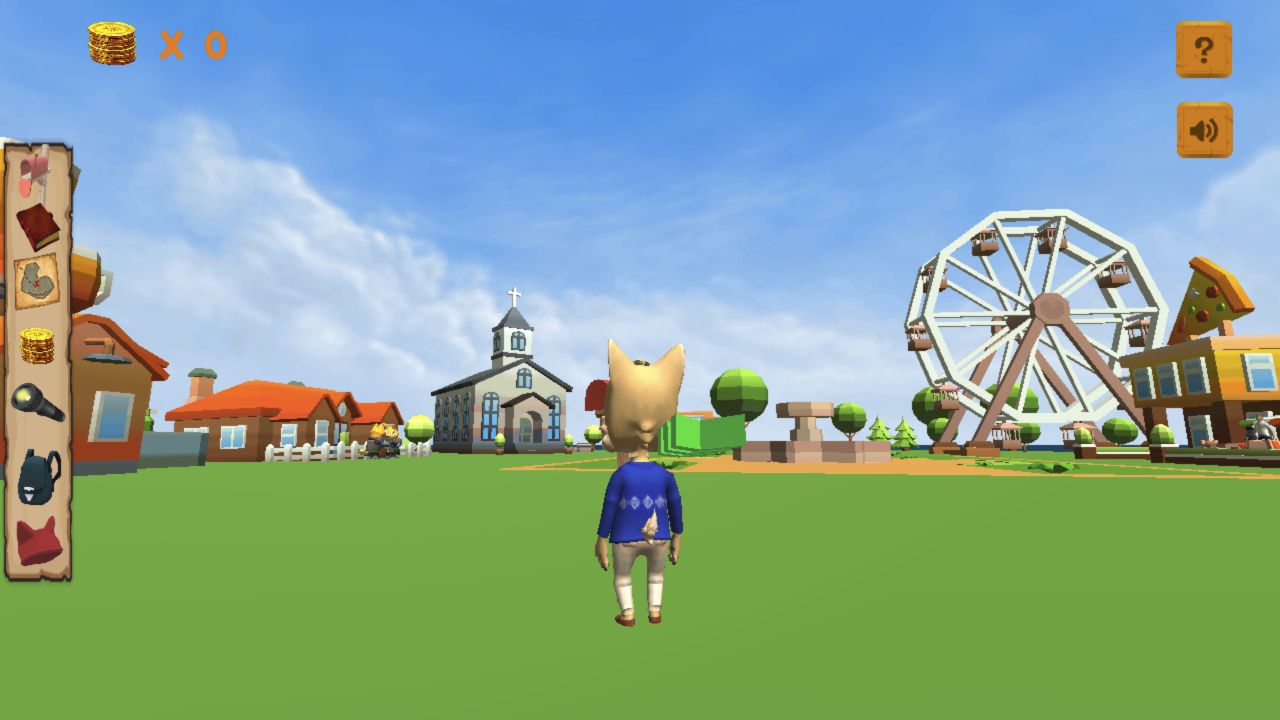
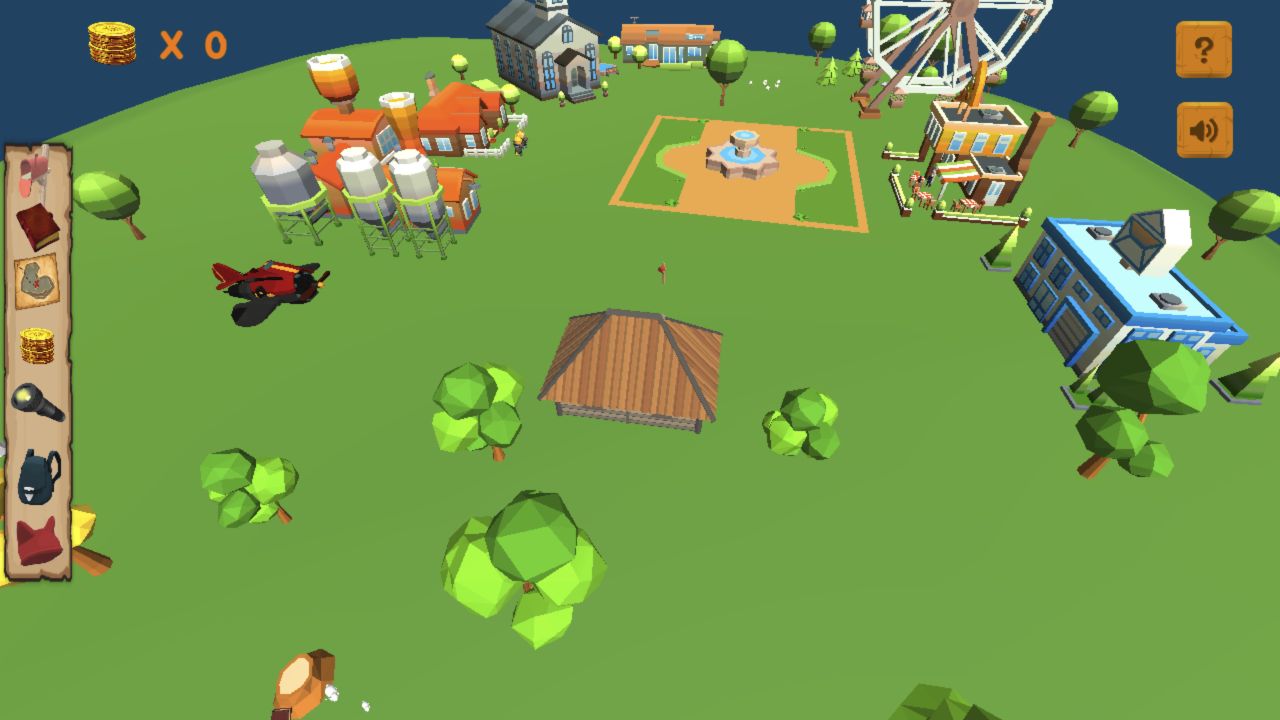
The initial camera pulls high enough to show the settlement as a toy-like diorama. A church anchors one side, a fountain occupies the central square, a Ferris wheel and pizza-roofed building dominate the right, and bright industrial tanks stand opposite. The cabin sits closer to the camera, surrounded by simple trees and open grass.
Those silhouettes matter because the interface does not present a conventional corner minimap. Navigation depends on remembering what is visible in the world. The Ferris wheel is the easiest compass, while the church and fountain help judge whether Max is moving across the square or back toward home. The low-poly art is not only decorative; it keeps distant landmarks readable.
The Opening Objective Is Deliberately Plain
A parchment panel spells out CHECK THE MAIL BOX OUTDOORS. That clarity helps distinguish the objective from the vertical item strip, which can initially look like a toolbar. The same instruction is visible in the desktop capture and the recorded 390-by-844 browser viewport. This is evidence of the message and its layout, not of how it performs on a physical phone.
The English text includes a few awkward constructions, including mail box as two words, but the meaning is never uncertain. New players should close the panel, orient Max toward the cabin door, and use small movement inputs rather than holding forward blindly. The camera can clip close to walls and roof pieces, so re-centering before the doorway saves more time than trying to force through at an angle.

Grandpa's Notebook Expands the Item Checklist
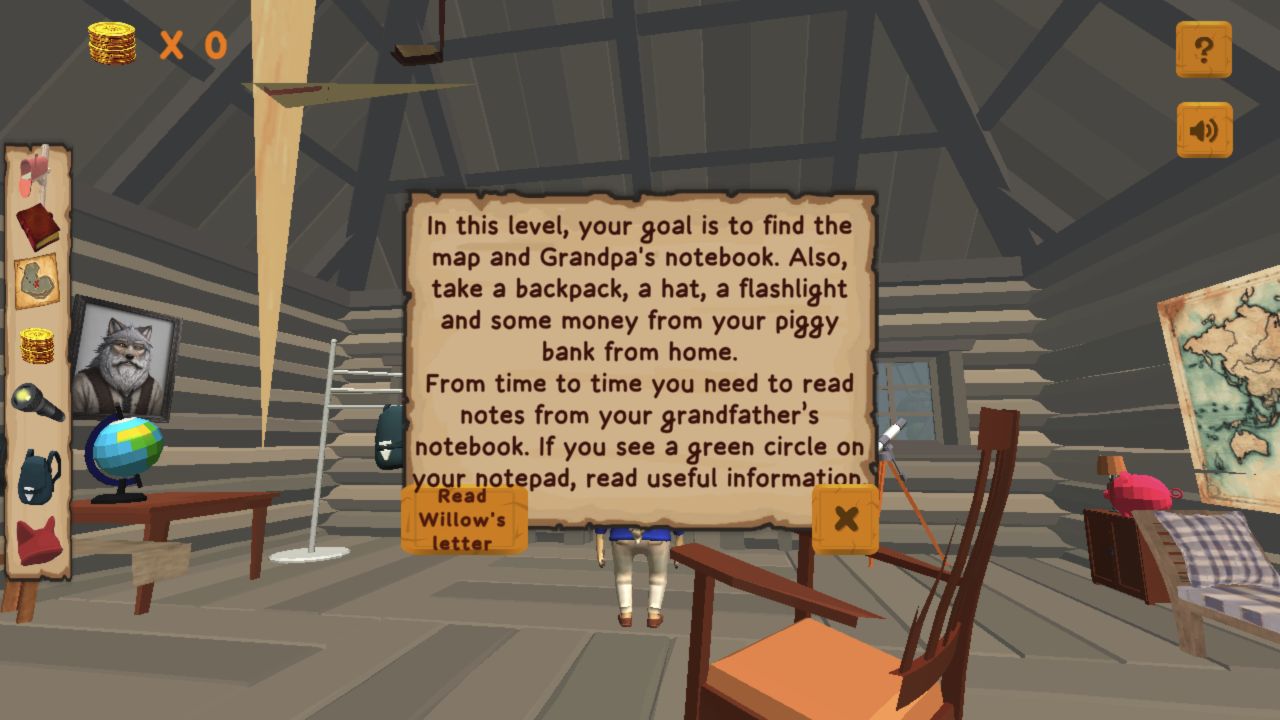
The help panel explains that the level eventually asks for the map and Grandpa's notebook, plus a backpack, hat, flashlight, and money from the piggy bank. It also says notebook entries should be read whenever a green circle appears on the notepad. This turns the left-side icons into a progression checklist rather than a set of unexplained decorations.
I verified the instructions and visible objects inside the cabin, including a hanging backpack, globe, telescope, wall map, bed-side piggy bank, and portrait. I did not mark the entire list complete, so the article does not present those objects as collected rewards. The important early lesson is to search the home deliberately before running deep into town; several required items are introduced in the starting room.
What the Recorded Portrait View Establishes
The recorded portrait browser session followed the cabin-to-outdoor route and kept the inventory strip visible. The town fills a tall composition: the cabin roof occupies the foreground, with the church, fountain, shops, and trees above it. The wider desktop capture includes more scenery side by side. These are useful differences when deciding which landmarks to keep in view at the cabin exit.
The mobile-labelled captures came from a phone-sized browser environment, not a physical Android phone or iPhone. The retained article and images do not establish the exact touch-emulation settings or a complete joystick-input sequence, so I cannot treat them as a verified touch-control test. They also provide no evidence about battery use, heat, frame rate, loading on a mobile connection, or later quest interactions.
For the opening route, the practical lesson is to use the church and Ferris wheel to orient yourself after leaving the cabin and read the notebook’s checklist before searching the town. The desktop view exposes more landmarks at once, but that alone does not establish a better device for the continuing mystery. This remains an opening-route impression; the treasure hunt and a comparable physical-phone or verified touch-input session are outside its tested scope.