Classic Level 1 Needed Only Three Legal Pours
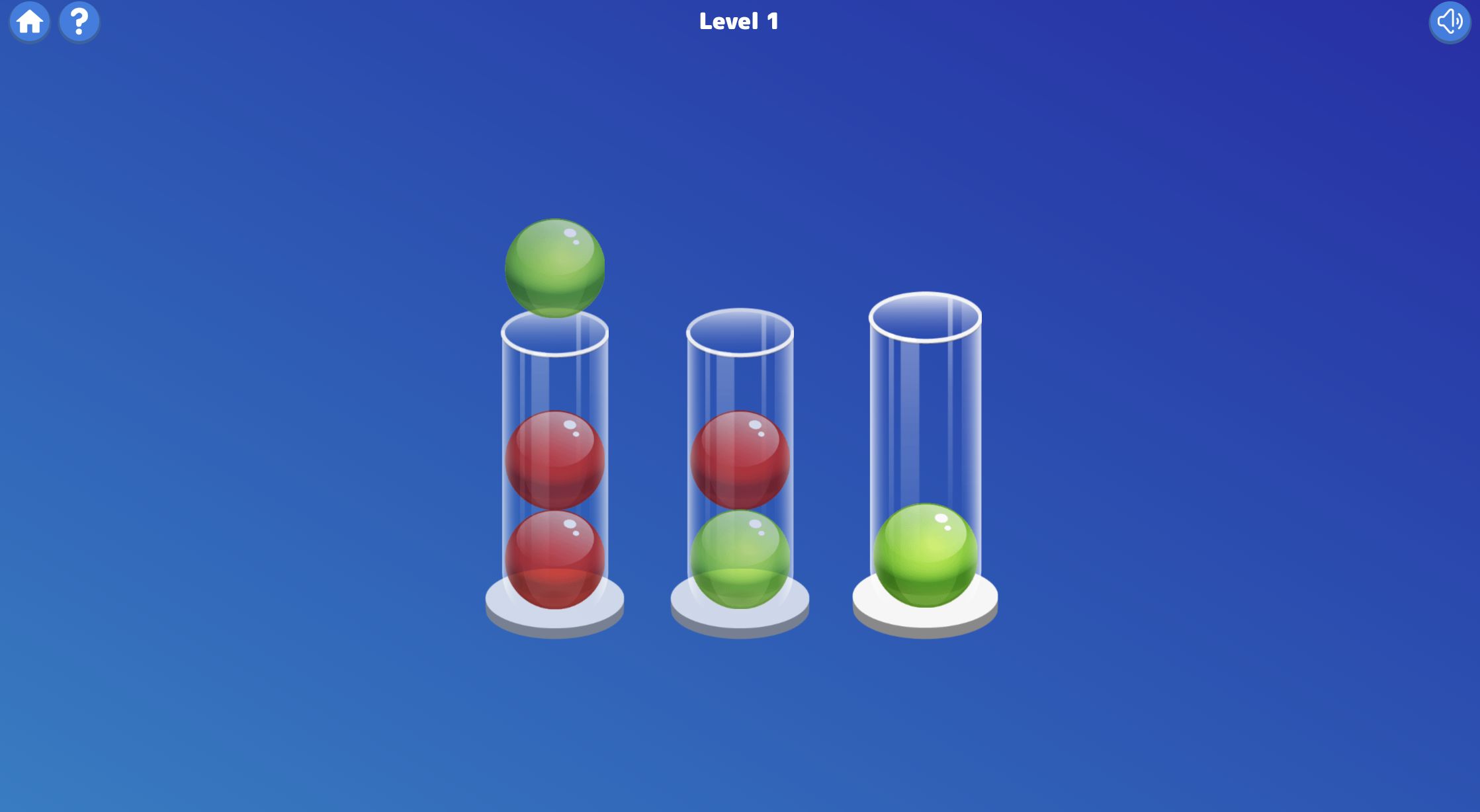
My first complete Classic board in Ball Sort Puzzle used three tubes and two colors. The left tube began green over two reds, the middle tube held red over green, and the right tube held one green with two open spaces. The solution took three pours: move the exposed green from the left tube to the right, move the exposed red from the middle tube onto the two reds, then move the last green from the middle tube onto the green stack. That left a full red tube, an empty tube and a full green tube.
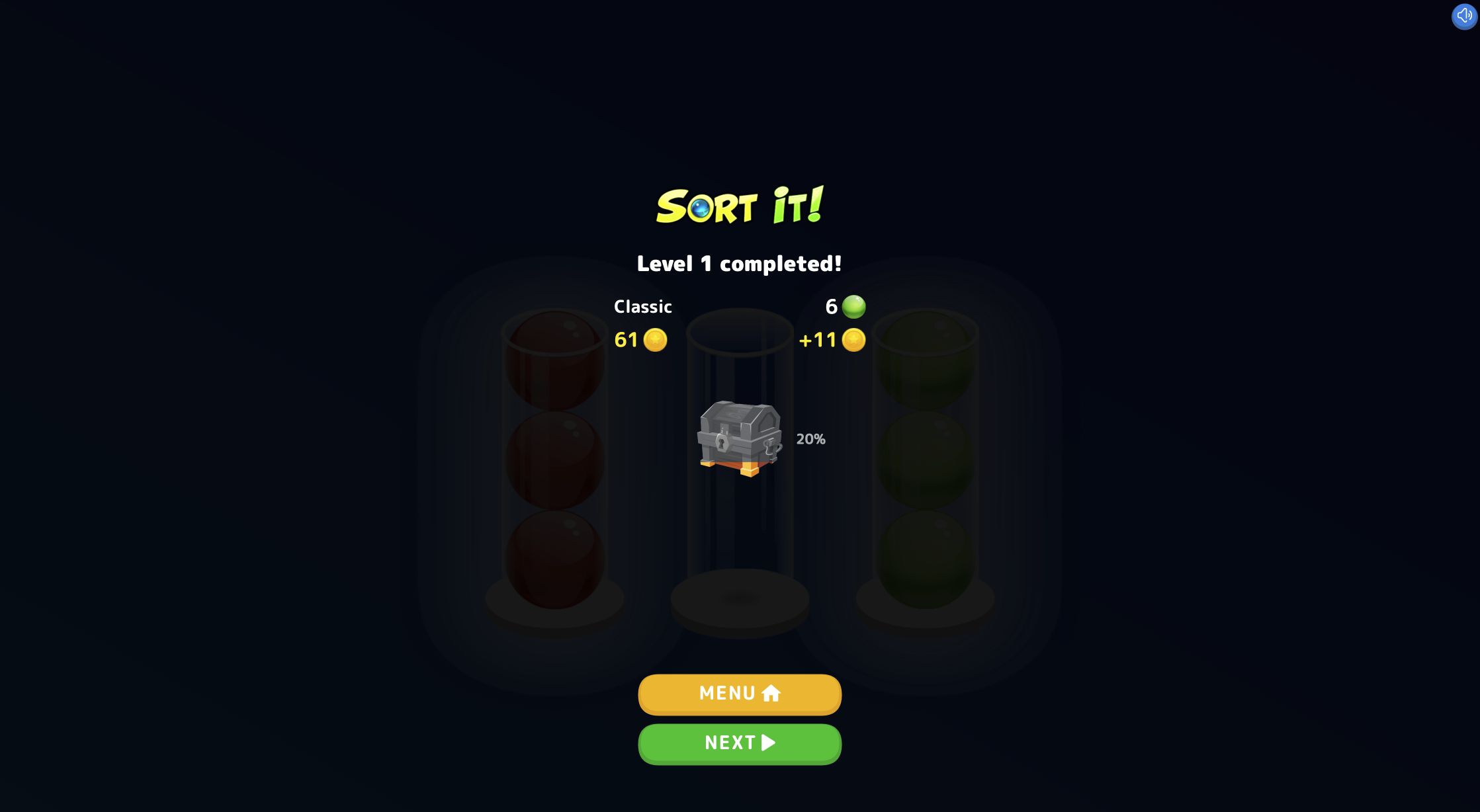
The result panel identified Level 1 as completed and displayed the sorted tubes behind its summary. During the completed-state animation, the visible balance moved from 50 to 61 and the reward line reached +11; a chest meter showed 20%. Another value appeared as 6 beside a small green-ball icon, but the panel did not label that number in text, so I am not treating it as a confirmed move count. The board itself required three player-initiated pours in my observed solution.

The First Board Teaches the Only Rule That Really Matters
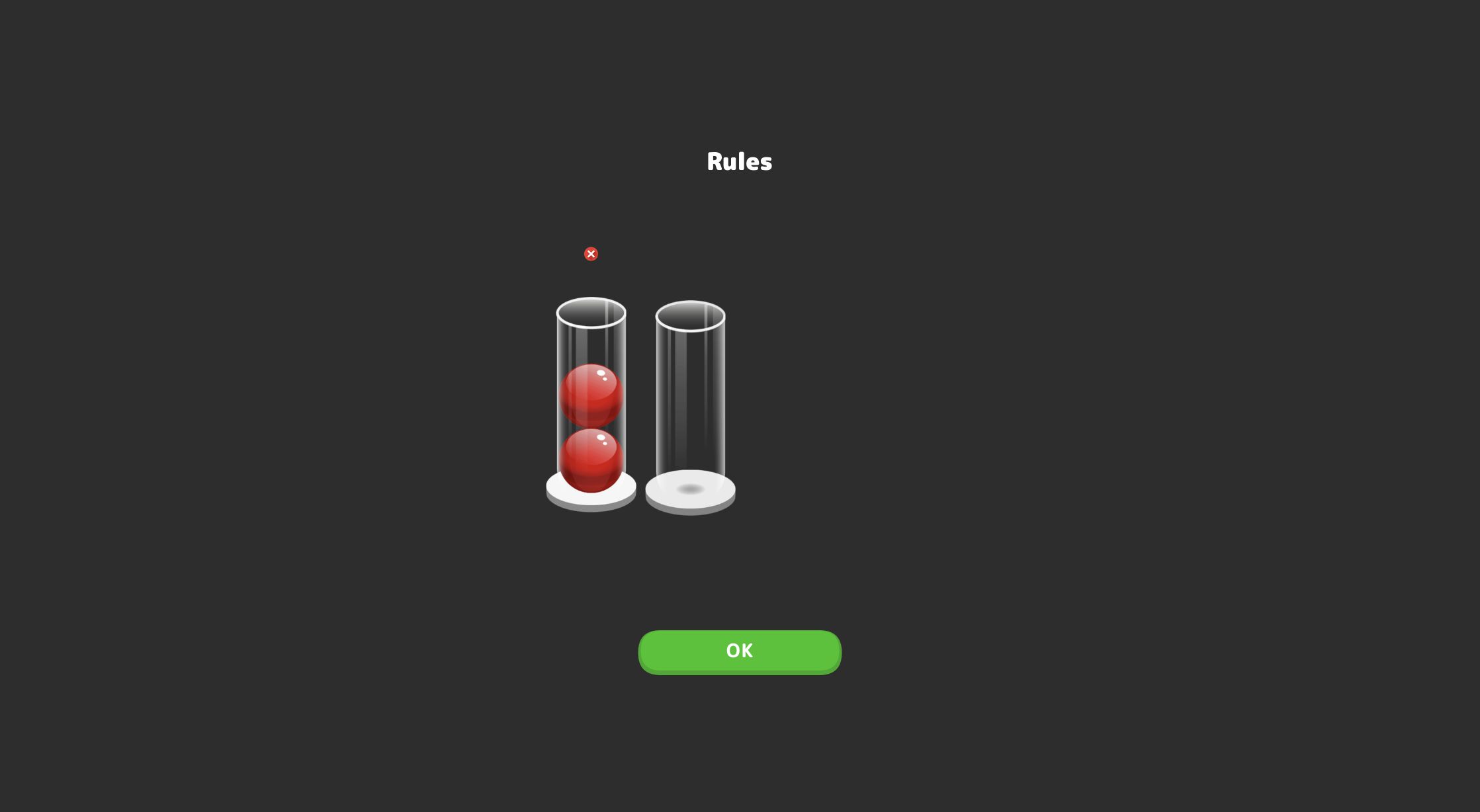
Before Level 1, a short Rules panel animated two red balls and an empty tube. The practical rule is familiar but important: tap a source tube to lift its top ball, then tap a destination that is empty or already shows the same color on top. Each tube also needs remaining capacity. There is no dragging and no need to target an individual ball; the game always uses the exposed sphere.
That economy of input is why the puzzle works equally well with mouse and touch. The glossy balls are large, the glass walls clearly show capacity, and the selected ball rises above its tube. The first board is deliberately easy, but it still demonstrates planning: the lone green tube is not merely spare space. It is the destination that lets the left tube reveal its red pair and lets the middle tube expose the final green.
An Invalid Destination Did Not Spend a Turn or Break the Selection
I deliberately tested a bad move before solving the board. With the green ball lifted from the left tube, I clicked the middle tube, whose top ball was red even though the tube still had an open slot. The top-color mismatch made the destination illegal. The game did not scramble the stack, deduct coins or restart the board; the green ball simply remained hovering above its original tube, ready for another destination.
That is good feedback for a game that will eventually present much larger color sets. A selected ball is visually obvious, while an illegal click does not create a punishing side effect. I could immediately choose the right tube and continue the solution. The tested level had no move counter or timer on the board, so experimentation felt safe. Later modes may add pressure, but Classic's first lesson encourages players to reason with the visible top colors rather than fear mistakes.
One Green Stack Opened the Red Finish
The first legal pour was the decisive one. Moving green from the left tube onto the right tube created a two-green stack and exposed red above red on the left. The middle tube's red could then move onto that pair, completing all three reds at once. With the middle tube reduced to a single green, the final pour into the right tube was automatic.
This tiny example captures the strategy behind larger ball-sort boards: do not use empty space randomly. Use it to reveal a color that can immediately consolidate somewhere else. A temporary stack is valuable when it opens a second move. Level 1 never approaches a dead end, but the visual cause and effect is clean enough that a new player can understand why the order works rather than merely copying taps.

Classic Is Only One of Several Visible Modes
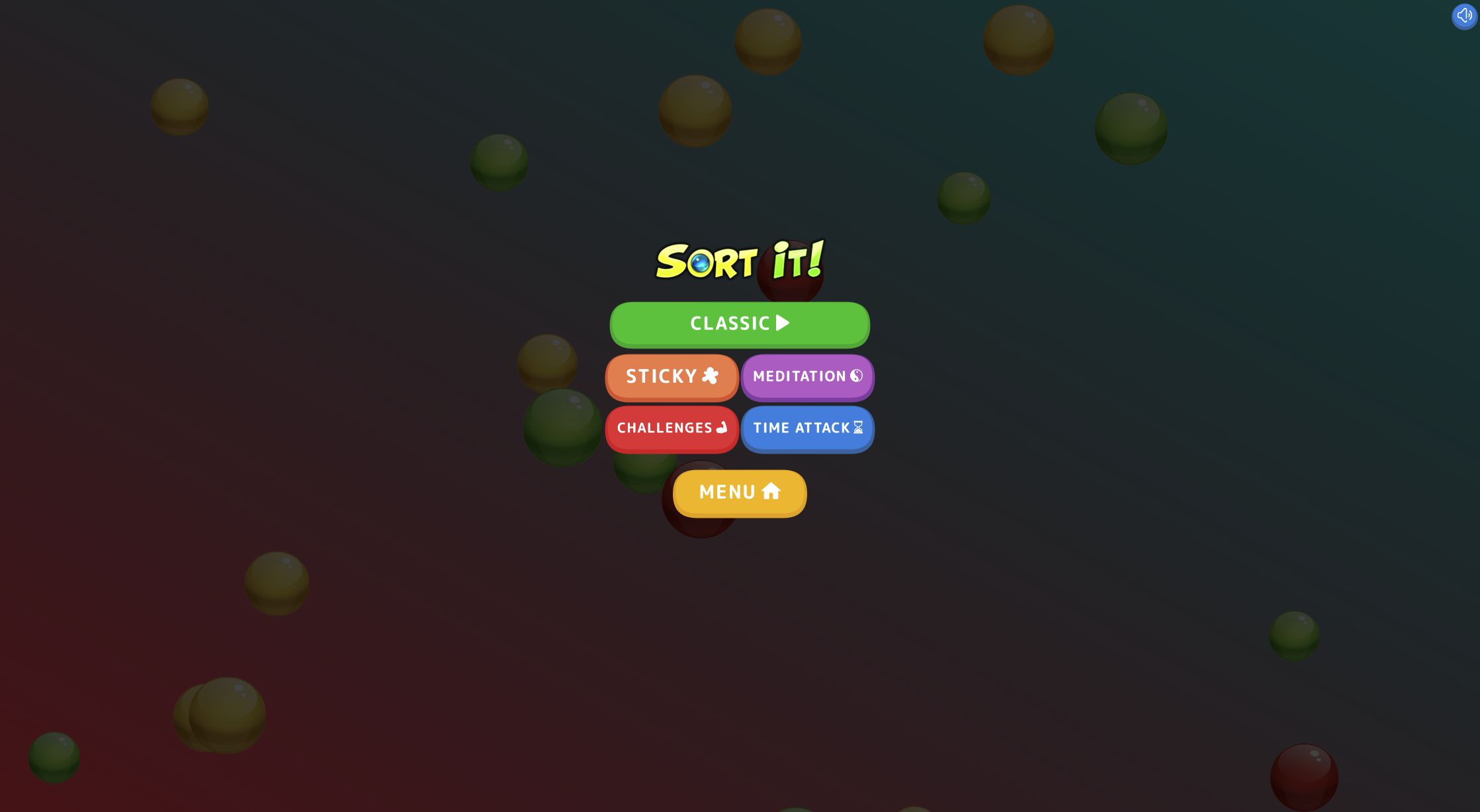
The menu exposes more than the standard campaign. Alongside Classic, I saw Sticky, Meditation, Challenges and Time Attack. I entered only Classic for the representative loop, so I am not claiming how Sticky changes the tube rules or how demanding the timed and challenge modes become. Their presence does show that the game intends to extend beyond an endless sequence of identical untimed boards.
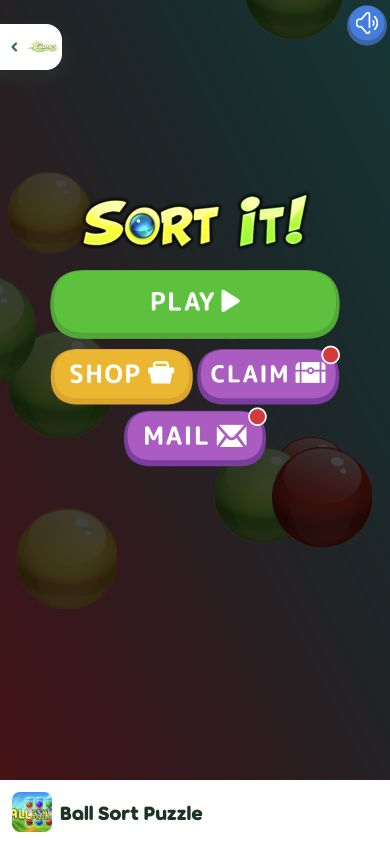
The main menu also includes Shop, Claim and Mail. The shop is coin-priced cosmetic territory rather than part of the first puzzle solution; I did not purchase an item. Claim and Mail displayed notification dots, but opening unsolicited rewards was outside this test. These systems make the presentation busier than the puzzle itself. Players who want a clean brain teaser can enter Classic immediately and ignore the surrounding economy until they decide whether the extra modes and cosmetics matter.
Mobile Portrait Stacks the Tubes Naturally, but Ads Interrupt Both Routes
I repeated the same three-pour solution in a recorded 390-by-844 mobile browser-emulation session. The full-viewport test covered the underlying detail page and kept a visible exit control at the upper left. After the portrait main menu, Level 1 placed two tubes above and the third below rather than shrinking all three into one row. Each tube remained a generous tap target, and the same source-then-destination input worked without precision problems.
The mobile completion state visibly showed the finished red and green stacks before the result transition. That makes portrait my preferred layout for early boards, although this was browser emulation and not proof of physical-device performance. Desktop remains clearer when future levels add more tubes across the width. Both routes had advertising friction: the provider showed a preroll before play and another interstitial after the desktop clear. On mobile, closing the preroll raised a confirmation warning that the reward would be lost; choosing Close still allowed the game to start normally. I saw no purchase requirement and made no transaction. Ball Sort Puzzle is mechanically crisp when the puzzle is on screen, but its surrounding ads and reward menus are more intrusive than the three-tap opening deserves.