Anna's Story: Dress Up DIY begins by asking who Anna should be
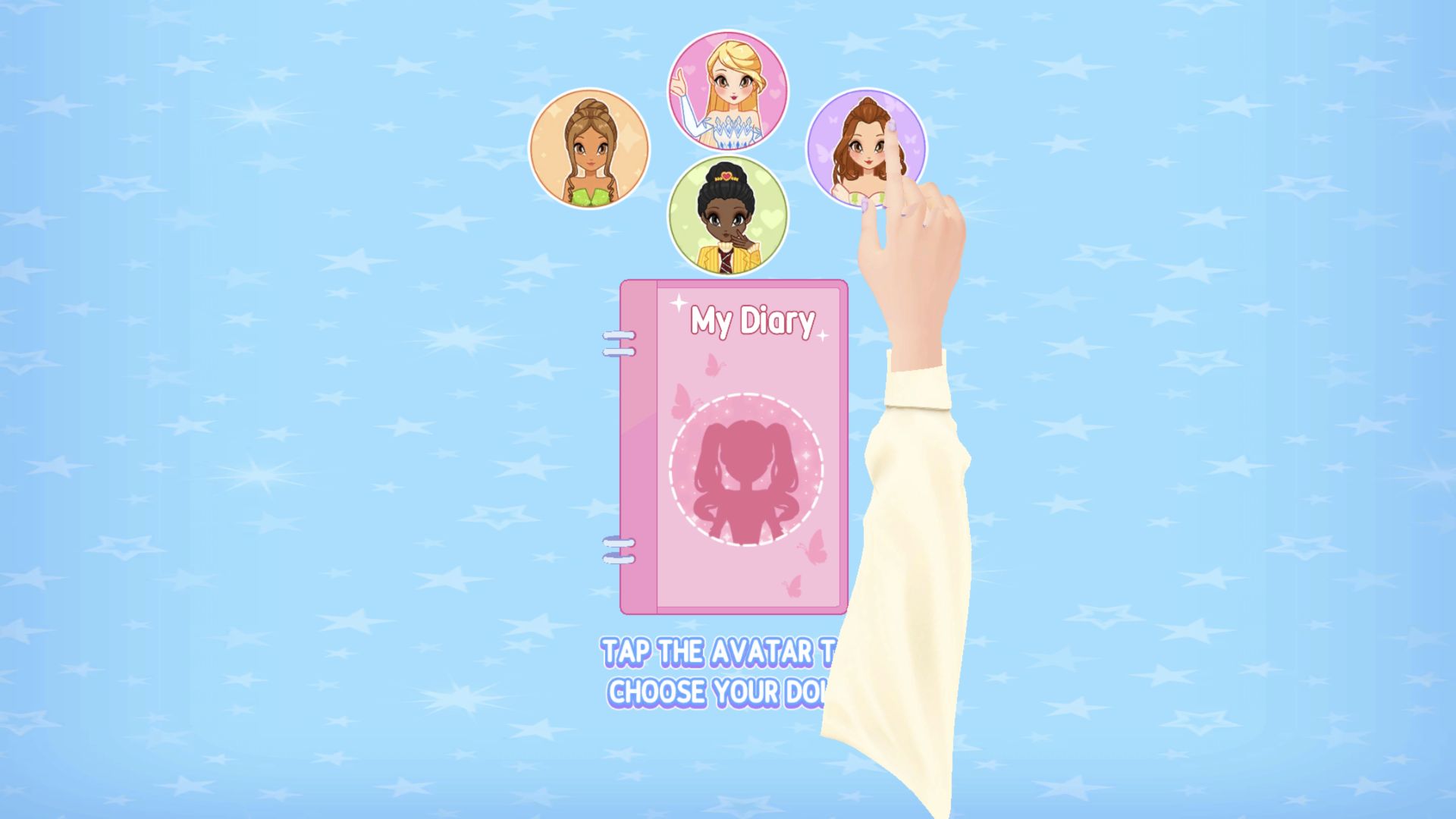
My first session opened on a pale blue star-patterned background with four circular portraits above a pink book labelled My Diary. The choices included different skin tones and hair colours rather than four near-identical dolls. An oversized tutorial hand indicated the active portrait. The useful detail is that the fingertip, not the centre of the animated hand, marks the hotspot; my first tap landed on the palm and did nothing, while the corrected tap immediately pulled the chosen character into the diary.
The introduction is almost entirely visual. Anna appears in simple white starter clothes, identifies herself in a speech bubble, and asks for help before the book opens beneath her. That presentation is friendly and readable for younger players, but it also makes accurate gesture interpretation important. There is no settings-heavy character creator here: the initial portrait decides Anna's base appearance, then clothing and hair choices happen in the wardrobe.
The open diary frames two contrasting school styles
The first wardrobe spread is divided between School Princess and Naughty Girly. The left page shows blue pigtails, a blouse and tie, a pink plaid skirt, shoes, striped pieces, and grey stockings. The right page uses darker hair, a cropped sailor-style skull top, a black skirt, heart-pattern legwear, striped socks, and a small plush accessory. Seeing both themes at once makes the choice more expressive than a sequence of isolated category buttons.
Anna stays above the diary at full-body scale, so the result is always visible, but desktop views must move the pointer a long distance from book to body. The tutorial first says Hold to Choose. A simple click lifts the indicated item into the animated hand; the next prompt changes to Drag to Place. The reliable gesture is to start from the hand's fingertip after the lift and carry it to Anna's torso. Dragging directly from the printed item before that transition can turn the page instead of dressing the doll.
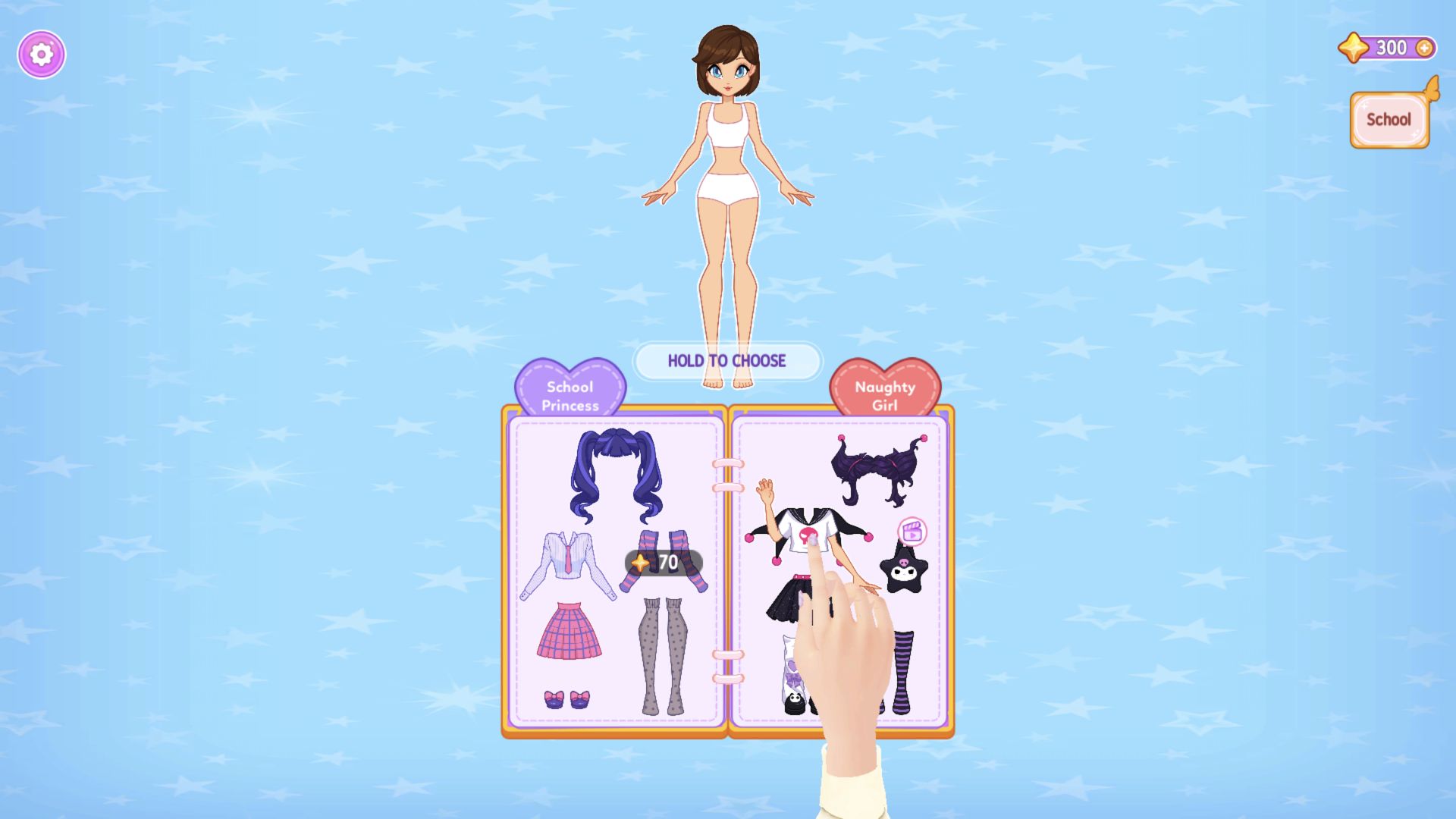
My skull top cost 70 starter stars and changed the silhouette immediately
I followed the tutorial to the white-and-black skull top on the Naughty Girly page. When the drag landed on Anna, her plain vest changed to the cropped sailor top with black shoulder panels and pink pom-poms, and she said, So cute! The item snapped into alignment cleanly; sleeves and decorative points did not float away from the body. This direct visual response is the strongest part of the styling interaction.
The star balance revealed an economic detail the page did not explain in prose. I started with 300 stars and had 230 after applying the top, so that choice cost 70. The nearby striped item showed a visible 70 badge, but the exact relationship between badge and held ensemble was easy to miss under the tutorial hand. No real-money purchase occurred, and the game did not block the chapter. Still, players or parents should watch the balance before trying items because a pleasing selection can consume in-game currency as soon as it is applied.
Swiping the diary reveals more themes than the opening pair
After the first item, the tutorial instructed me to swipe the diary. A leftward drag changed both page headings to Miss Luxury and exposed another set containing a checked top, a dark skirt, pale legwear, elaborate pale hair, a white jacket, and black shoes. The page-turn gesture is sensitive enough that an attempted long drag from the blue hairstyle also flipped the spread. That is useful once learned, but the game could separate wardrobe pickup and pagination more clearly on a large desktop canvas.
A green arrow on the right was already available after the skull top, so the chapter did not require a full head-to-toe makeover. I chose to continue with that one decisive garment rather than spend more stars while still learning the controls. Players who want layered experimentation can keep paging through the book; players who prefer the story can advance quickly. This flexible stopping point makes the opening forgiving, although it also allows Anna to enter the scene still wearing some starter basics.
The outfit becomes part of a short school-arrival story
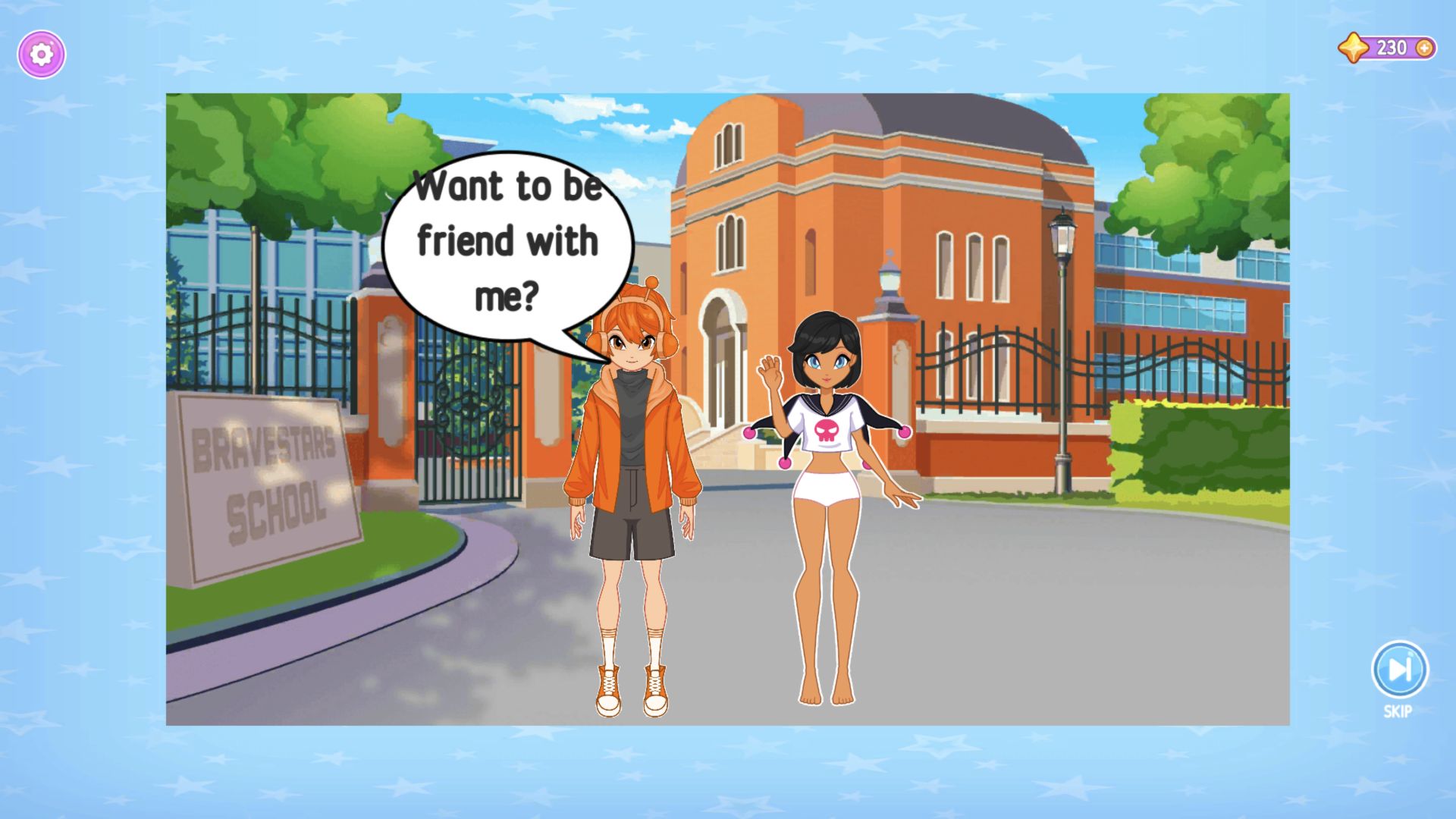
Pressing the arrow moved the session from the notebook to the entrance of Bravestars School. Anna first appeared as a small paper doll held by the same tutorial hand. I dragged her onto the scene, after which she expanded to match the other characters. A blonde student in a red school uniform and an orange-haired student with headphones joined her. Speech bubbles introduced the group, and a Skip control remained visible for players who prefer the styling loop to dialogue.
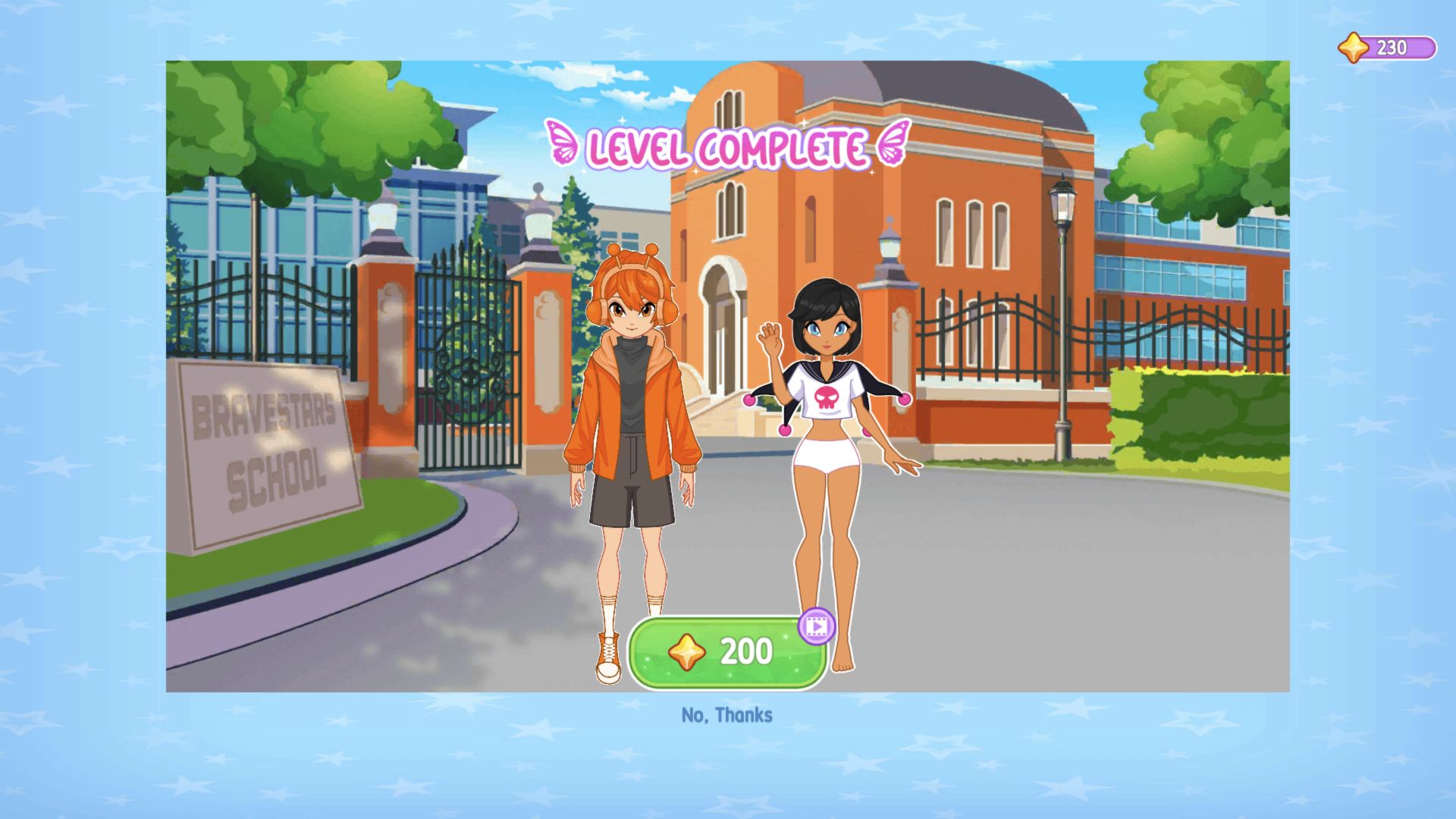
The important payoff is continuity. Anna's black-and-white skull top, pink decorations, short dark hair, and waving pose remained intact throughout the scene. The game does not grade whether the outfit matches the school uniform; it treats the look as the player's version of Anna. Dialogue advanced automatically during my test, and I did not encounter a branching conversation choice. This is a guided dress-up story, not a competitive fashion judge.
A 100-star base reward made the first paid choice recoverable
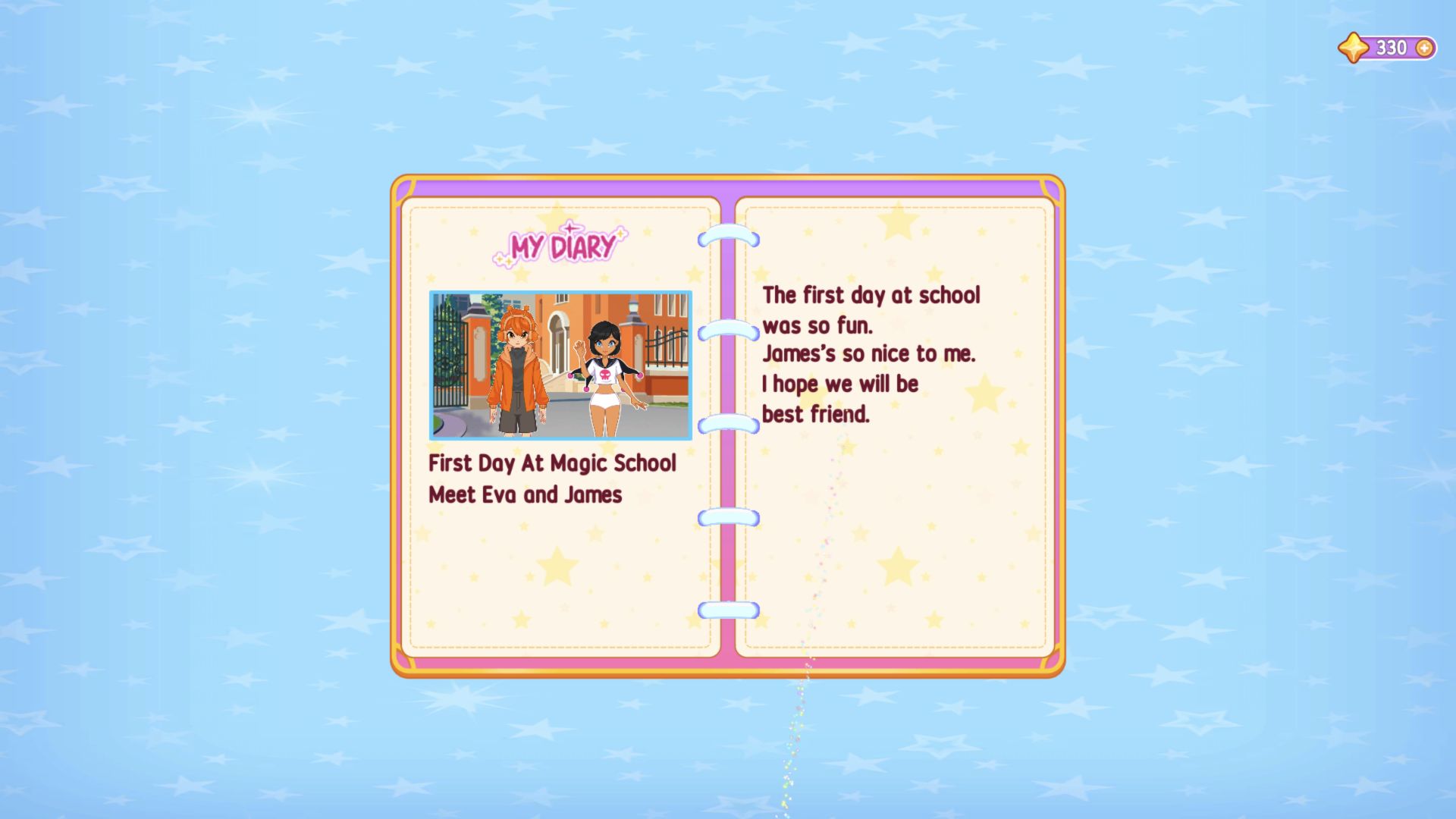
The chapter finished under a Level Complete banner. A green button offered 200 stars with a video badge, while a separate No, Thanks option allowed ordinary completion. I chose No, Thanks and did not watch the video. The balance then increased from 230 to 330, confirming a 100-star base reward. In practical terms, the first chapter repaid the 70 spent on the top and left Anna 30 stars above the starting balance. That is a healthier result than a wardrobe that only drains currency, although the optional double-reward prompt remains prominent.
My verdict is that Anna's Story works best for players who enjoy a makeover leading into a gentle character scene. Its strongest ideas are the contrasting diary spreads, precise snap-on clothing, and persistence of the selected look. Its main friction comes from ambiguous hand gestures, page swipes that can be triggered while trying to drag an item, and price information partly hidden by the tutorial. This review verifies a complete desktop opening loop at 1920 by 1080: avatar choice, wardrobe selection, a 70-star purchase using supplied in-game currency, item placement, school dialogue, level completion, refusal of the video bonus, and receipt of the 100-star base reward. I did not complete a comparable mobile full-viewport loop, so the device verdict remains desktop-only.