
Tile Valley makes seven empty slots feel generous—at first
My desktop session began on Level 1 against a soft mountain-and-sky background. The compact stack used clear food symbols—apples, grapes, wrapped candy, cookies, avocados, and blue-rimmed plates—while seven empty spaces waited below it. Four large tools sat beneath the tray, each showing three uses, but I left every one untouched. I wanted to see whether the opening puzzle could be solved by reading the stack rather than leaning on a hint, shuffle, undo, or extra-space button.
I skipped the brief visual tutorial and learned from the board itself: click a tile, store it in the lower tray, and make three identical pictures disappear. There was no visible timer in this tested level, so the pressure came from capacity rather than speed. That sounds relaxed, but the stack hides lower pieces behind the exposed layer. A harmless-looking single can therefore occupy a slot for several turns while the two partners needed to clear it remain covered. The opening is less about rapid matching than deciding which incomplete set is worth carrying.

Two matching plates taught the danger of an unfinished set
The first useful warning arrived when I placed two blue-rimmed plates into the tray. They were an obvious pair, but a pair is not progress by itself: both remained visible and consumed two of the seven spaces. The third plate was still in the stack, so every tile chosen in the meantime had to coexist with them. That changed how I read the board. I stopped treating any two identical pictures as an automatic invitation and began checking what selecting them would uncover.
The practical lesson is to separate exposed triples from hopeful pairs. If all three symbols can be seen and selected, the set clears immediately and gives the tray room back. If only two are available, ask whether taking them exposes their third match or simply adds another unfinished family. Tile Valley's cheerful artwork does not make that calculation visually harsh, yet the seven boxes are an exact accounting system. Two plates plus an avocado, cookie, and apple already leave only two spaces for correcting the plan.
Visible triples are safer than digging through mixed singles
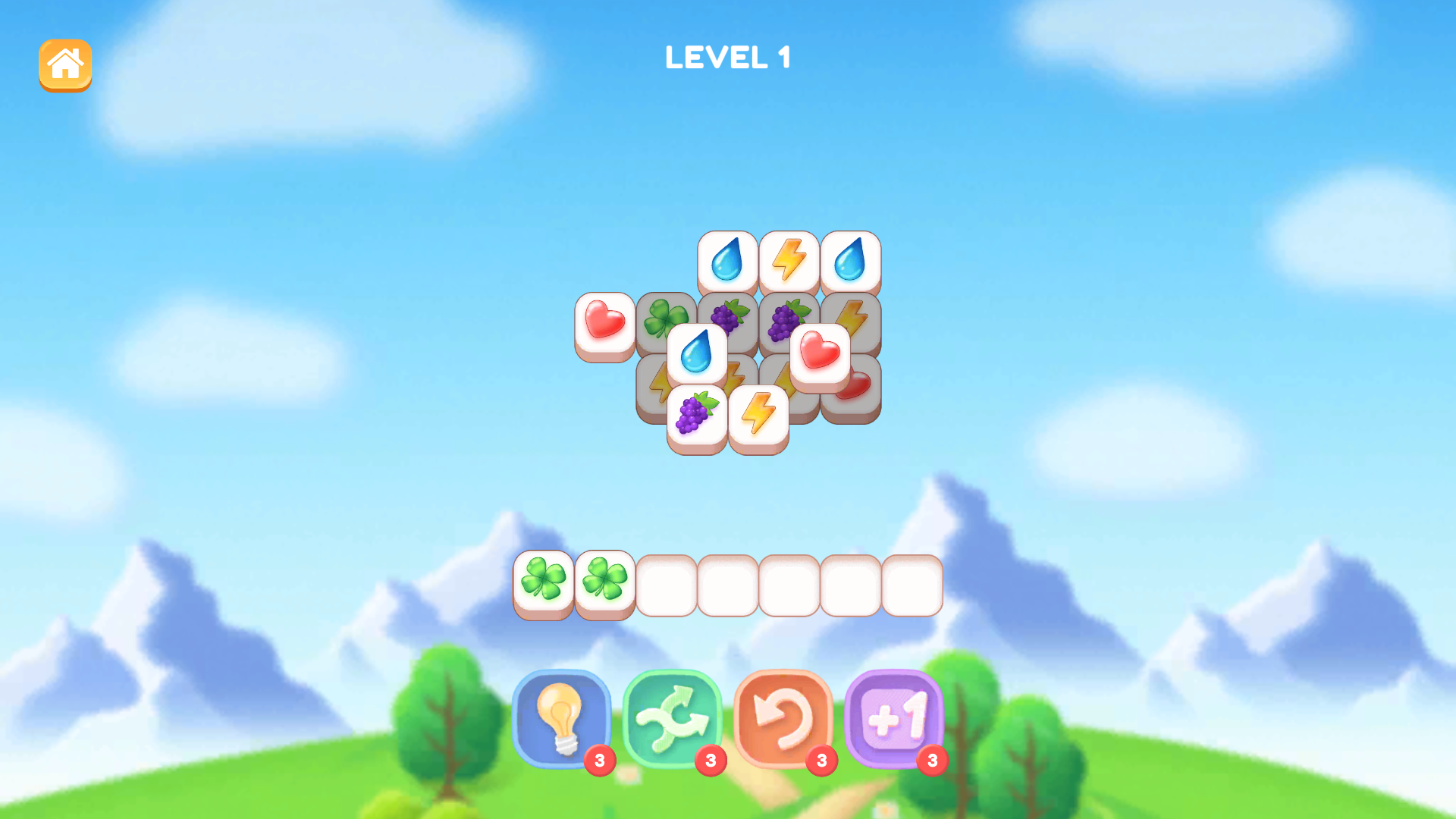
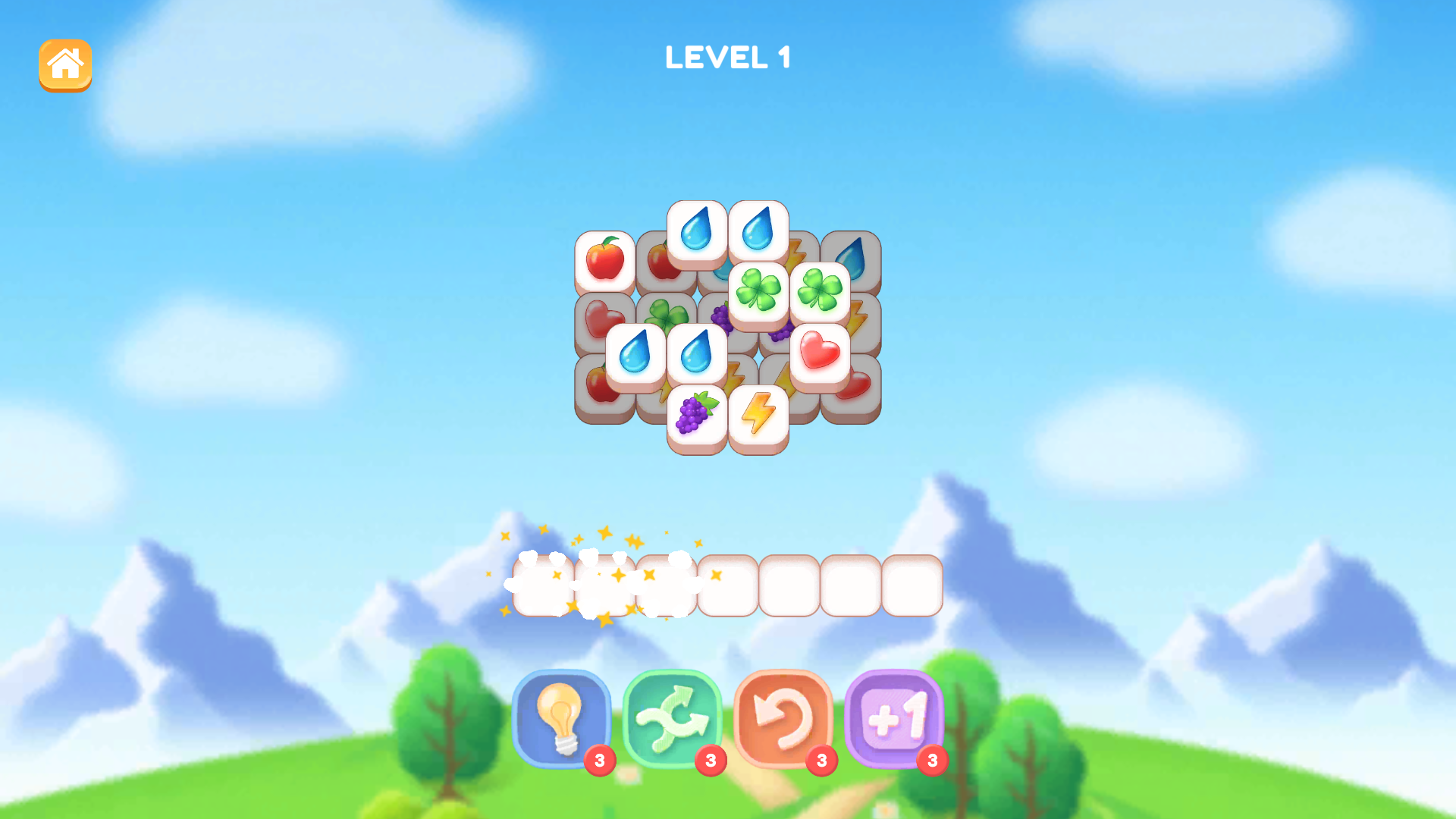
A complete triple produces the cleanest feedback in the game. The three matching tiles vanish from the tray, small sparkles mark the removal, and the remaining stack becomes easier to read. On the successful run I prioritized visible groups such as clovers and wrapped candy before committing to looser pairs. Each cleared set did two jobs: it removed three tiles from the level and exposed symbols underneath without leaving a long-lived burden in the tray.
This is where the opening level became more interesting than a basic spot-the-pair exercise. The topmost pictures are selectable, while shaded or overlapped pieces have to wait. A triple may be present somewhere in the stack but still be unusable as a set because one tile is covered. The safest move was not always the most visually prominent icon; it was the move that either completed a set now or uncovered a partner with minimal tray cost. Pausing to trace those layers was more reliable than clicking every appealing fruit in reach.
My first attempt ended with the full tray the rules warned about
I did not solve Level 1 on the first attempt. After mixing unmatched avocado, cookie, and apple groups with other incomplete sets, the tray reached all seven occupied slots. The board immediately darkened behind a LEVEL FAILED message. That failure was useful because it confirmed the limit precisely: there is no grace space after the seventh unmatched tile. A selection that cannot trigger a triple can be the final move even when several promising matches remain on the board.
The result overlay offered Menu, Restart, and a larger Revive button marked with a video icon. I did not open the revive route. Restart was enough, and it preserved the main lesson from the loss without adding an untested rescue claim. For a beginner, the recovery is simple: restart early levels freely, then change the order of selection. The mistake was not choosing one wrong picture; it was carrying too many different partial families at once and hoping the covered third tiles would appear before the tray ran out.
The randomized retry rewarded a stricter tray budget
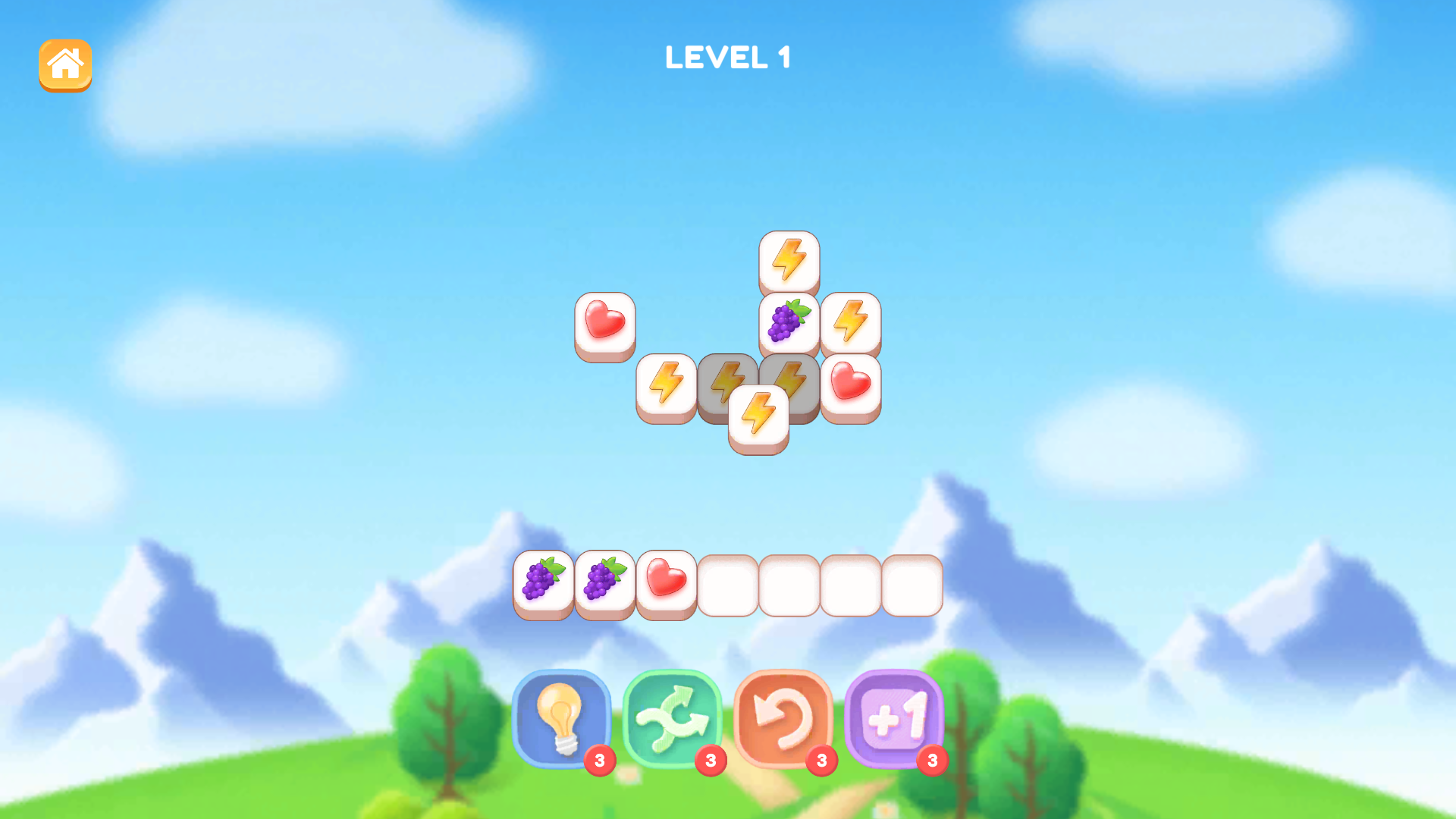
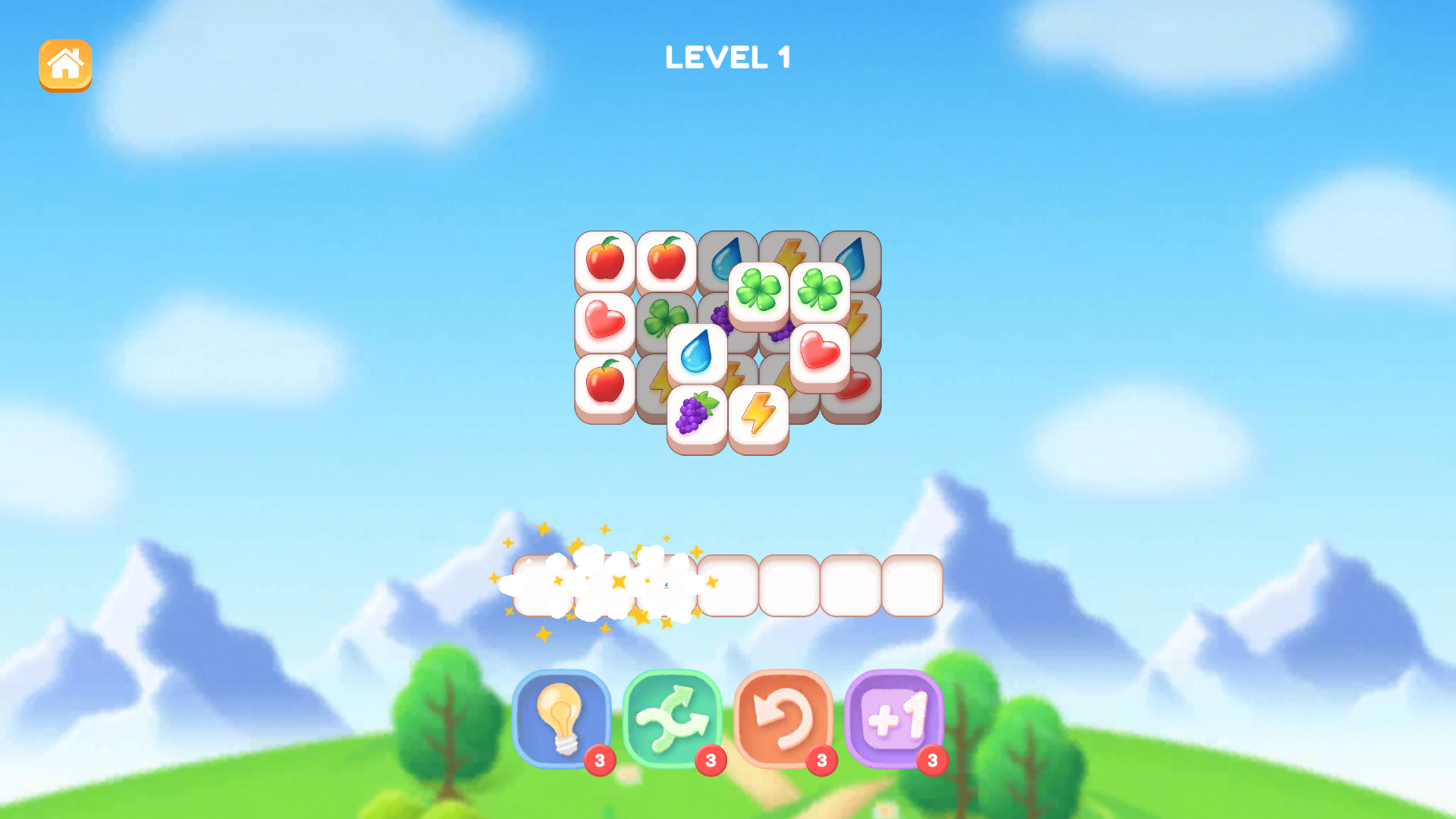
Restarting produced a different Level 1 arrangement rather than an identical script. I approached that randomized board more conservatively: clear exposed triples first, tolerate only a small number of unmatched tiles, and reconsider whenever the tray started holding several symbol types. At the midpoint, one avocado could sit safely in the first slot because the other spaces remained open. That margin made it possible to reveal lower tiles without recreating the crowded state that ended the first run.
Later sequences required carrying pairs of ice creams, apples, and plates until their third pieces became available. The difference was timing. I completed one family before opening too many others, so the tray repeatedly emptied instead of accumulating permanent clutter. I still had to read the covered bottom layer, but the level never demanded fast clicking. The most effective rhythm was select, check what became exposed, complete the nearest triple, then reassess. None of the four tools was necessary for this successful Level 1 clear.
The last tiles paid 20 coins, with the x3 route left alone
Near the end of the successful play, the final family was unambiguous: two lightning tiles remained on the board while one waited in the tray. Selecting both completed the triple, cleared the bottom layer, and triggered LEVEL COMPLETED. The reward animation displayed +20 coins, and the settled result screen showed a total of 20. That was the representative loop I set out to verify: start Level 1, make and learn from a full-tray failure, restart a newly arranged board, remove every tile, and receive the stated reward.
The completed screen also showed a purple x3 option with a video symbol beside the normal Menu and Next buttons. I left the multiplier untouched, so this review makes no claim about what video it plays or whether the reward actually triples. Based on the tested desktop loop, Tile Valley suits players who enjoy low-speed planning, readable symbols, and small reversals caused by their own selection order. Its first level looks gentle, but it punishes casual hoarding immediately. Treat seven slots as a strict budget, favor complete visible triples, and let the stack reveal itself one controlled group at a time.
I also opened the local Tile Valley detail route at a 390x844 layout viewport and tapped Play. Playflaming's fullscreen modal appeared with its back control and bottom game label, and the provider's Let's Play! gate loaded correctly. After I pressed it, the player remained black except for the surrounding modal chrome and Tile Valley label for roughly 35–45 seconds; a recovery attempt produced the same state. These two true 390x844 PNGs document the blocker at CSS resolution, not mobile gameplay or high-DPR phone pixels. Because no comparable touch puzzle loop loaded, I make no touch-response or best-device claim.
