A wrecked cafe gives every order a reason
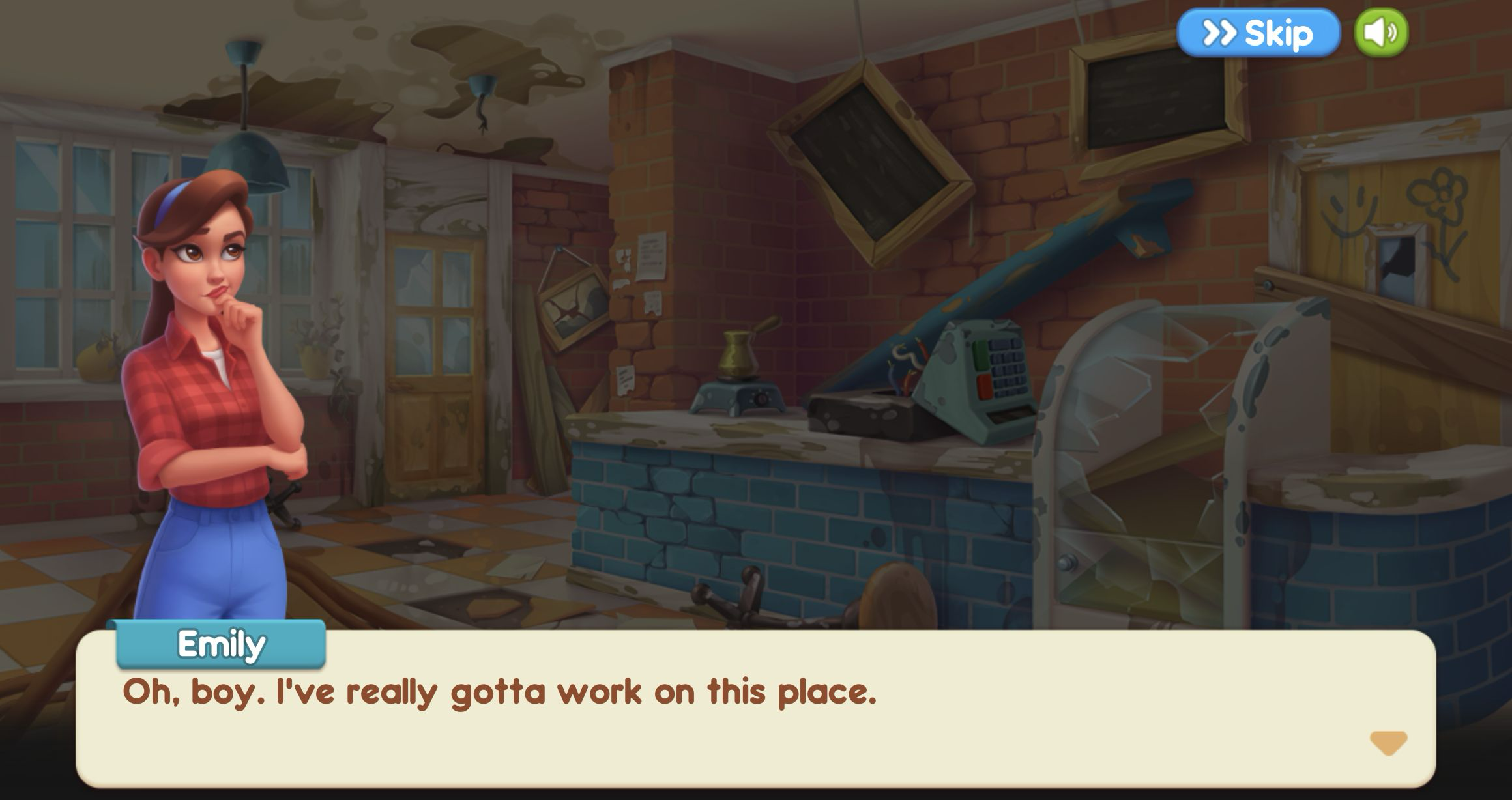
My session opened on a cafe that looked far beyond a quick wipe-down. Chairs and metal parts covered the floor, the display case was cracked, frames hung at odd angles, and a broken machine occupied the counter. Emily summed it up with, “Oh, boy. I've really gotta work on this place.” That line gave the merge board a useful purpose. I was not combining food merely to raise numbers; each customer order promised money that could be put back into the room.
The startup was not completely frictionless. An optional login prompt appeared while the game loaded, and I continued without an account. The opening conversation then introduced Olivia, the young helper who becomes the face on the first order card. The story is delivered through large character portraits and dialogue boxes rather than exploration. It is warm and easy to follow, though players eager to reach the puzzle will spend several taps moving through the scene before the board appears.
Four pan upgrades become the first food generator
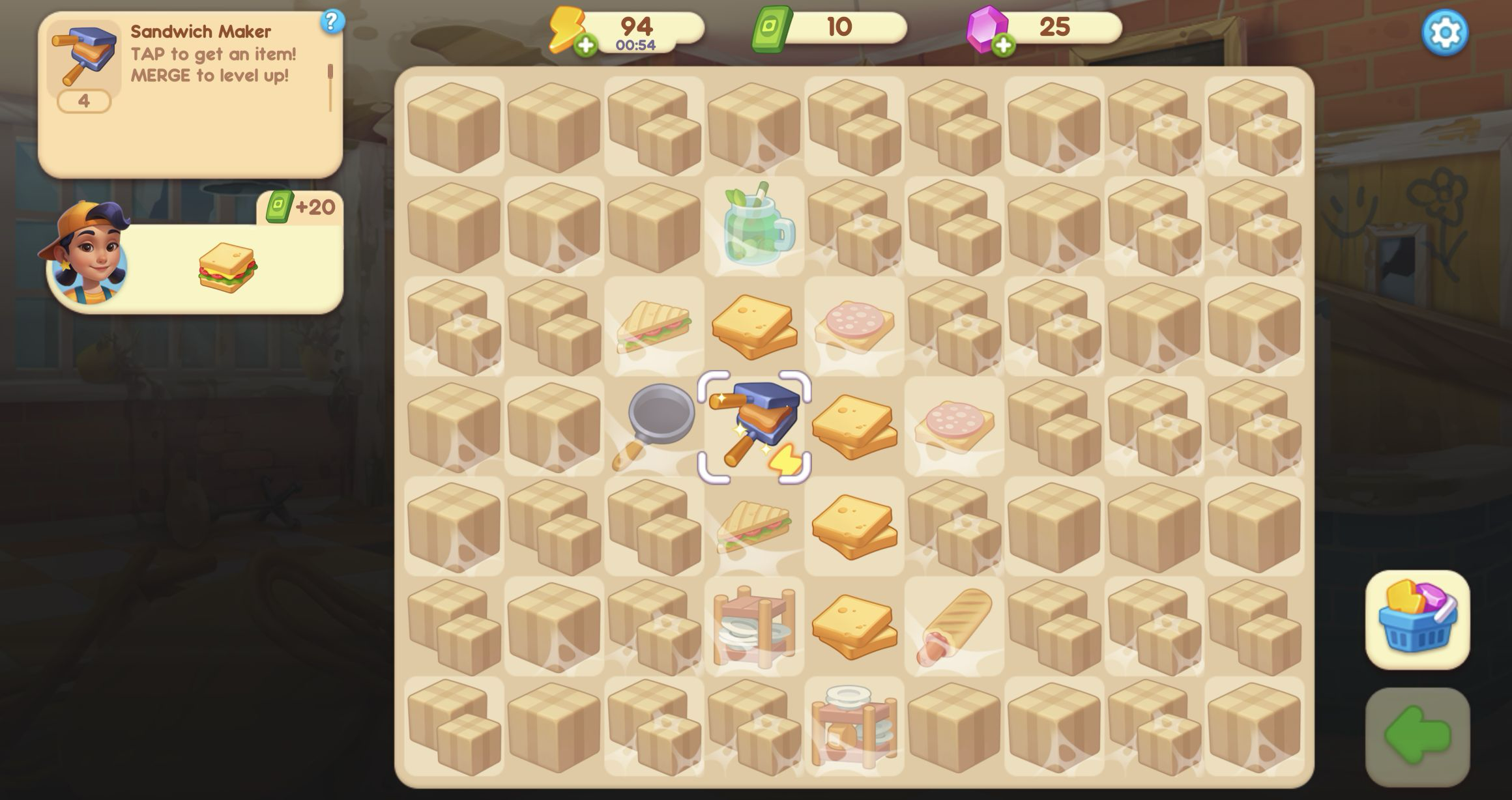
The first tutorial chain is deliberately mechanical. Two Pan Handles merge into a Pan Without Handle, two of those become a Pan With Handle, and matching that pan with a dusty equivalent produces a Sandwich Maker. The item panel labeled these stages as levels one through four, so I could see exactly why each drag mattered. A large hand and spotlight identify the required cells, which makes the lesson almost impossible to misunderstand.
Dust is more than decoration. Most of the board begins under cardboard-colored blocks, and some useful items are visible only as pale, dirty versions. Merging a clean item with the same dusty item removes that obstruction and advances the recipe at once. It is a smart shortcut because a single move both upgrades the object and opens space. The tradeoff is that the early board feels heavily scripted: the game chooses the match, highlights it, and waits for the expected drag before revealing the next step.

Energy turns the Sandwich Maker into a small production puzzle
Once unlocked, the Sandwich Maker turns taps into Toast. Each successful production tap cost one energy: the counter fell from 100 to 98 while I made the first pair, then from 98 to 94 while I prepared four more pieces for the next order. Energy also showed a refill timer beneath the number. I never came close to emptying the starting supply, but the meter makes clear that repeated production is a resource decision rather than an unlimited clicker.
Space mattered before energy did. Only a narrow patch of the grid was clean, and generated Toast occupied adjacent cells around the maker. Pairing items promptly kept that center area usable. Leaving four basic pieces scattered made the board look busier than the recipe actually was, while merging them into two Egg Toast items restored breathing room. The dusty perimeter hints at a much larger board, but the first session rewarded tidy local planning more than long-term inventory management.

Toast climbs through a clearly explained five-step recipe
The food chain was easy to remember because every level remained visually distinct. Two Toast items became Egg Toast, two Egg Toast items became a Ham Sandwich, two Ham Sandwiches produced a Club Sandwich, and two Club Sandwiches made a Cheese Sandwich. I also opened the recipe panel, which displayed those five stages in order. That reference removed guesswork when the second customer asked for a higher-level item.
The first green card requested a Ham Sandwich and displayed a 10-money reward. After I merged the two Egg Toast items, Emily announced that Olivia's sandwich was ready, and submitting the card changed the money counter from 0 to 10. That was the first complete loop: spend two energy, make and merge food, satisfy a visible order, and receive currency. The confirmation was immediate enough that I always knew whether the finished sandwich had actually left the board.

The second order tests whether the chain has really clicked
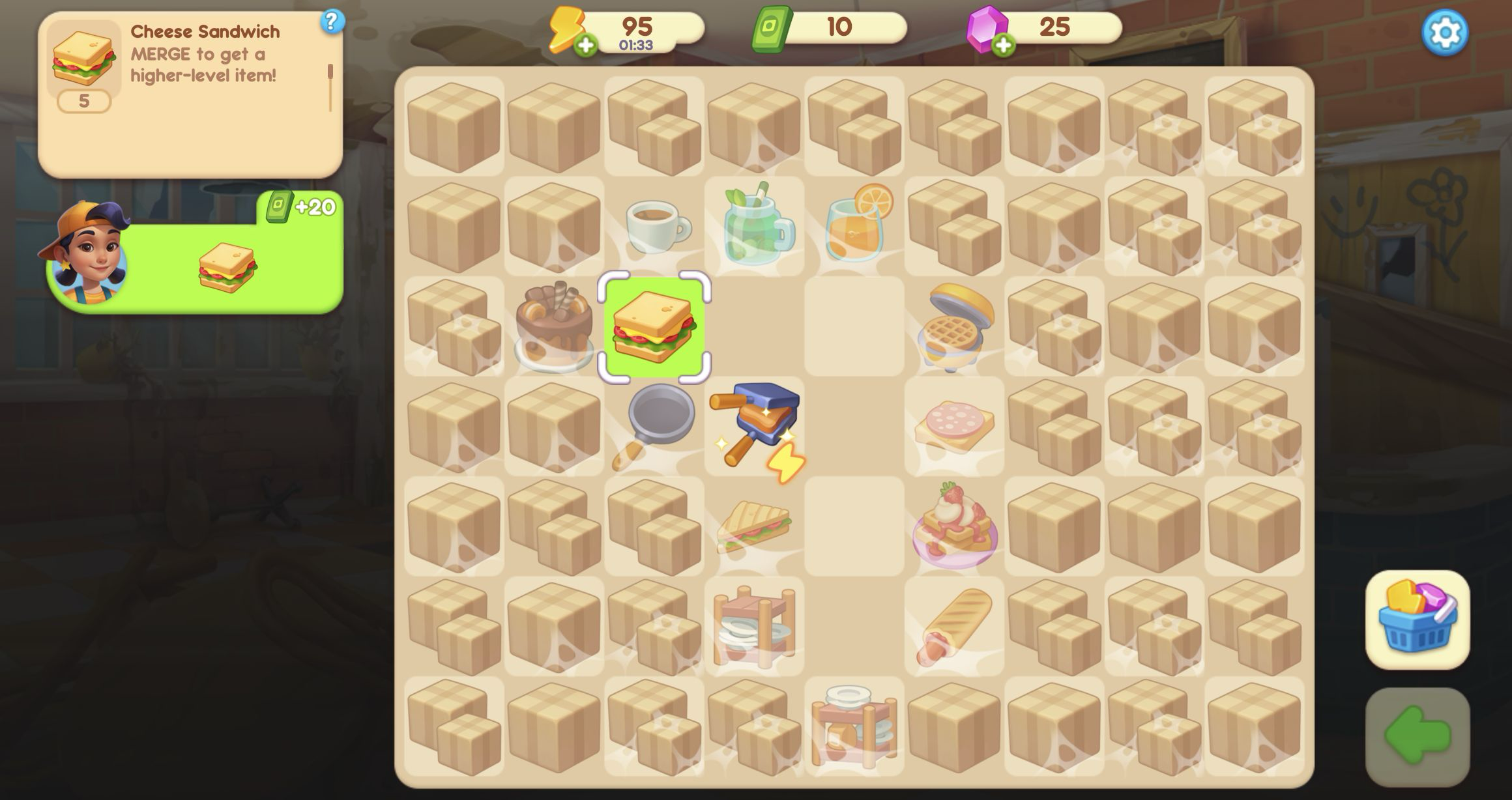
The next order looked similar but required a Cheese Sandwich and advertised 20 money. I initially stopped at a Club Sandwich, clicked the order, and received the recipe panel instead of a payout. That mistake was useful: the panel highlighted Cheese Sandwich as level five and showed Club Sandwich at level four. One more match with a dusty Club Sandwich produced the correct item, turning both the board cell and order card bright green.
This longer chain felt better than the fully directed first one. I generated four Toast items, combined them into two Egg Toast items, made one Ham Sandwich, and used dusty matches to climb through Club to Cheese. The board also uncovered glimpses of coffee, orange drink, a waffle maker, chocolate drink, and dessert items as the clean area expanded. I did not test those recipes, but their appearance made the food system feel broader than the opening sandwich line.
The 390x844 modal works, but the horizontal board becomes tiny
I also entered through the local Playflaming page at a 390x844 viewport. The Play button opened the required fullscreen modal, with a back control at the top left and a Piece of Cake footer at the bottom. A skippable pre-roll ad appeared before the loader. Inside the game, I dismissed the optional login, opened the board, cleared the dusty pan match, unlocked the Sandwich Maker, generated Toast, and merged two pieces into Egg Toast.
The game honors its declared horizontal orientation inside the portrait frame, leaving large black bands above and below the playable strip. The full board remains visible, but icons, counters, and tutorial text are much smaller than in the desktop capture. My narrow run used pointer actions in the emulated viewport, not a physical phone, and it stopped after the initial Egg Toast step. I therefore cannot make a best-device claim or judge real touch accuracy, thermals, battery use, or mobile performance.

Two orders finally put money back into the cafe
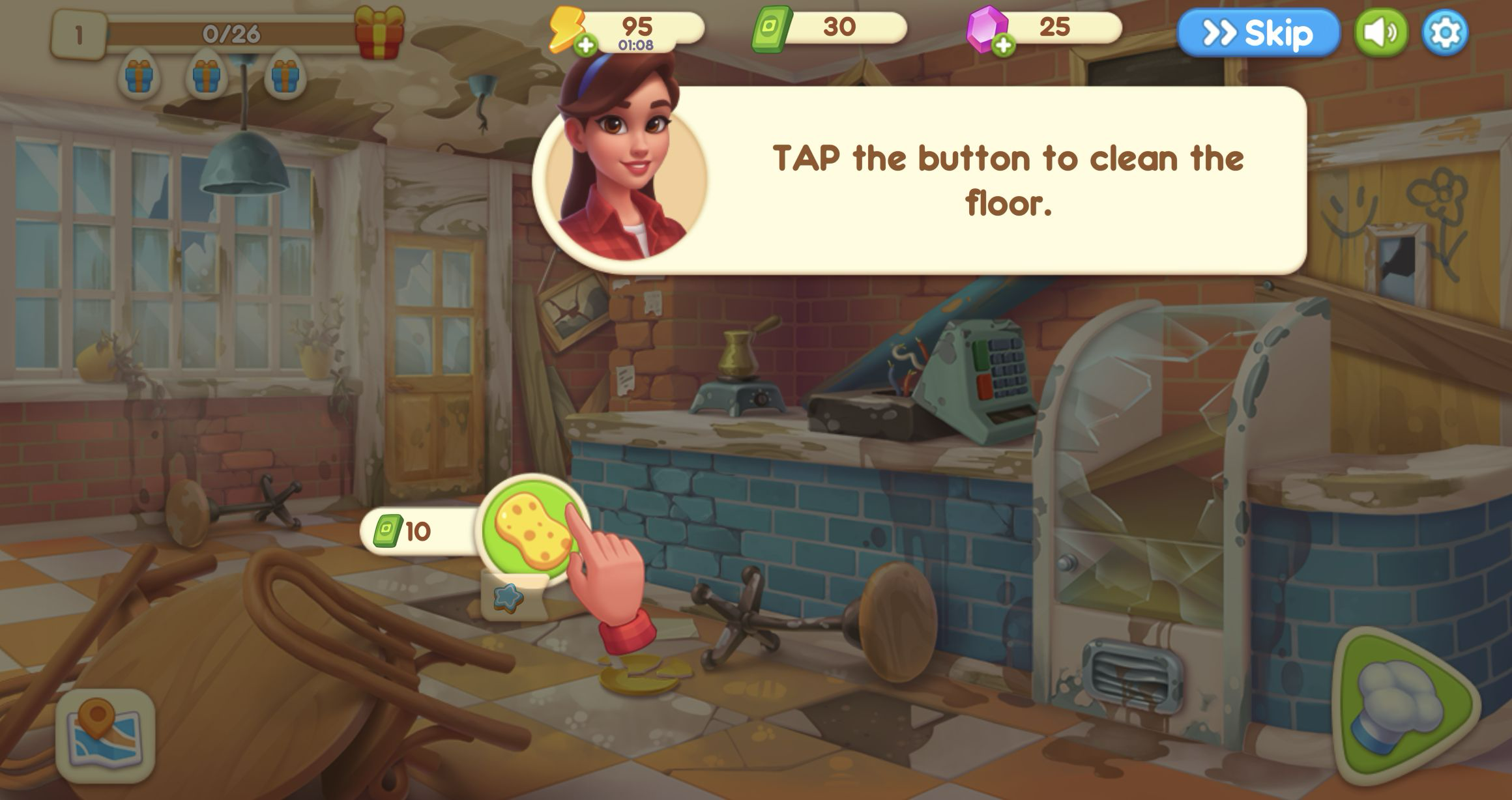
After submitting the Cheese Sandwich, the game directed me back to the cafe. The money display reached 30 on that screen, and a sponge button offered to clean the floor for 10. Activating it brightened the tiled area and moved the story forward. The room was still full of broken furniture, wall damage, and a wrecked counter, so the action felt like one visible repair rather than an implausible instant renovation.
Olivia then returned and told Emily that the sandwiches were amazing. That dialogue closed the session with a concrete result: two orders served, one cleaning task triggered, and a customer reacting to the food. Piece of Cake: Merge & Bake should suit casual players who enjoy explicit upgrade chains and room-by-room progress. Its strongest hook is how a simple drag on the board leads back to a changing location; its early weakness is how insistently the tutorial controls each move before that rhythm opens up.