The first ten coins turn into a much longer walk
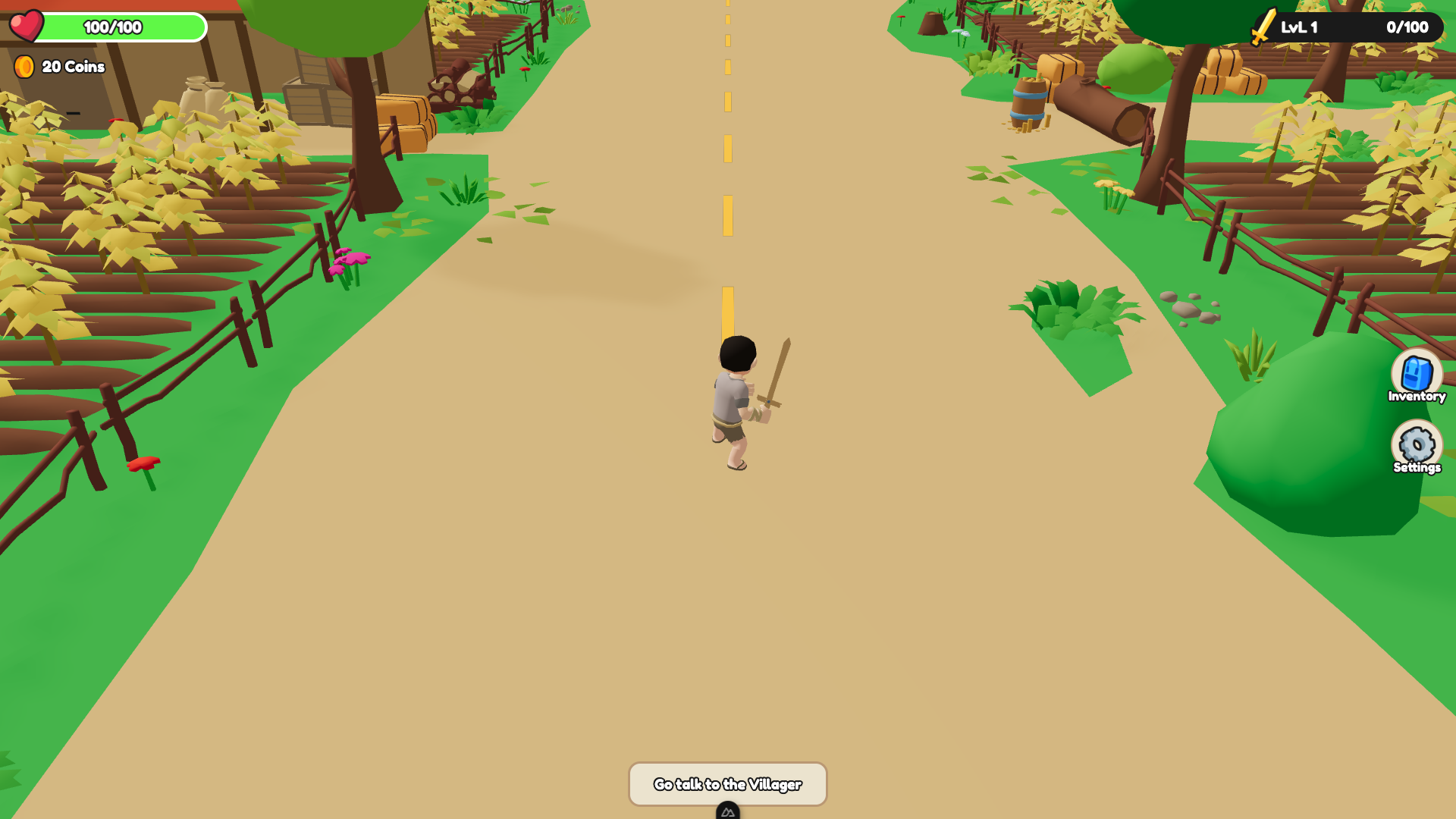
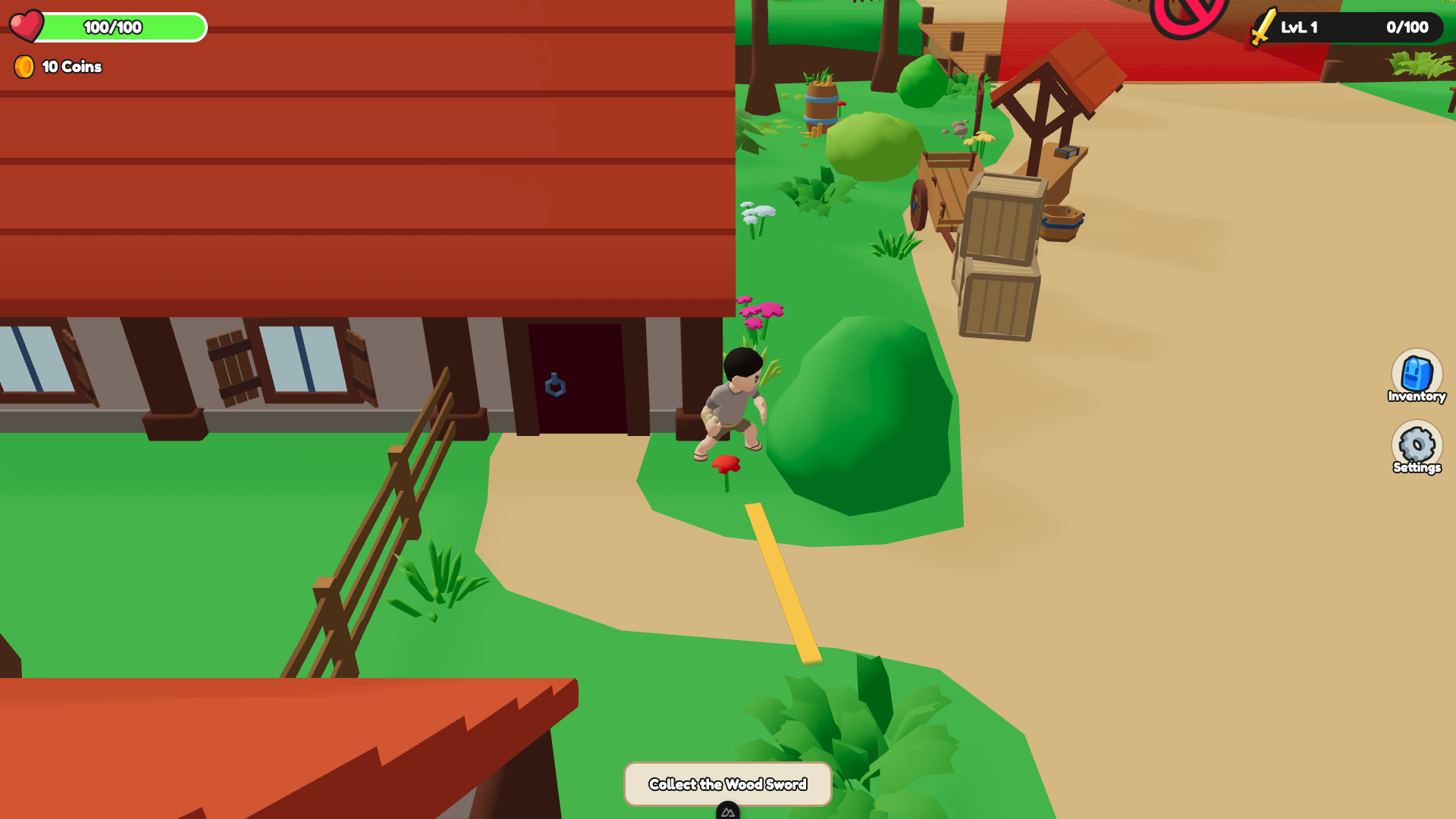
My Knight Legend session began with 100 health, no weapon, no experience and no coins. The first useful interaction was pleasantly clear: moving forward over the opening pickup produced a bright +10 and changed the counter to 10 Coins. The game then replaced the movement prompt with a concrete objective, Collect the Wood Sword, and drew a yellow route across the ground. That small sequence is an effective introduction because it teaches movement, confirms that pickups are automatic, and gives the player an immediate reason to leave the dock for the village.
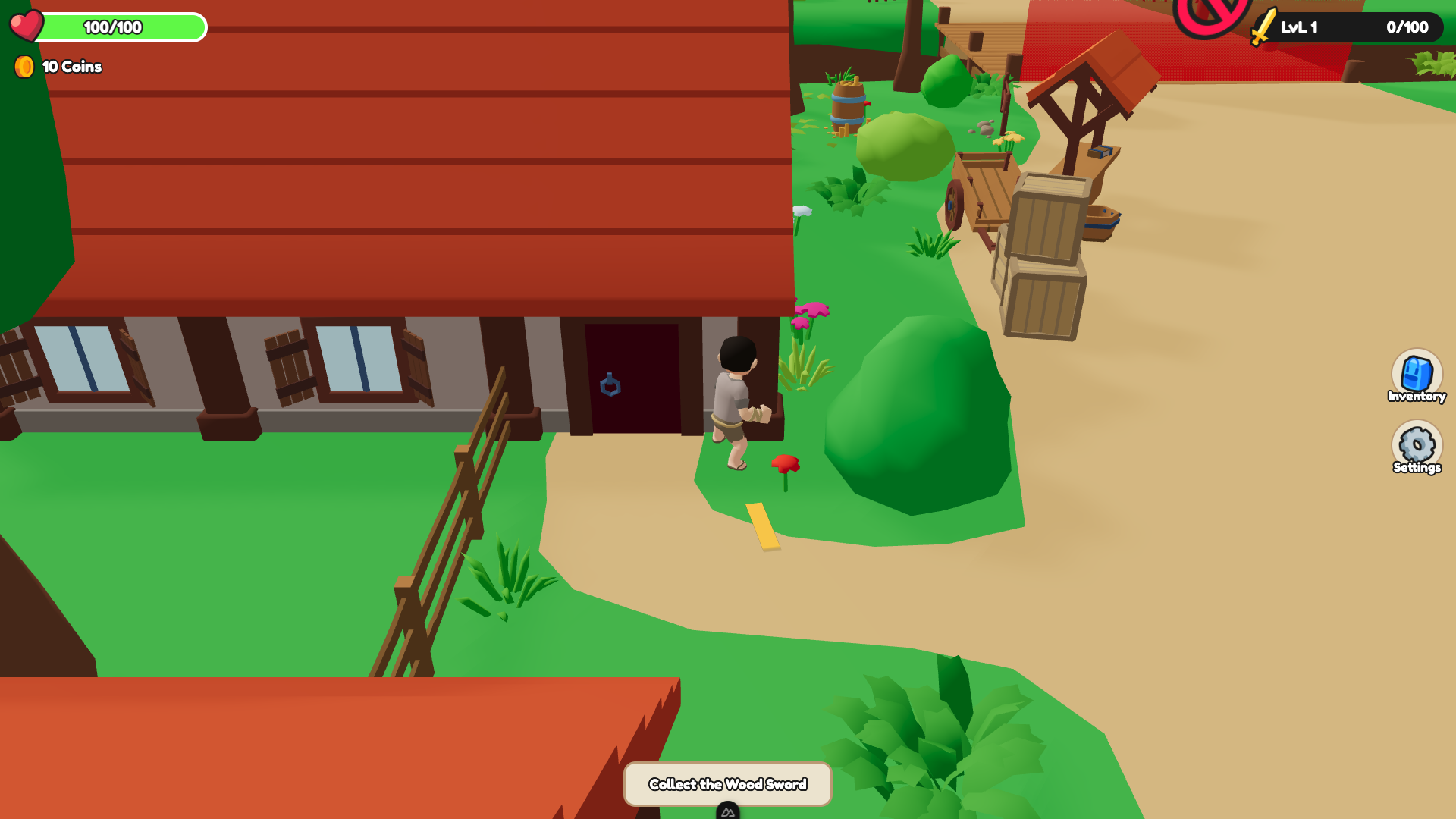
Movement uses the arrow keys on desktop, with WASD also declared in the game's instructions. The character accelerates smoothly enough for an action RPG, and attacks happen automatically when an eligible target enters range. That frees the player to concentrate on positioning rather than juggling a separate attack button. The trade-off is that movement precision matters more than expected: holding a direction for a second too long can put the character behind a stall, tree or house, while the elevated camera often lets foreground roofs and foliage cover the avatar.
The visual language is cheerful and readable. Health, coins, level and experience occupy the corners, while the current task sits in a large panel at the bottom. I always knew the next goal even when I temporarily lost the route line. The opening village also has enough wells, market awnings, carts, fences and crop plots to feel like a place rather than an empty tutorial corridor. It is simple low-poly art, but the warm palette makes the first minutes inviting.
The village is charming, but its scenery fights the controls
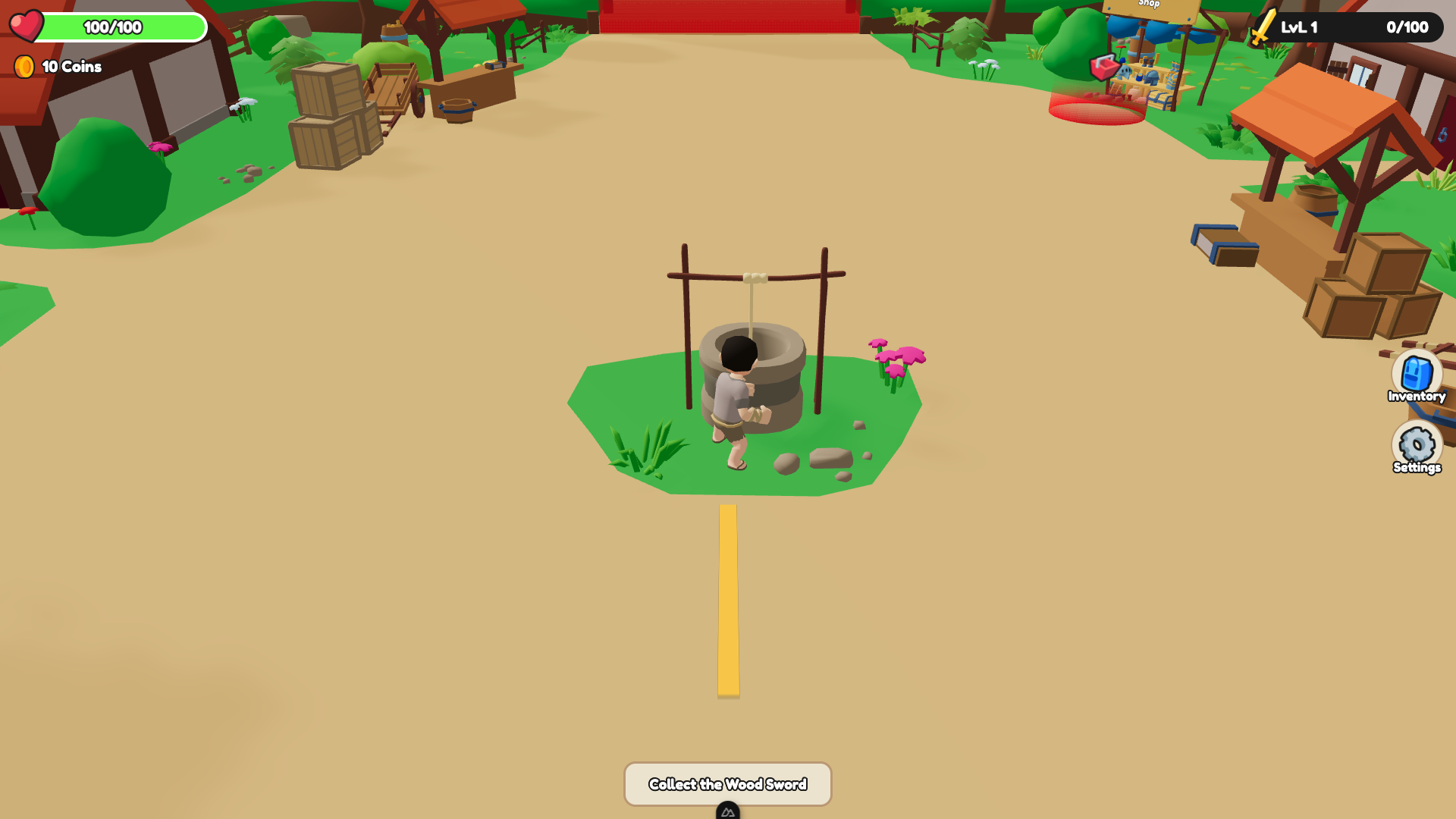
The least polished part of the run was navigating around solid scenery. I became wedged near the village well, then took a wide detour behind a house and through the edge of the farm. The yellow route updates as the character moves, yet it can run beneath carts, fences and crops. Because the camera remains fixed, a tree canopy or roof can turn translucent only after the character is already underneath it. The result is not difficult combat; it is friction in reading where the collision boundary actually ends.
This matters because Knight Legend otherwise encourages continuous movement. The route marker looks like permission to hold a direction, but the more reliable technique is to tap around large objects and check the character's new position before committing to another long input. At the well, for example, walking straight into the stone rim stopped progress with no extra feedback. A short sideways adjustment was enough to continue. The same approach helped around the cart and field fence.
I would not call the opening maze-like. The roads are broad, and the objective never disappears. Still, the collision work makes the tutorial feel longer than its actual sequence of tasks. Players who enjoy a relaxed progression loop may accept that roughness; anyone expecting the snappy pathing of a polished action game will notice it immediately.
A farm detour reveals how the route marker behaves
My biggest wrong turn led along the crop rows. This was useful evidence about the guide itself: it points toward the target rather than guaranteeing that the straight line is walkable. The yellow strip crossed the field, but the fence was solid, so following it literally kept the character pressed against the boundary. Backtracking to the open road was the correct answer. Beginners should treat the marker as a compass and use visible roads or gaps, not assume it is a navigation mesh.
The detour also showed that the game world remains active outside the immediate objective. Breakable or attackable objects can appear under the Mobs group, and the automatic combat system checks nearby targets on a timer. During the tutorial fight, approaching the Training Dummy brought it into range and the character attacked without another key. Its health fell from 100 to 50, then to 30, and finally zero over repeated swings. The kill advanced the task and awarded another 10 coins, taking the session total from 10 to 20.
That hands-off combat will divide players. It is approachable and works well for a game about accumulating gear, but it removes the timing test found in more active brawlers. The tactical decision is mostly where to stand and which target to approach. In this first encounter the dummy never threatened my 100 health, so the loop was about confirming range and waiting for the next swing rather than dodging.
The Wood Sword makes the reward loop tangible
Defeating the Training Dummy produced a visible common Wood Sword drop. Walking into it collected the item automatically and changed the objective to Equip the Wood Sword. The Inventory button gained a small 1 badge, so there was no ambiguity about where the reward had gone. Inside, Weapons was already the active category and the sword occupied the first slot against a green rarity background.
I like that Knight Legend pauses long enough to make the first upgrade legible. It could have auto-equipped the tutorial reward, but asking the player to open the inventory teaches the menu that will support later loot. Selecting the sword opens a detail panel, while unused slots make the capacity of the system obvious. Merge All and Sell Unused buttons also hint at the longer gear treadmill, though I did not use either during this test and cannot say how quickly duplicate management becomes important.
The inventory is clearer than the world navigation. Categories use icons, the selected item is large enough to recognize, and the action button changes according to its state. There is also a Sell option, which makes even a starter item feel part of an economy rather than a disposable scripted prop.
Equipping doubles the opening attack value
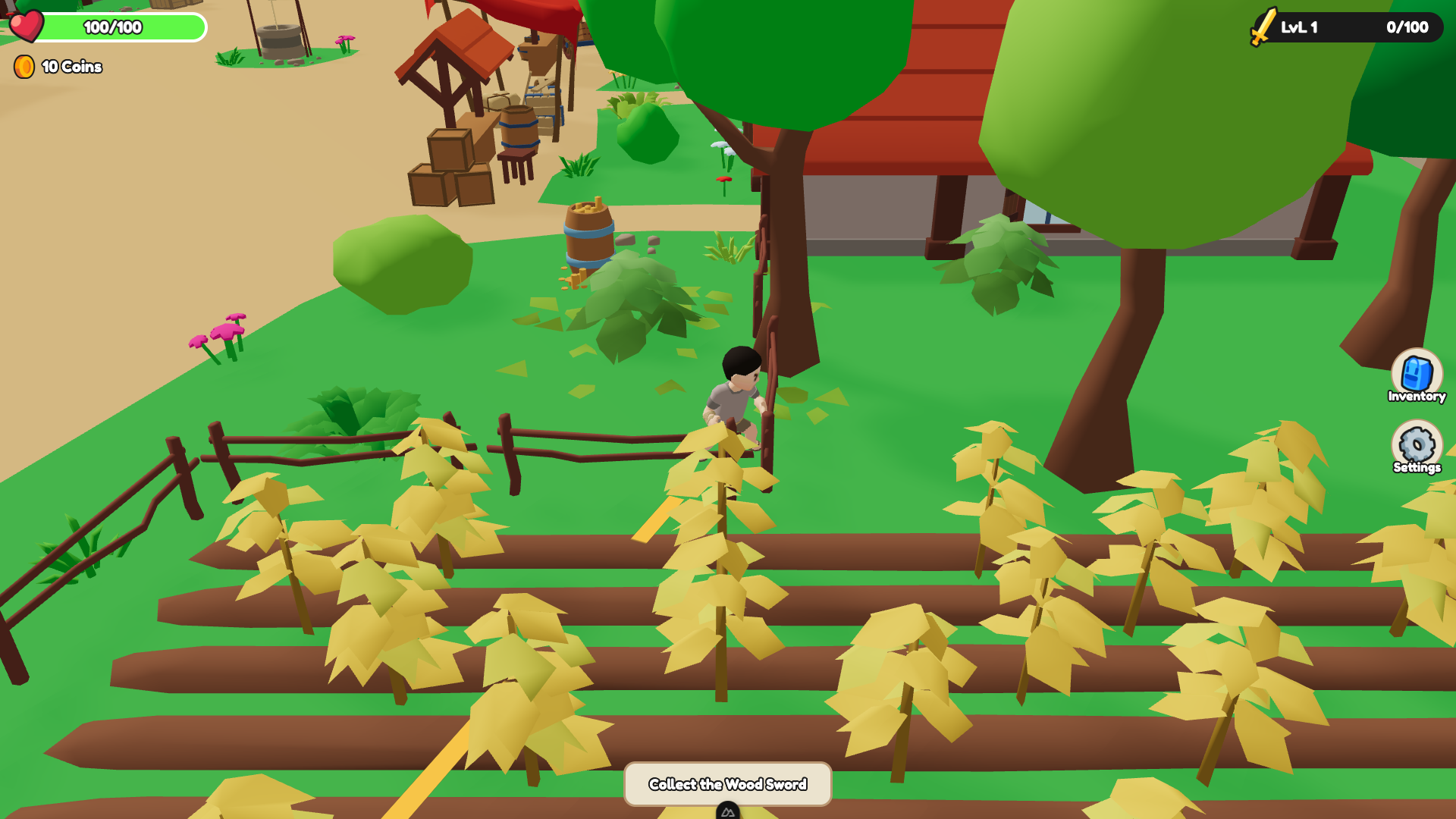
The inspected Wood Sword was Level 1, listed 20 damage, no health bonus, x1 damage, health and gold multipliers, and a sell value of 5. Equipping it changed the character model from bare hands to a visible wooden blade. More importantly, the internal attack total rose from the unarmed 20 to 40, so the first upgrade had an immediate and measurable effect. The next task became Go talk to the Villager, a clean endpoint for this opening test loop.
There was significant technical friction around ads. A launcher appeared before play, followed by a skippable pre-roll. Later, interstitials interrupted the session. In this isolated test, visually closing one of those ads sometimes left movement disabled, and I could continue only by invoking the game's own resumeGameAfterAd() recovery hook. A normal player should not have to troubleshoot an ad handoff that way. I did not see a login requirement or make a purchase. The catalog says in-game purchases are absent, but this session was too early to independently verify the full economy.
Knight Legend is most promising for players who enjoy uncomplicated RPG progression: follow an objective, let proximity combat resolve, collect a drop, inspect its numbers and equip it. The first reward is satisfying because the stat change is explicit. The main caution is the collision-heavy village and the ad interruptions, both of which slow a loop that is mechanically straightforward. The catalog declares desktop, Android and iOS support. I completed the representative loop only in an isolated desktop Chromium session. The Playflaming mobile fullscreen modal opened with its Exit-game control, but its pre-roll repeatedly failed to hand off to gameplay after reasonable retries, so I am not making a best-device recommendation or claiming a completed touch loop.