My First 09:00 Route Turned 570.25 into 2.98K
My first morning in Idle Train Empire Tycoon began at 05:05 with 1.85K cash, 25 of 300 electricity, no water use, and 120 prestige. By 08:47, after following the tutorial and watching the station operate, the balance was 570.25. I had scheduled the red Onyx train for 09:00, set Galador as its destination, and accepted the projected 3.23K profit per trip shown on the route card.
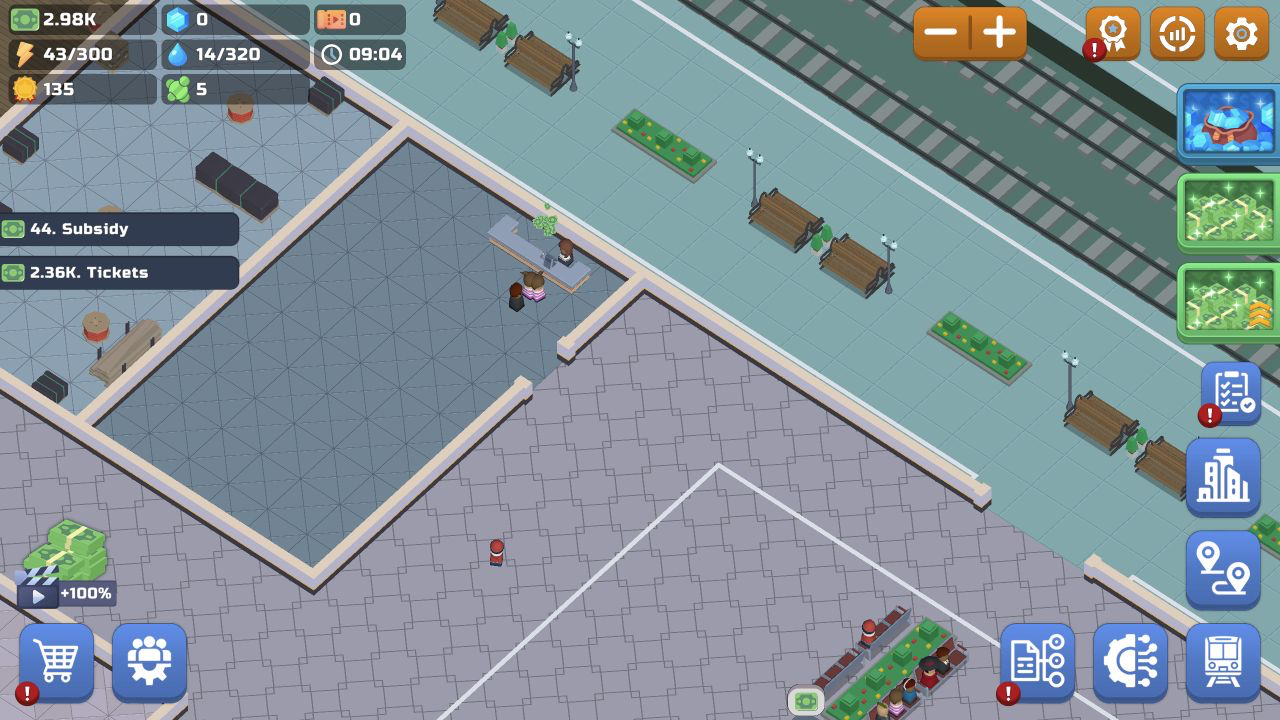
At 09:04, the result arrived in a much more useful form than a generic victory screen. The balance jumped to 2.98K, a ticket notification showed 2.36K, and a second notification added 44 in subsidy. The payout was below the route card's headline projection, which made passenger flow and service capacity feel consequential rather than decorative. That first departure completed the game's core promise: build the passenger chain, assign a train, wait for the clock, then reinvest a large lump of revenue.
The First Ticket Terminal Cost Most of My Starting Cash
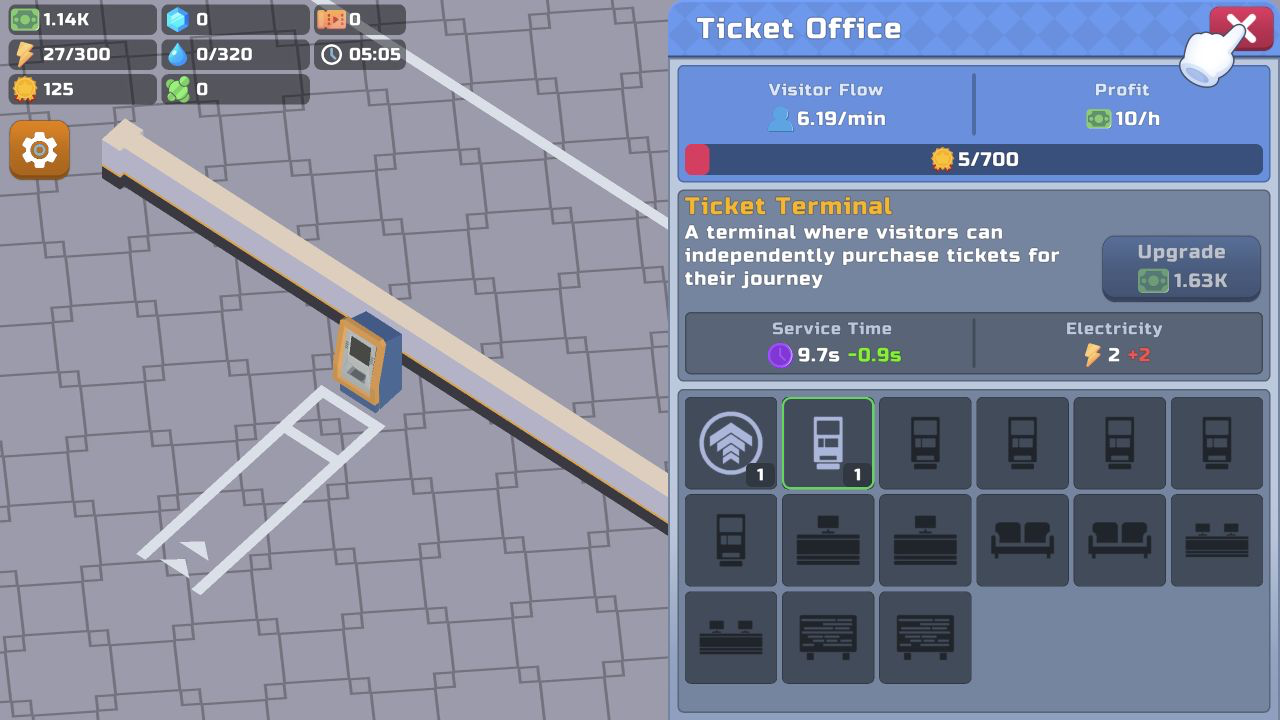
The tutorial does not ease into tiny purchases. Selecting the first Ticket Terminal and pressing Upgrade dropped my balance from 1.85K to 1.14K. In return, the Ticket Office changed from zero flow to 6.19 visitors per minute, electricity use rose from 25 to 27, and prestige increased from 120 to 125. Its progress bar moved to 5 of 700, while the next terminal upgrade jumped to 1.63K.
That early spend taught me to read the whole panel before clicking. Each facility card shows its purpose, current output, resource demand, and the improvement attached to the next level. The terminal displayed a 9.7-second service time with a possible 0.9-second reduction, but I could not afford the next tier. Rather than wait on one expensive counter, the tutorial pushed me to complete the rest of the passenger route.
Security Flow Was Slightly Faster Than Ticket Sales
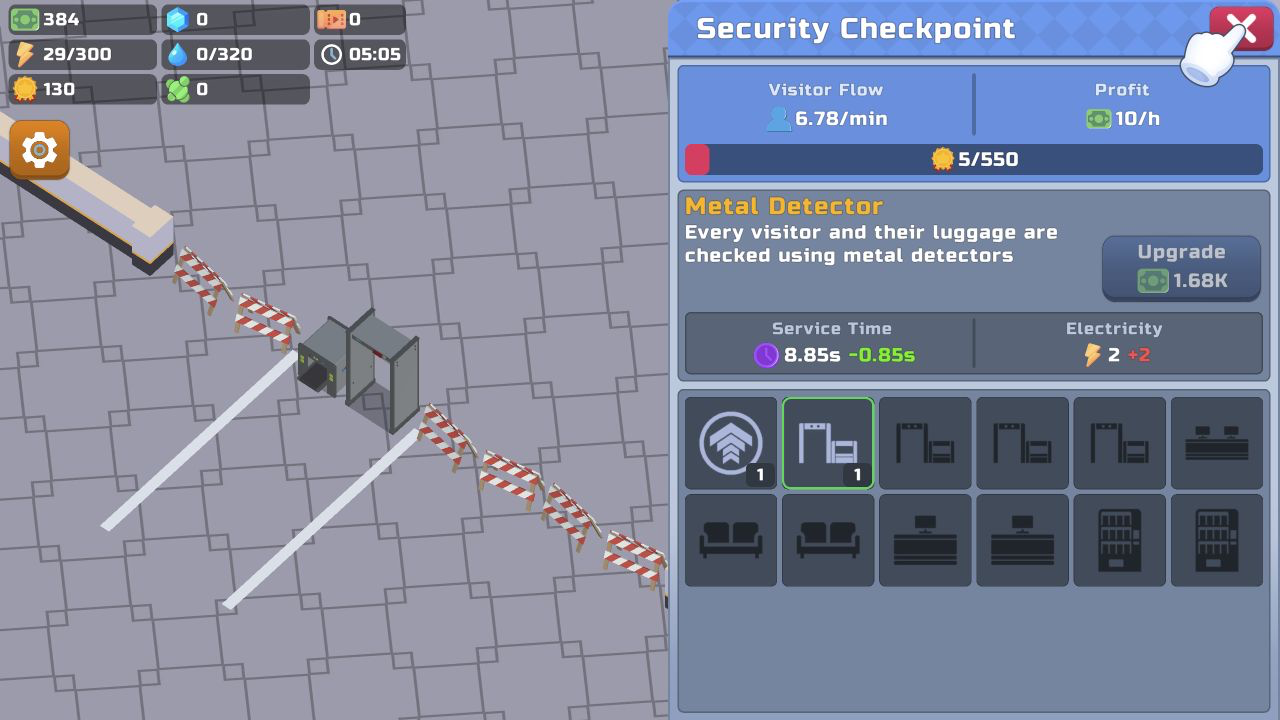
The next required room was the Security Checkpoint. Its first metal-detector upgrade reduced the balance from 1.14K to 384, raised electricity use to 29, and pushed prestige to 130. The new checkpoint processed 6.78 visitors per minute at an 8.85-second service time, slightly faster than the Ticket Office's 6.19-per-minute rate. A visible queue formed at the detector as soon as the panel closed.
This is where Idle Train Empire Tycoon begins to feel like a throughput puzzle rather than a collection of upgrade buttons. Improving security far beyond the ticket desks would not create more train passengers if the earlier counter remained slower. The useful comparison is not simply which upgrade number is green; it is which stage is restricting the entire route from entrance to platform.
A 22-Cash Rest Area Was the Best Early Value
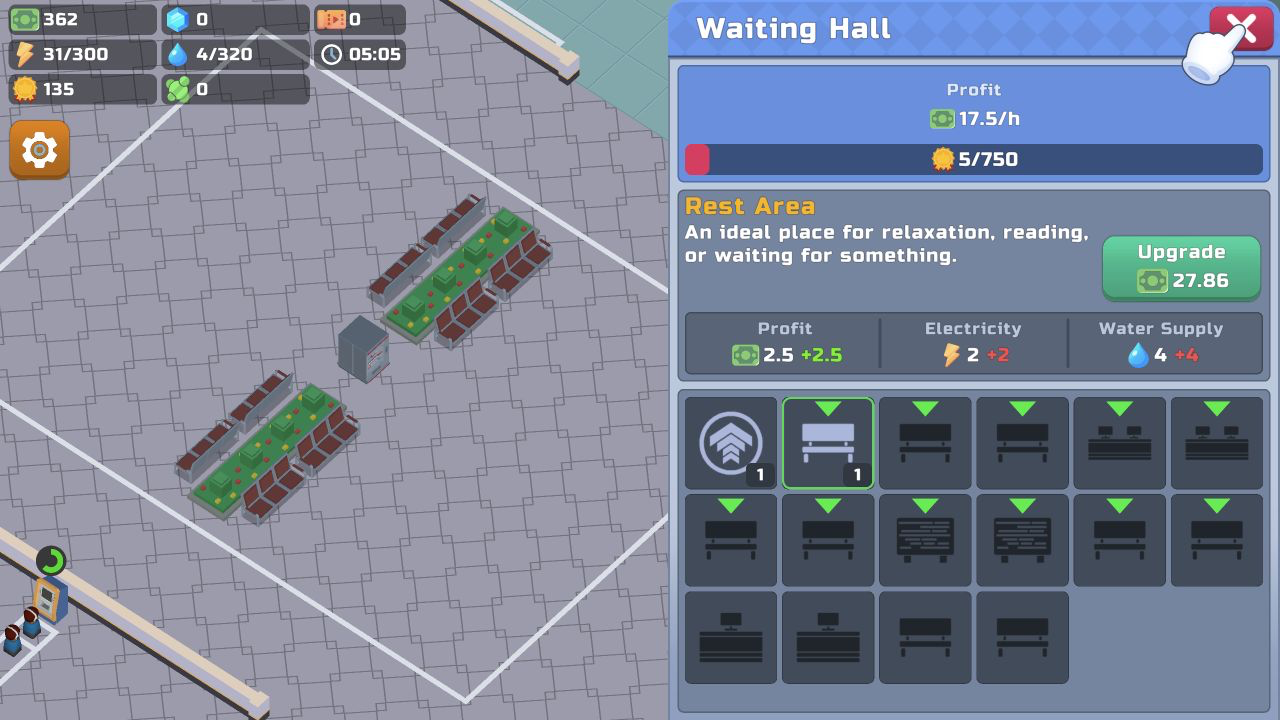
After two expensive service upgrades, the Waiting Hall provided a welcome change of pace. Its first Rest Area level cost only 22, moving cash from 384 to 362. Hall profit rose from 15 to 17.5 per hour, electricity climbed to 31, water use appeared at 4 of 320, and prestige reached 135. The next upgrade cost 27.86, so this was the first facility where another level looked immediately realistic.
The hall also makes the station visually satisfying. Rows of benches and planters fill what began as an empty outlined room, while passengers choose seats instead of standing in a featureless corridor. Early on, one cheap comfort upgrade is sensible; repeatedly polishing the waiting area before transport capacity improves would be much harder to justify.
The Café Added Revenue but Tightened Both Utility Meters
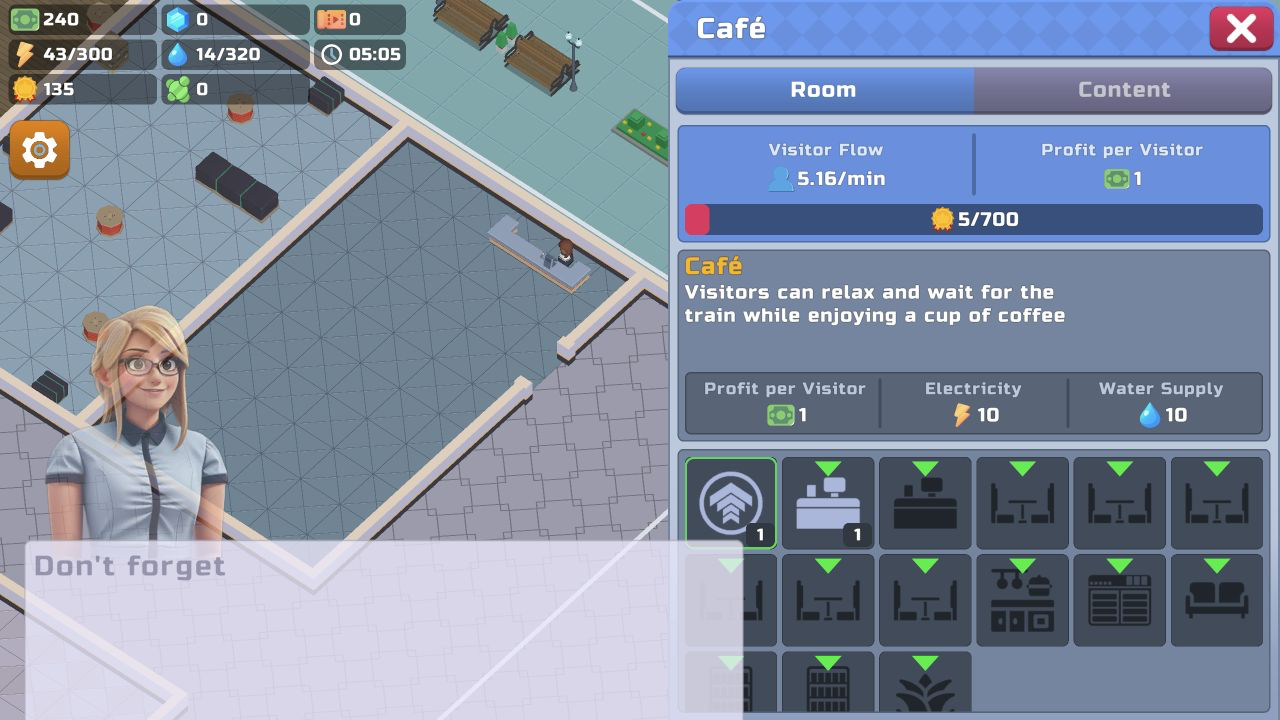
The café cost 480 to construct, cutting the balance from 720 to 240 after passive station income had replenished the account. Its room panel showed 5.16 visitors per minute and one unit of profit per visitor. The overall utility counters moved to 43 electricity and 14 water, so the café was not free money; it created another revenue stream while consuming capacity that future rooms will also need.
I liked that the room has separate Room and Content tabs. The empty shell is only the beginning, and the furniture grid makes it clear that counters, tables, seating, cabinets, and plants can be developed independently. The risk is scattering cash across attractive objects before the railway itself can carry enough people to justify them.
Onyx to Galador Was My First Scheduled Route
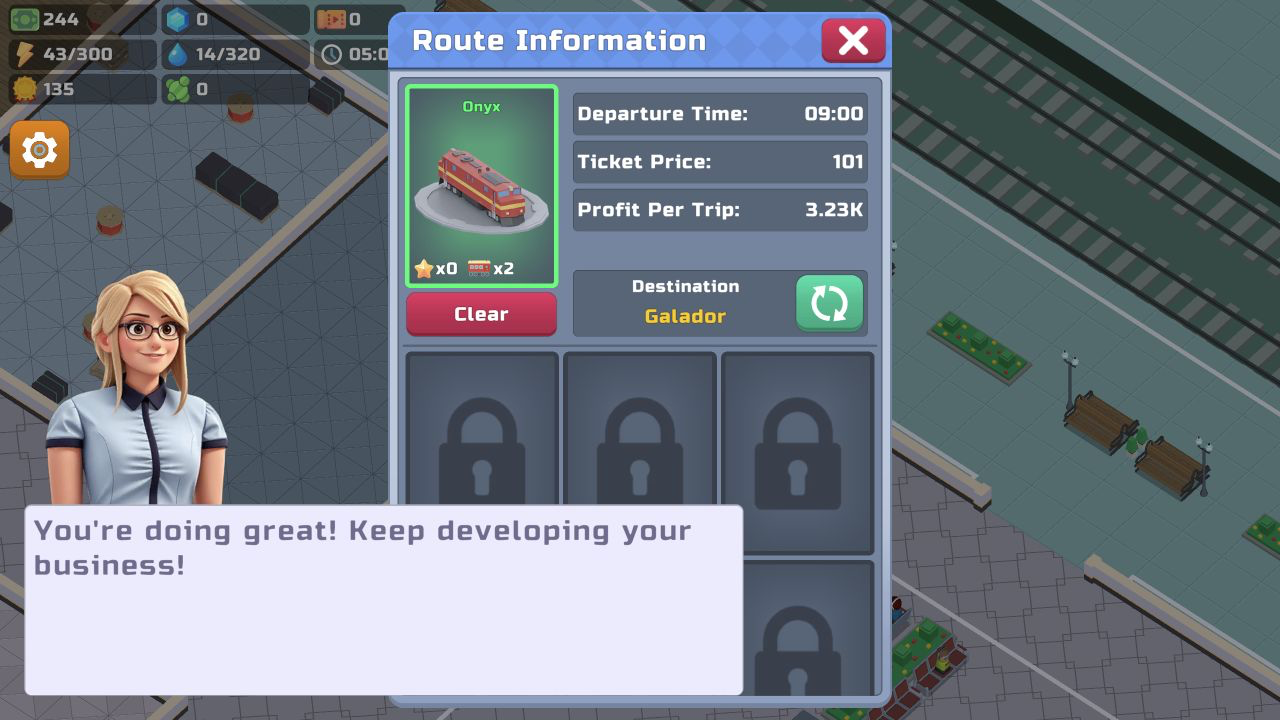
The Schedule screen is arranged in three-hour blocks. The tutorial pointed to 09:00, then opened a Route Information card with Galador already selected. Before choosing a train, the ticket price read 100 and profit was blank. Selecting Onyx changed the ticket price to 101 and filled in a projected 3.23K profit per trip.
Route setup is simple, but the waiting creates useful tension. The clock advanced from 05:05 toward 09:00 while ticket desks, security, the café, and subsidy payments produced smaller increments. I could watch passenger lines grow and the cash counter recover, yet the scheduled train remained the major payday. New players should set a valid route as soon as the tutorial permits, because room income alone is slow compared with the first ticket payout.
The Statistics Screen Exposed the Real Bottleneck
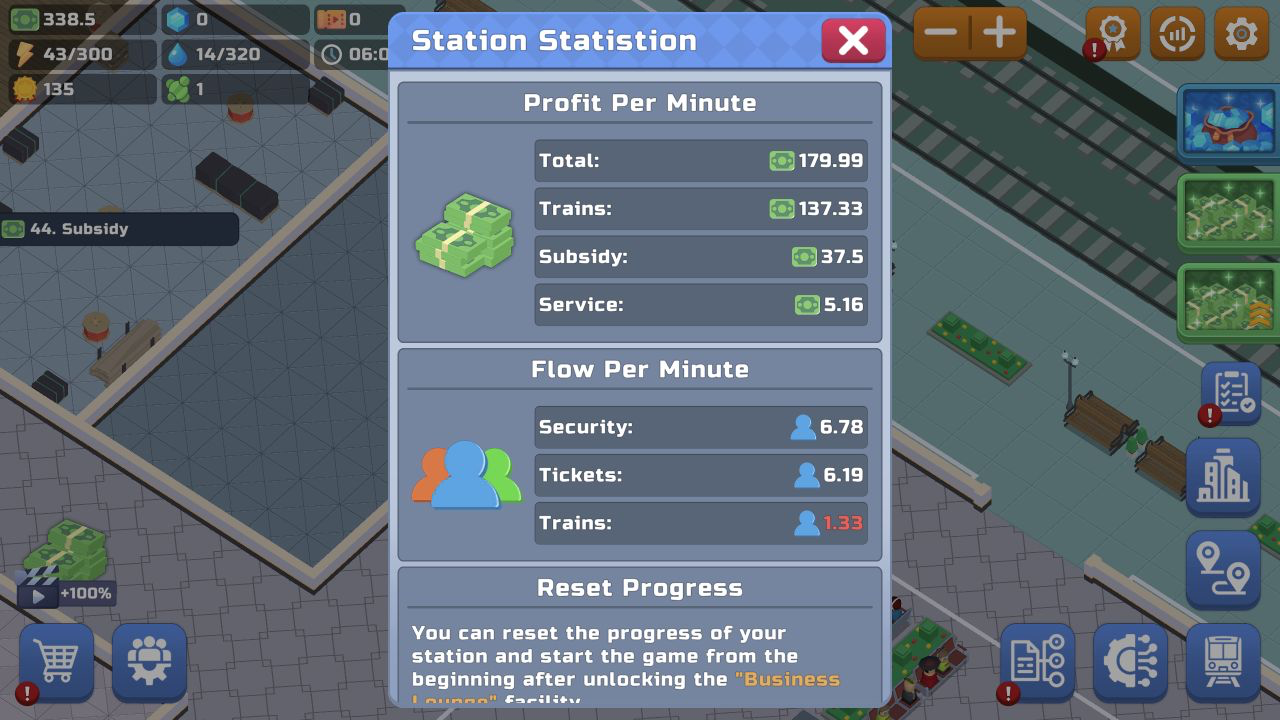
The best planning screen in the opening hour was Station Statistic. It reported 179.99 total profit per minute, split into 137.33 from trains, 37.5 from subsidy, and 5.16 from service. More importantly, its flow comparison showed 6.78 visitors per minute through security, 6.19 through tickets, and only 1.33 on trains. The train figure was red, making the bottleneck impossible to miss.
That comparison changed my upgrade priority. Spending another 1.63K on the Ticket Terminal would make an already faster stage even faster, while train flow remained a fraction of both entrance services. The stronger next investment is whatever expands departures, rolling stock, or platform capacity. Idle Train Empire Tycoon is at its best when the pretty isometric rooms support this kind of operational reading instead of replacing it.
Mobile Fullscreen Opened, but the First Precise Upgrade Was Blocked
The catalog declares Android, iOS, and desktop support, so I also opened the local Playflaming page at 390 by 844 and used its Play button. That correctly launched the fullscreen modal player: the back control and player boundary stayed visible, while the page's navigation and recommendation grid remained outside the gameplay capture. Center taps advanced the opening dialogue and opened the Ticket Office.
The next step did not survive the portrait emulation. The horizontal game was scaled into a narrow vertical frame, making the HUD and upgrade tiles tiny. Repeated touch targeting could not activate the highlighted terminal, and keyboard navigation did not provide a fallback. Because the mobile build cycle stopped there, I cannot recommend one device over another or make real-phone performance claims. The complete ticket-to-departure loop and all economic results in this review come from the desktop browser test.
One other piece of friction appeared before the desktop run: the Playgama export showed a short advertisement before loading the station. No further forced interruption appeared during the build-and-departure loop. A clapperboard control marked +100% remained available on the main HUD, but I left it untouched.
