The First Scene Is a Shop, but the Real Puzzle Is Its Width
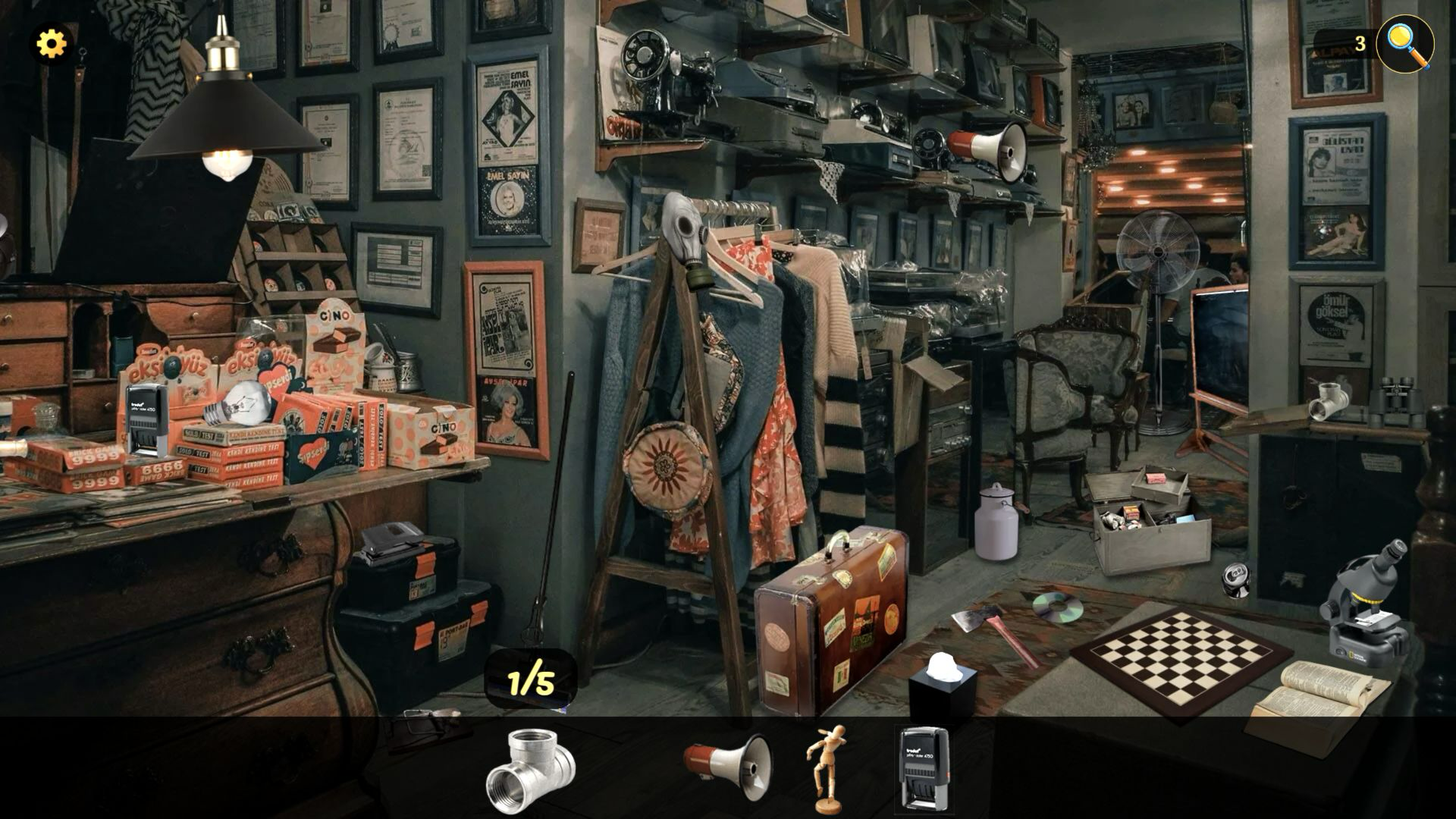
The first case opens in a vintage shop packed with framed certificates, boxes, clothing, lamps, cameras, furniture, and small tools. The target strip contains five objects: a silver pipe fitting, glasses, a megaphone, a wooden artist mannequin, and a black stamp. Three magnifying-glass hints sit at the top. The scene is wider than the visible frame, so searching only the opening view guarantees that some targets remain off-screen.
A short line of narration establishes the tone: the shop looks regular at first glance, but something more may be hidden behind the counter. That sentence describes the play style as well as the story. The challenge is not speed. It is learning to separate meaningful silhouettes from a deliberately busy photograph while remembering which side of the panorama has already been checked.

The Tutorial Glasses Teach Tapping; the Hand Teaches Panning
A large arrow points to the glasses on the central counter. Selecting them changes the counter from 0/5 to 1/5 and removes their icon from the target strip. The next tutorial gesture is more important: a hand demonstrates horizontal movement. On desktop I dragged the scene; in the fullscreen mobile player I swiped it. The panorama then exposed sections that could not be inspected from the opening position.
This two-step lesson is enough because the interface stays consistent. Found objects disappear from the list, the progress fraction updates immediately, and there is no timer competing with the search. The absence of time pressure made it practical to scan in layers—top shelves, counter surface, floor, then the extreme left or right edge—without resorting to random clicking.

The Pipe Fitting and Megaphone Reward Silhouette Matching
The pipe fitting was easier to identify by its curved silver outline than by surface detail. The megaphone was similarly readable because its flared cone looked unlike the rectangular boxes around it. These were my second and third desktop finds, taking the counter to 3/5 while all three hints remained unused. The order can differ on another run, but the object positions in the observed first scene were stable between desktop and mobile tests.
When an item icon is small, focus on proportion before color. The pipe is squat and reflective; the megaphone has a narrow handle and a wide mouth. Then pan until the background contains objects at roughly the same scale. Searching for a tiny stamp while looking at full-size chairs is inefficient, even if both are technically visible in the same panorama.

The Stamp Is Easy to Miss Because It Belongs on the Counter
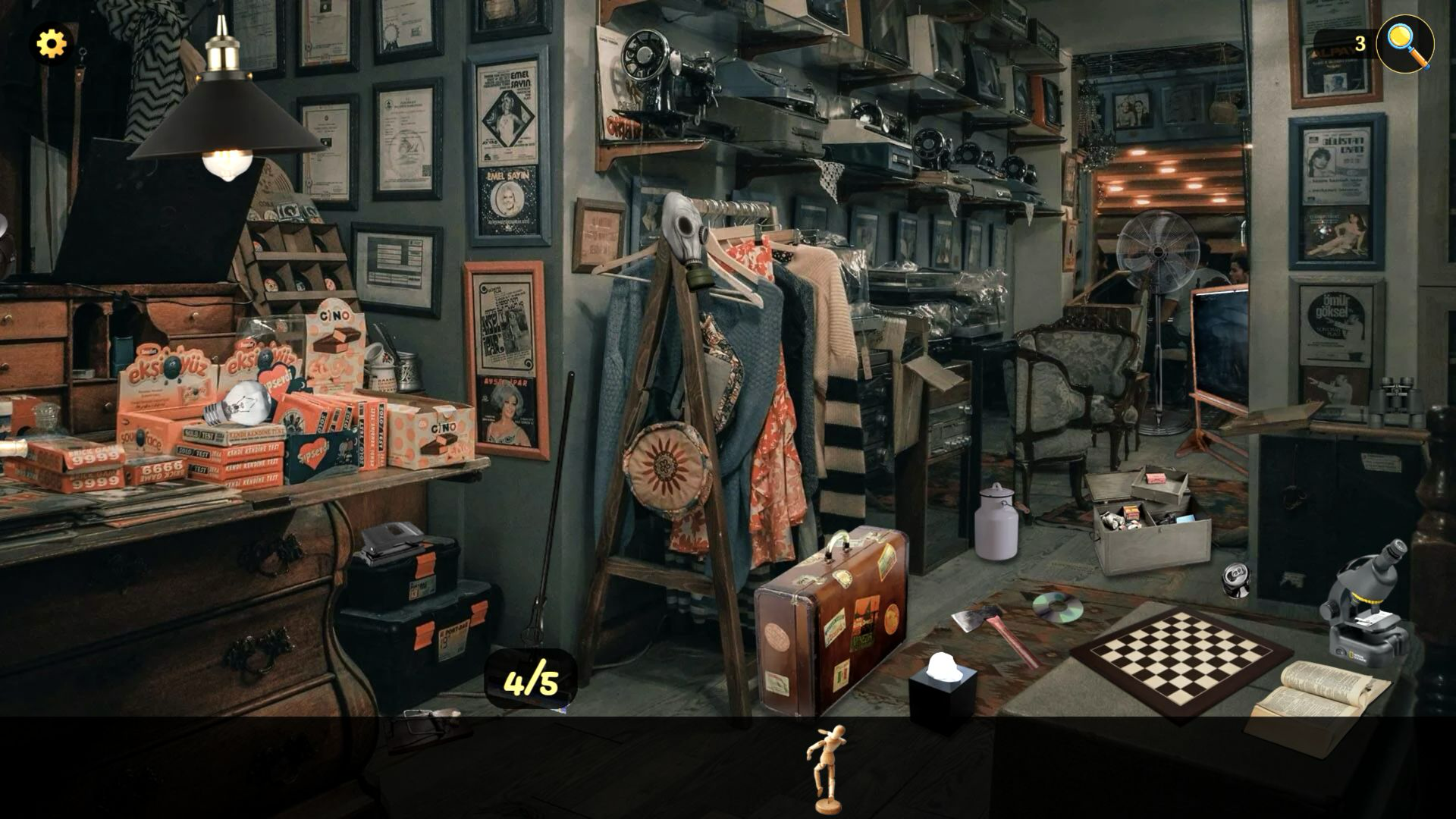
The black stamp was the most deceptive desktop target. Its rectangular body looked like store equipment and packaging, so it blended into a row of orange product boxes on the left counter. Clicking the correct upright object moved the progress to 4/5 and left only the wooden mannequin. This is a good example of semantic camouflage: the object is visible, but it looks as though it naturally belongs in the shop.
If one target remains, stop rescanning the whole scene at equal intensity. Ask where that object would plausibly be placed. A stamp belongs near a counter or paperwork; a mannequin belongs near clothing or display materials. This does not reveal the answer automatically, but it narrows a wide panorama into two or three credible zones.
The Wooden Mannequin Completes the Search and Advances the Case
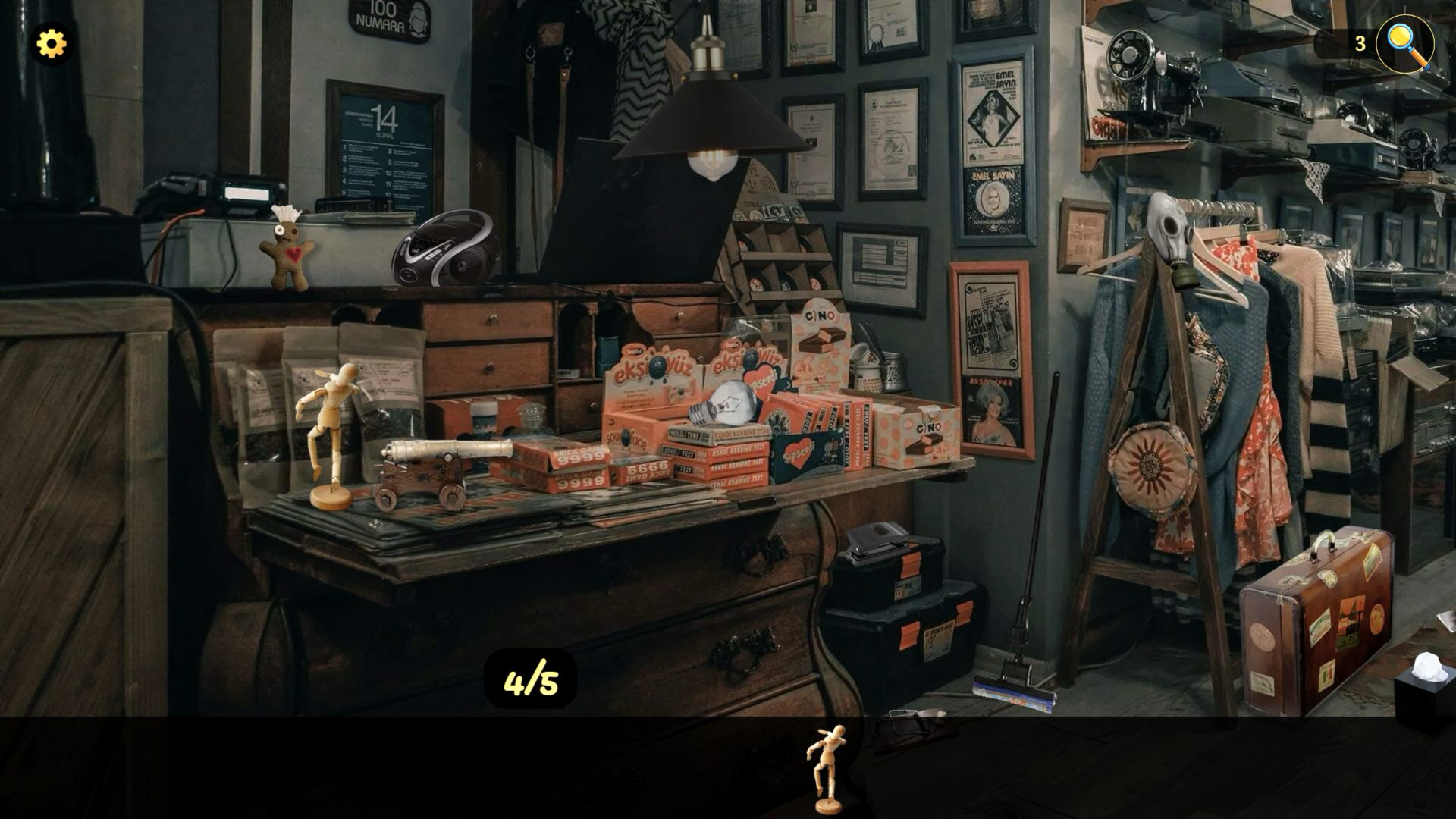
The final mannequin stood on a table and was readable by its jointed arms, legs, and round base. Selecting it completed the five-item list. The desktop route finished without spending a hint, while the mobile route used all three magnifiers during verification and still reached the same final object set. That difference made the hint system easy to understand: a hint shifts attention toward a useful area, but the player still has to identify and tap the object.
The game did not interrupt the first scene with a login or purchase prompt. It also did not grade the clear with stars or a time score. Completion itself is the result, followed by a story beat and a small progress increase. That structure suits players who want careful observation and atmosphere more than competitive optimization.
The Detective's Closing Line Is the Reward for Looking Closely
After the fifth find, a detective appears with the line, ‘This shop sold not only items but also its secrets.’ Returning home increased the hat-shaped progress counter from one to two and made Level 2 available in the observed flow. The story is light, but it gives the object list a reason to exist beyond clearing icons from a strip.
Mobile Play was tested in the real Playflaming fullscreen popup with the Exit game control visible; the screenshots exclude the page underneath. Portrait makes the scene feel naturally close, but the narrower window requires more panning and makes small targets easier to confuse with drag gestures. Desktop is my preferred format for pure inspection because more of the panorama is visible at once. Mobile is still a good fit for short searches, especially if you are comfortable using hints rather than preserving them as a perfect-run resource.

A Search Method That Works Better Than Random Tapping
My most reliable routine was to divide the panorama into three zones and scan each zone from top to bottom. First I checked shelves and framed walls for strong silhouettes. Next I inspected the counter, where packaging can disguise tools such as the stamp. Finally I checked the floor and furniture legs, then panned to the next zone. After every find, I reread the smaller target list instead of continuing to hunt for an object that had already disappeared.
Hints are most useful after a complete structured pass, not at the first moment of uncertainty. In the mobile verification run, each hint moved the scene toward a useful region, including the table with the pipe fitting and the highlighted wooden mannequin. That confirmed the hints are guidance rather than automatic clears. Players who enjoy calm visual puzzles, photographic scenes, and light detective narration are the best fit. Players who dislike panning or very small targets may prefer a larger desktop display.
The first case also sets a fair expectation for later play. It asks for five clearly illustrated objects, teaches both input methods, and ends with visible story progress instead of stretching the tutorial. The difficulty comes from camouflage and scene width rather than a countdown. That makes the game easy to pause and resume, but still rewarding when the final silhouette suddenly becomes obvious among objects you have already looked past several times.