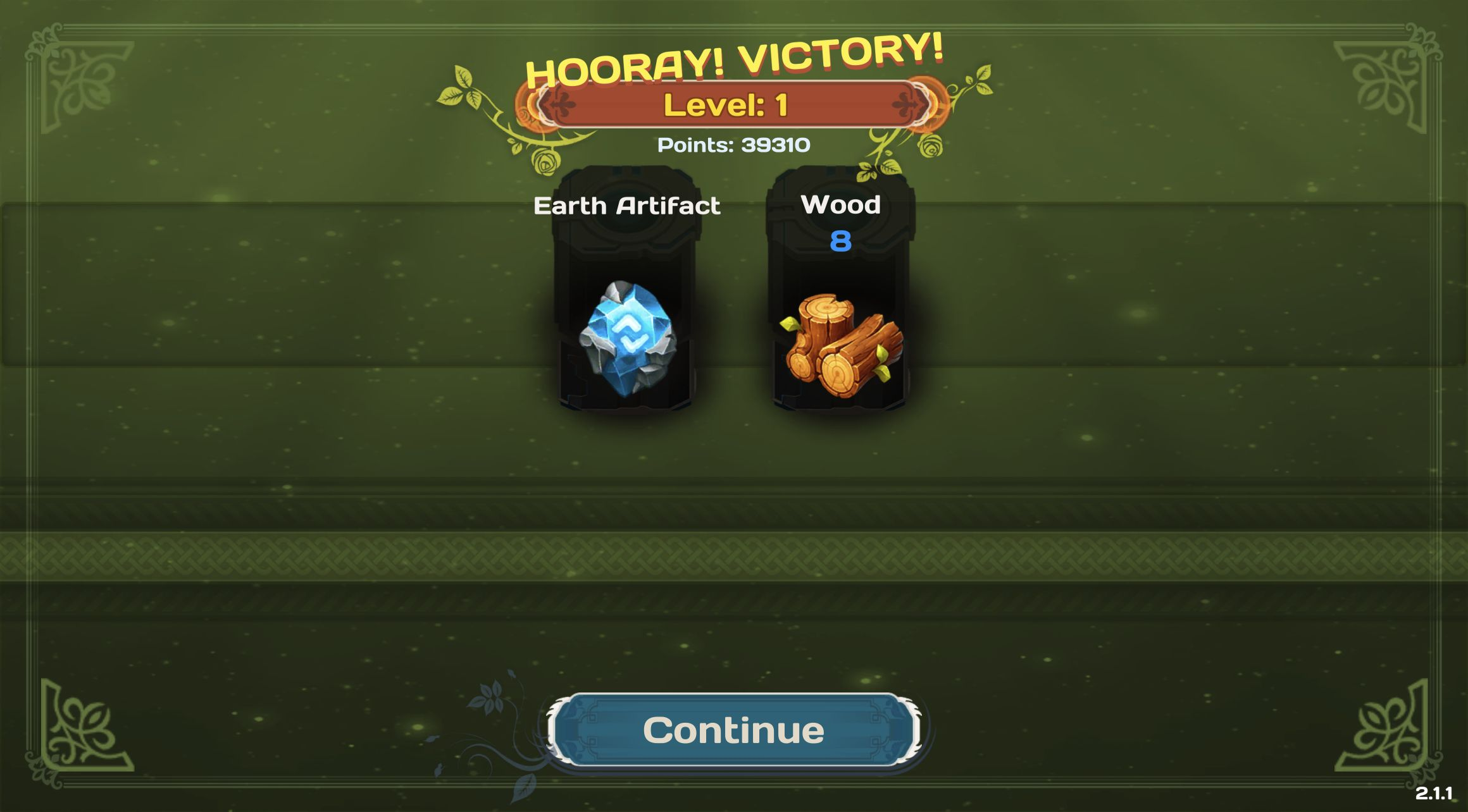
Level 1 finished with 12 moves left and 39,310 points
Diamant: Match 3 Sky Story gave me a concrete opening challenge: collect 15 yellow gems in 23 moves. The tutorial controlled the first swaps, but the rest of the board still demanded ordinary match-three planning. I completed Level 1 with 12 moves remaining. The result panel converted that efficient finish into 39,310 points, an Earth Artifact, and eight units of wood, then offered a plain Continue button.
That result captures the game's two-part appeal. The board is a brisk color-matching puzzle, while the artifact and wood immediately point back to the floating island. A clear is not only a score chase; it supplies objects and materials for a visible restoration project. The first level is forgiving enough for a beginner, yet preserving more than half of the move budget made the finish feel earned rather than automatic.
A four-gem match made the first useful power-up
The opening tutorial first spent one move on a blue three-match, reducing the counter from 23 to 22. Its next forced swap aligned four yellow gems vertically. That single action pushed the objective from 15 yellow gems to 11, lowered the move counter to 21, and created a striped electric yellow gem near the bottom of the board. The charged piece was much more useful than a decorative combo flash: matching through it cut the remaining yellow target from 11 to eight.
Once the hand prompts stopped, I worked normal matches around the objective instead of chasing every possible cascade. Yellow matches reduced the target to five and then two before the final set cleared it. The practical lesson is to treat the color goal as the priority and specials as a way to reach it faster. A spectacular move in the wrong color is still less useful than a modest match that removes the last required pieces.
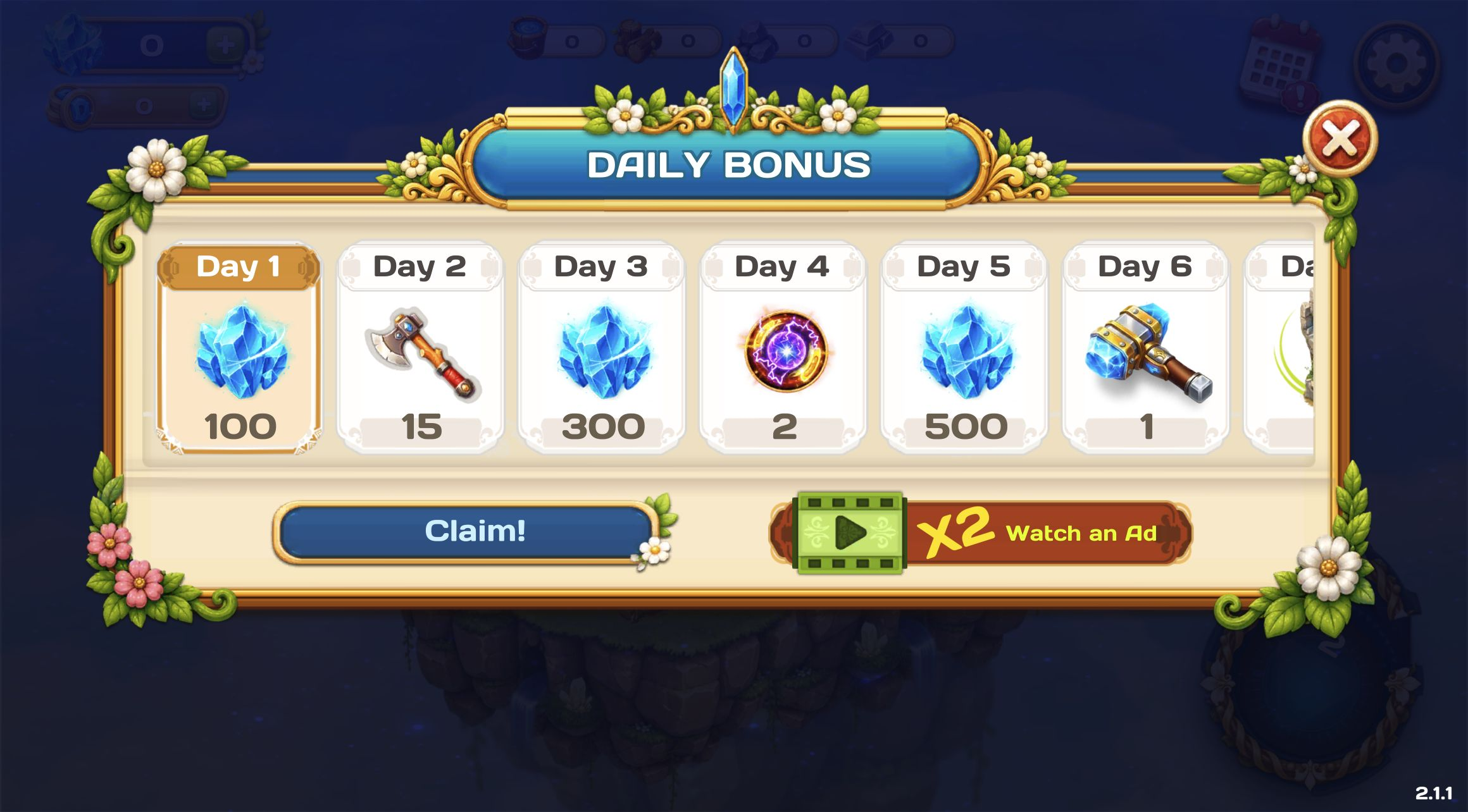
The normal Day 1 claim paid 100 crystals
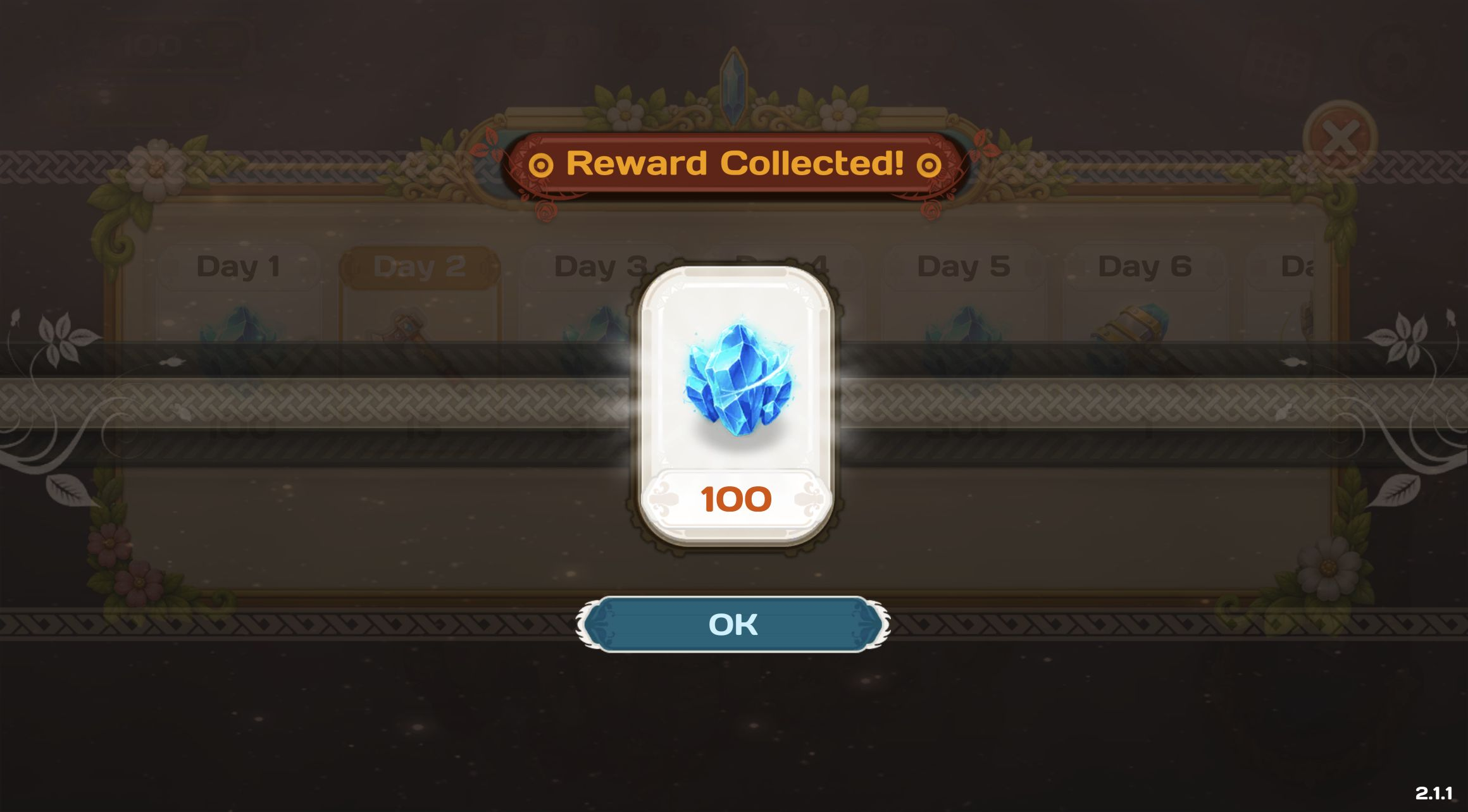
Continuing from the victory opened a daily bonus calendar. Day 1 offered 100 blue crystals, with two routes underneath: Claim or a prominent option to watch an ad for twice the reward. I chose the ordinary Claim button. The next panel confirmed Reward Collected and displayed exactly 100 crystals, so the base reward did not require a video.
This is a reasonable piece of free-to-play design, although the doubled offer is visually louder than the standard choice. Players who only want the puzzle-and-building loop can continue with the smaller award. The calendar also previews later rewards such as tools and additional crystals, but I did not advance the calendar or value those future items. For this session, the verified economy was simple: 100 crystals from Day 1, eight wood from Level 1, and no purchase required.
The Earth Artifact made the island reward visible
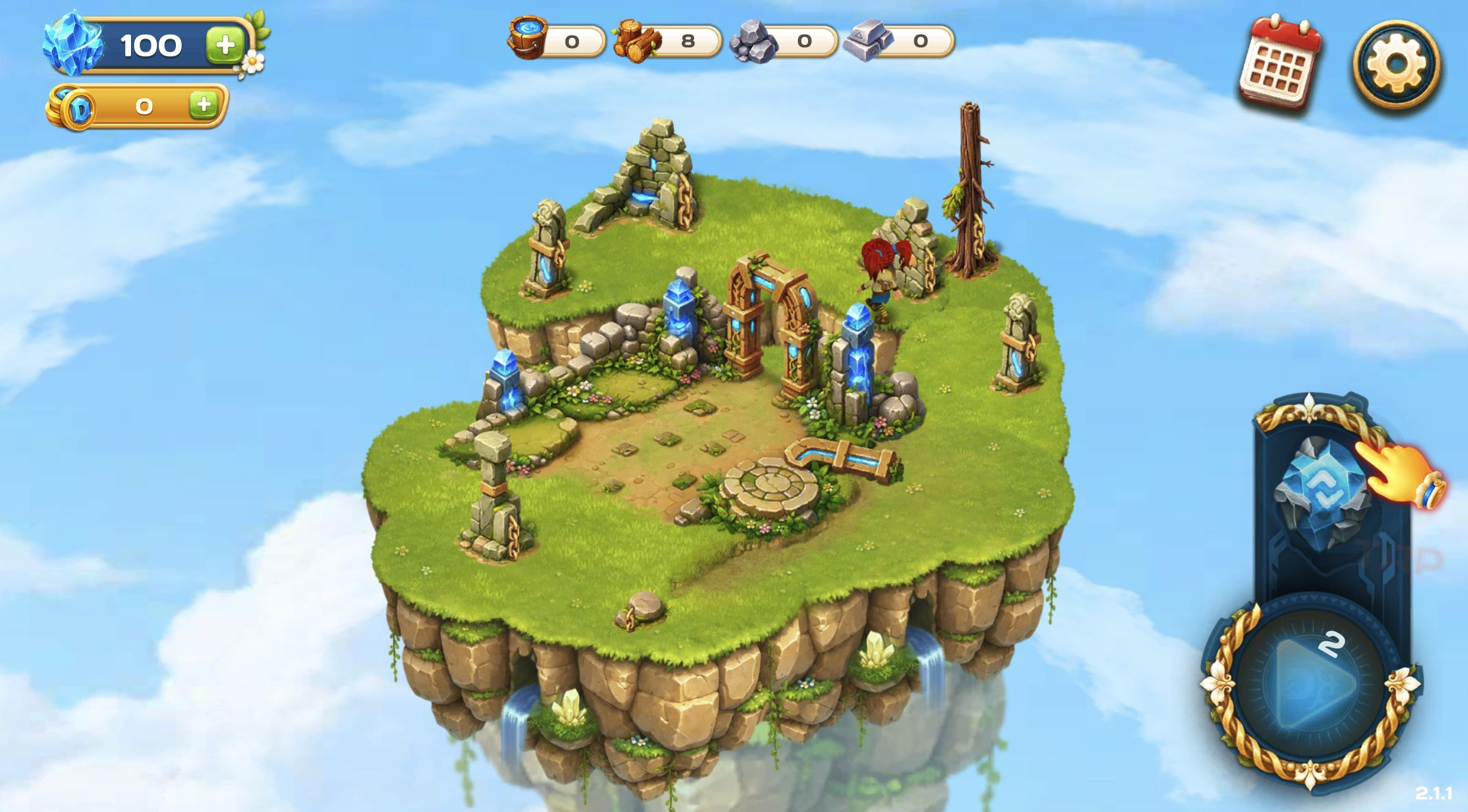
Back on the floating island, the top bar now showed 100 crystals and eight wood instead of the initial row of zeroes. More importantly, the Earth Artifact appeared in a large guided panel on the right. Tapping it advanced the island scene, giving the Level 1 reward a purpose beyond a line on the victory screen.
The island is compact but easy to read. Ruined arches, inactive crystal pillars, a dead tree, and broken stonework surround the central path. That makes restoration progress legible even before every system has been explained. The match-three half provides short goals; the island supplies the longer reason to complete them. Players who only care about increasingly difficult boards may find the extra handoffs slow, but anyone who likes visible rebuilding gets an immediate payoff.
Restoration changes the scene instead of only raising a number
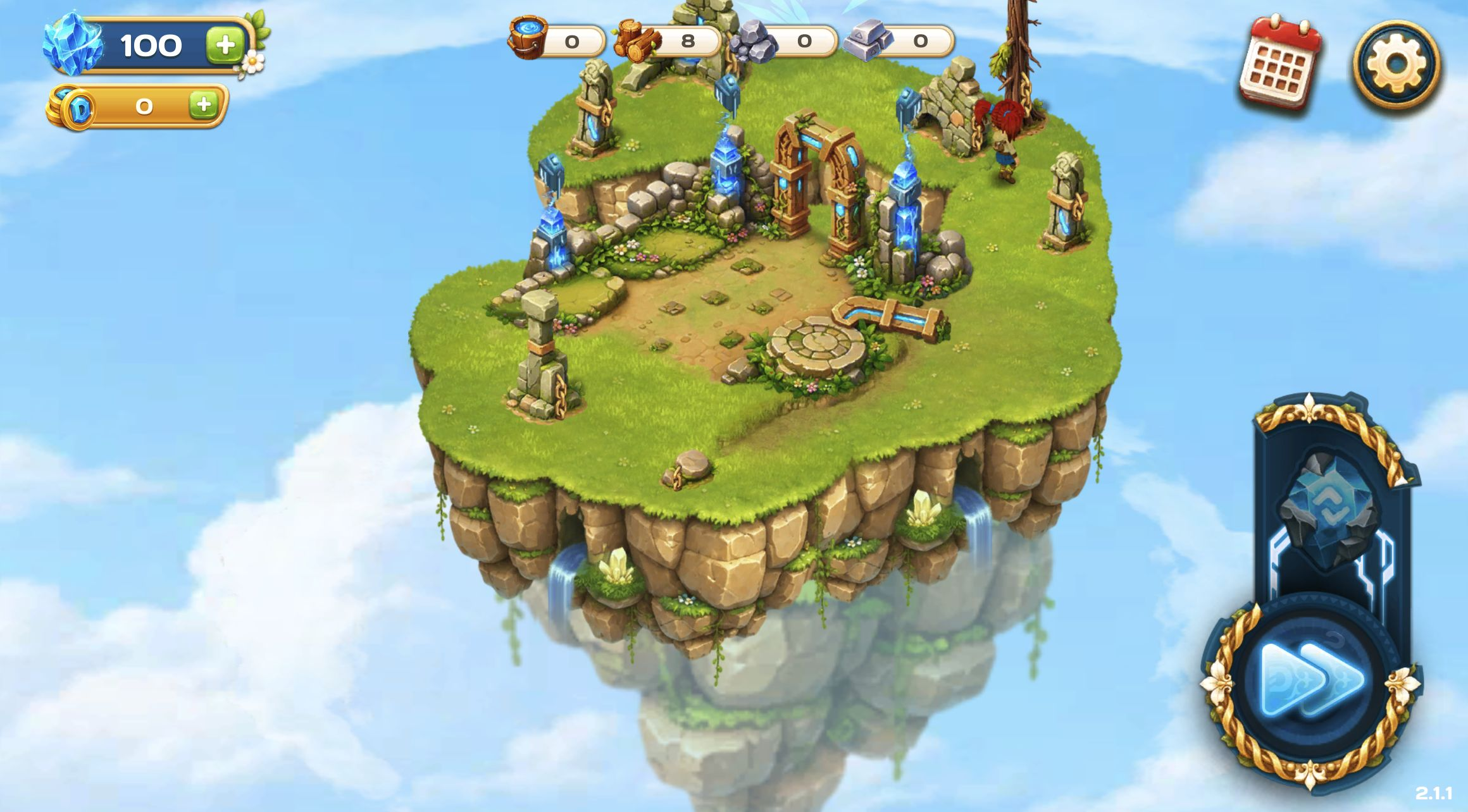
Using the artifact altered the island rather than merely filling an invisible progress meter. Blue structures around the ruined entrance lit up, the central area looked more complete, and the guided panel changed from the artifact icon to a double-arrow control. The resource bar still showed the eight wood earned from the level, so this step did not silently consume the material before the game introduced a building choice.
That visual feedback is the strongest reason to keep playing after the easy first puzzle. The island begins damaged enough that each repaired element has room to stand out. The drawback is that the opening uses several consecutive overlays—victory, daily reward, artifact prompt, restoration—before the next board. It suits relaxed progression better than rapid-fire match-three sessions.
Level 2 replaces color collection with eight glass shards
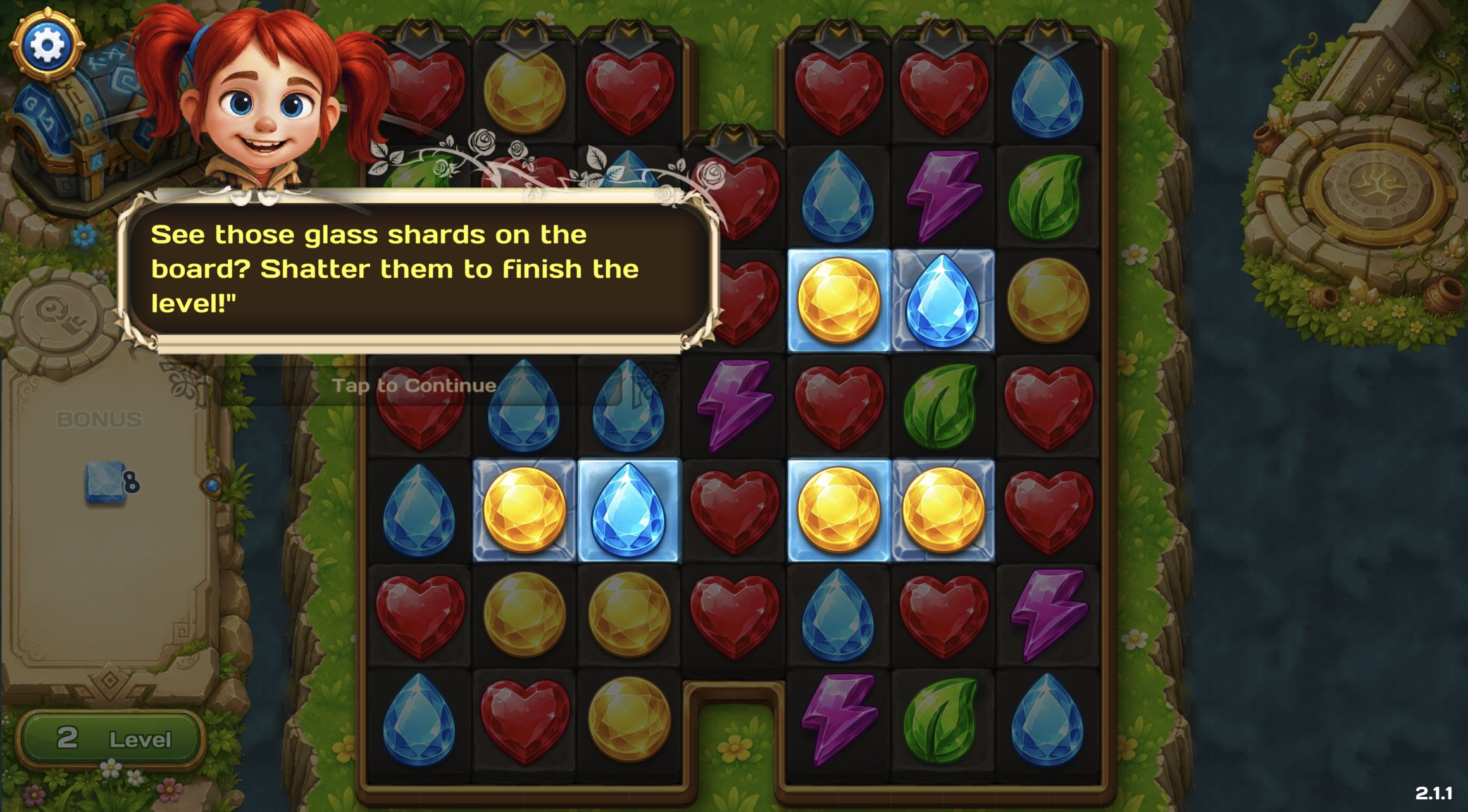
The next board did not simply ask for another gem color. Level 2 introduced glass shards beneath selected pieces and set the target at eight. The tutorial wording was direct: shatter the glass to finish the level. That changes how the board should be read, because a match only helps the objective when it crosses one of the highlighted backing tiles.
My best beginner advice from the opening is to scan the objective panel before making an attractive match. On Level 1, that means favoring yellow and arranging a charged piece where it can join a valid swap. On Level 2, it means working around the glass positions instead of clearing open areas with no shard underneath. The game communicates both goals clearly; the challenge is resisting cascades that look productive but spend moves away from the target.
The mobile player opens in a true full-screen modal
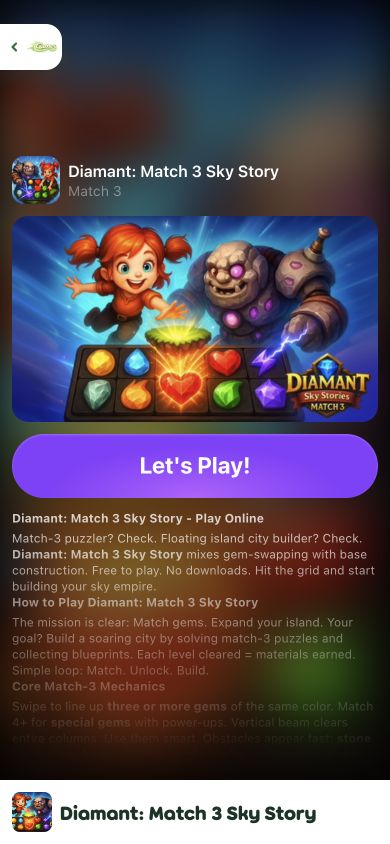
On a 390-by-844 touch viewport, the local Play button opened a full-screen modal and kept a visible back control at the upper left. The provider launcher filled the remaining space with the game artwork, title, description, and a large Let's Play button. Tapping that control advanced to the game after the preroll, so the mobile route was not merely a static preview.
The launch screen is comfortable to operate in portrait, but it adds another step before play. The preroll also introduces a wait on top of the game's own loading sequence. These access costs matter for a casual puzzle meant to fit a short break. Once the game appeared, touch controls and the main continue button were large enough to target without zooming.
Portrait play works, but desktop shows the island more comfortably
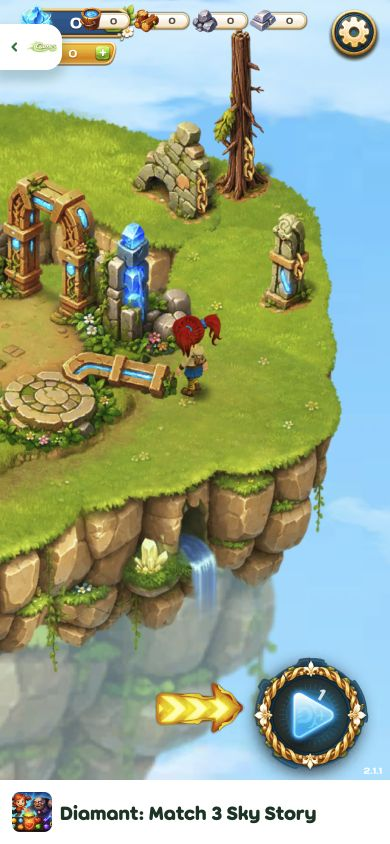
The live island rendered inside the same portrait modal with version 2.1.1 visible in the corner. Resource counters remained across the top, the settings control stayed reachable, and the large play arrow fit near the bottom. The island itself was cropped into a narrow vertical slice, so the mobile view emphasizes the character and current control while hiding much of the wider floating landscape.
I would choose desktop for the first session because the full board and island have more breathing room, and the transition between puzzle and restoration is easier to understand at a glance. Mobile is a workable way to launch and continue, but I did not complete a second full level there and will not claim identical board precision. Overall, Diamant is best for players who want gentle match-three objectives tied to a visible rebuilding loop; score-only puzzle fans may find the reward screens and island prompts more elaborate than they need.