My First Two Defenders Were Nowhere Near Enough
My first Mission 1 attempt in Chicken Merge ended with an empty wall meter and zero stars. I had rushed into battle after placing only two Level 2 chickens on the top two stumps. That looked respectable while the first small rats crossed the right edge, but the wave soon spread across all six rows. The unguarded lanes delivered zombie animals straight to the barricade, and the two shooters could not correct a bad formation once the field became crowded.
The retry told a completely different story. I returned with every stump occupied, including two newly unlocked Level 3 chickens, and upgraded the wall before pressing Mission 1 again. Six streams of yellow projectiles met rats and larger green crocodile-like enemies well away from the fence. The result was a three-star win worth 50 coins. Chicken Merge is bright and silly, but that loss-to-win swing revealed a real tower-defense rule beneath the cartoon chickens: coverage matters before raw spectacle.
The Tutorial Starts with 800 Coins and a 10-Coin Recruit
The session began at 0% completion with 10 gems, 800 coins, no passive income, twelve reserve squares on the left, and six wooden stumps beside a 200-point wall. The first recruit cost 10 coins. Tapping that large blue button dropped a Level 1 gunner into the reserve grid and moved completion to 0.02%. A second recruit reduced the balance again, raised the next price to 11, and produced the pair needed for the first merge.
That large opening balance removes the usual idle-game wait. Chicken Merge wants the player to learn by building immediately, and recruitment remains a visible tradeoff because the price rises as more birds are bought. The button increased from 10 to 11 during the tutorial, reached 12 after the opening steps, and later showed 16 after I filled most of the reserve. Coins also began arriving passively as the roster grew, first at 1 per second and eventually 2 per second, so preparation continues to pay even before a mission starts.

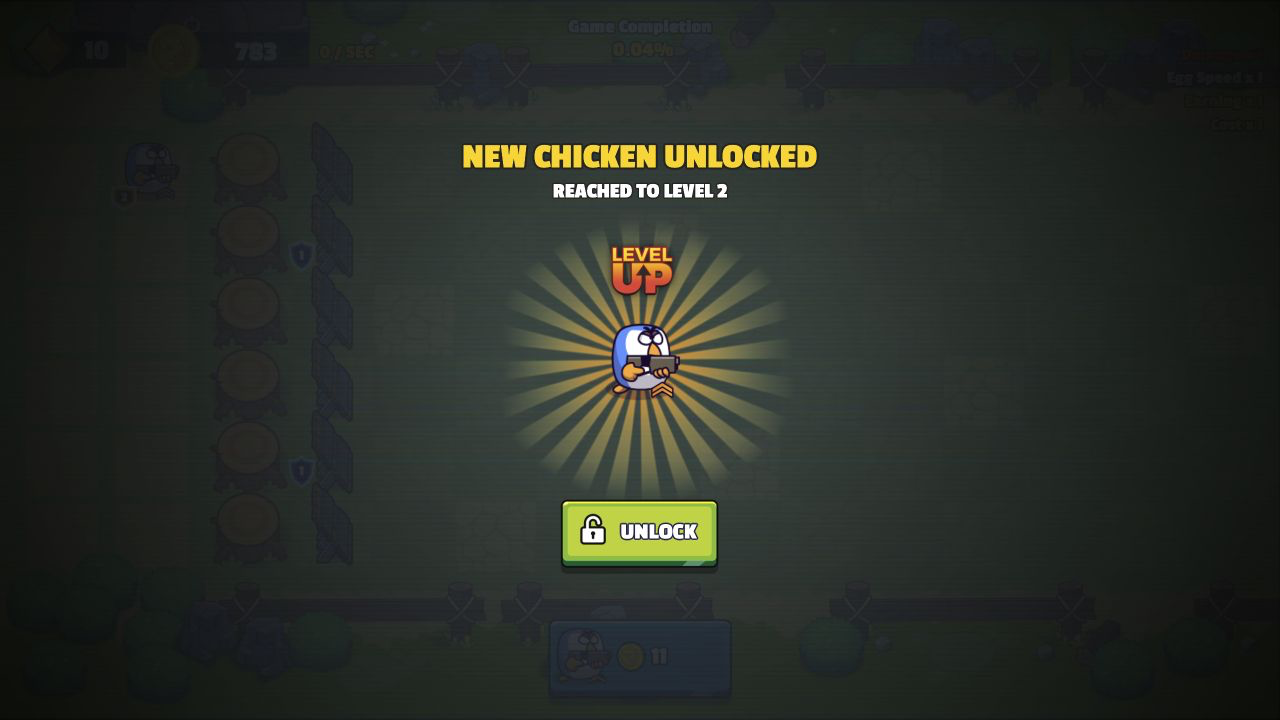
One Drag Turned Two Level 1 Birds into a Level 2 Gunner
Merging uses direct drag-and-drop rather than a separate upgrade menu. I dragged one Level 1 bird onto the other and received a full-screen New Chicken Unlocked panel for Level 2. After pressing Unlock, the merged chicken returned to a single reserve square with a clear level badge. The next tutorial step asked for one more recruit, then instructed me to drag the Level 2 unit onto a stump. That movement from reserve to firing line is the core loop in miniature: recruit, match equal levels, then decide which lane deserves the stronger unit.
The desktop controls are simple, though not perfectly frictionless. One later merge failed to register when I released near the edge of the target square; reversing the drag and dropping directly onto the other bird worked. The readable level badges prevented that miss from becoming confusing. For a long recruitment chain, deliberate center-to-center drags are safer than quick diagonal flicks.
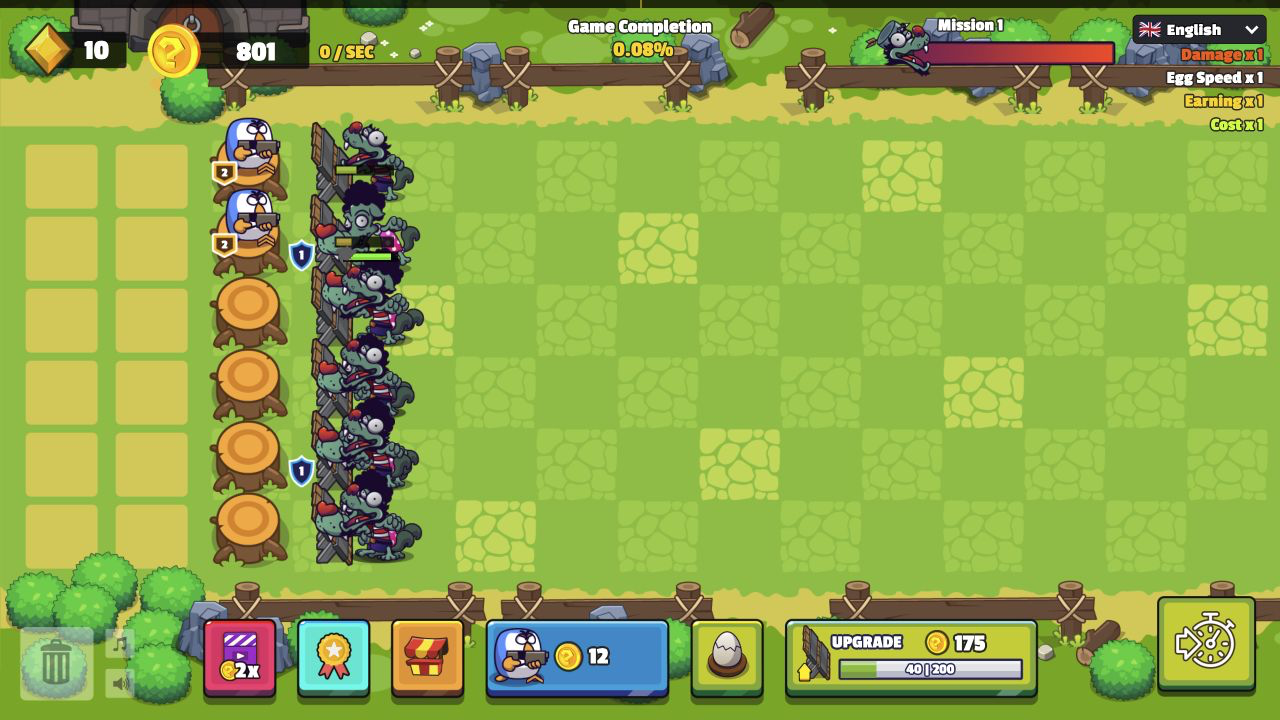
At 40 of 200 Wall Health, the First Mistake Was Already Decided
Mission 1 did not scale itself down to my tiny formation. Rats arrived first, followed by larger green enemies with dark hair and pink clothing. The mission bar at the top kept filling as the defenders fired, but enemies that survived to the left began striking the wall. Its display dropped from 200/200 to 178, then to 40. With only the first two lanes staffed, most of the attack had no chicken shooting into it at all.
This was a useful failure because it exposed what the board communicates visually. Each stump lines up with one horizontal route. A high-level bird on one stump cannot substitute for an empty row elsewhere when several enemies arrive together. New players should fill the six positions before chasing an impressive single unit, then concentrate extra merge levels in the rows that receive the heavier targets. The game allowed the battle to finish automatically, so the important decisions had already happened on the preparation screen.
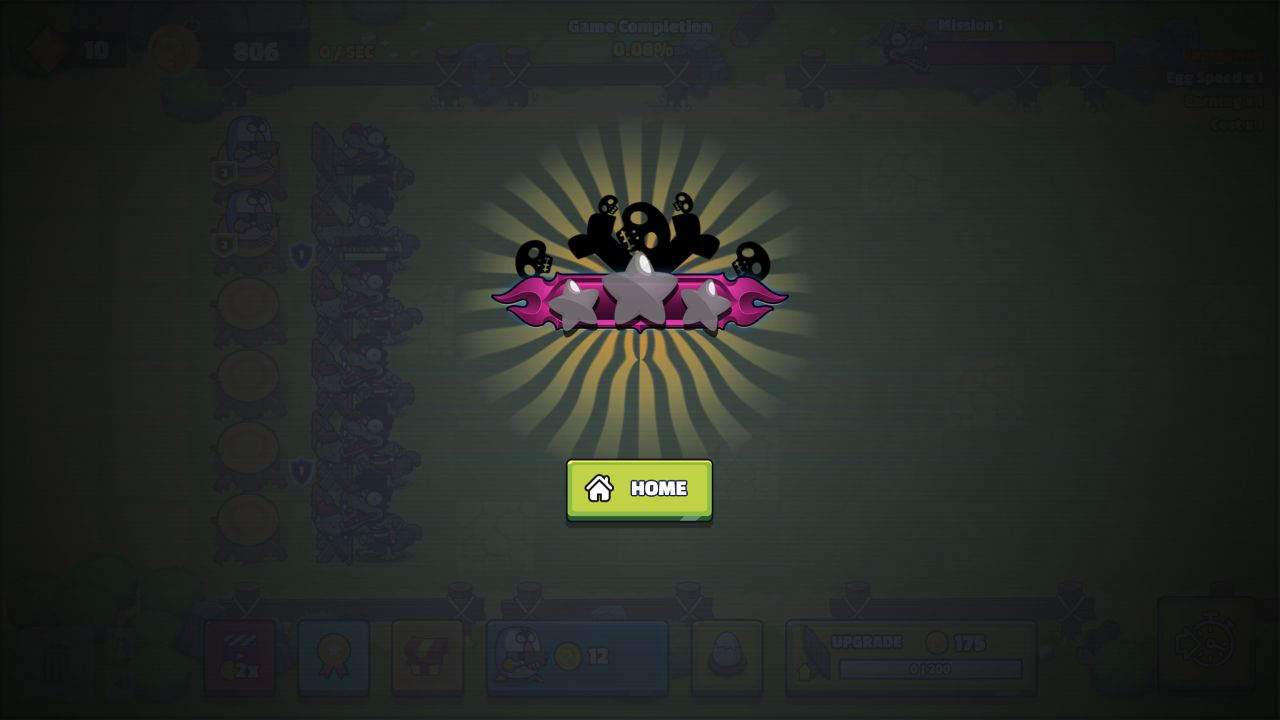
Zero Stars Sent Me Home, but It Did Not Erase the Roster
When the wall reached zero, the result panel showed three empty stars and only a Home button. There was no confusing revive sequence and no forced purchase prompt. Returning home preserved both Level 2 chickens and restored the wall to 200/200, while the coin balance continued to provide enough room for a serious rebuild. Failure cost time, not the roster I had already merged.
That makes experimentation much less punishing than the crowded battlefield suggests. The weakest strategy is repeatedly launching the same underfilled board and hoping the automatic shooting behaves differently. The better response is to use the safe home screen: recruit enough matching pairs, merge them before deploying, and spend on the wall only after understanding why the previous line collapsed.
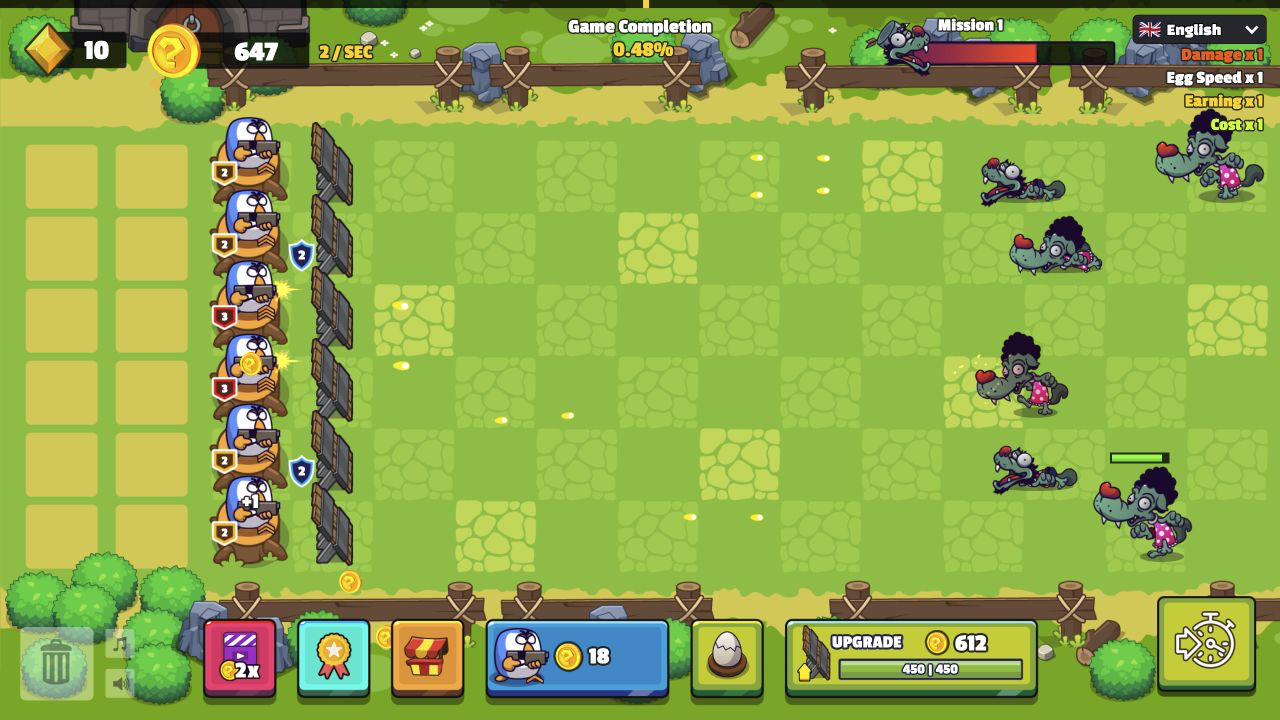
Eight Fresh Recruits Became Two Level 3 Chickens
I bought eight more Level 1 chickens, paired them into four Level 2 units, and then merged those four into two Level 3 gunners. The first Level 3 combination triggered another unlock panel. It also made the growth curve tangible: reaching Level 2 costs two base birds, while one Level 3 represents four. Every higher badge therefore consumes more reserve space and more of the increasingly expensive recruit button.
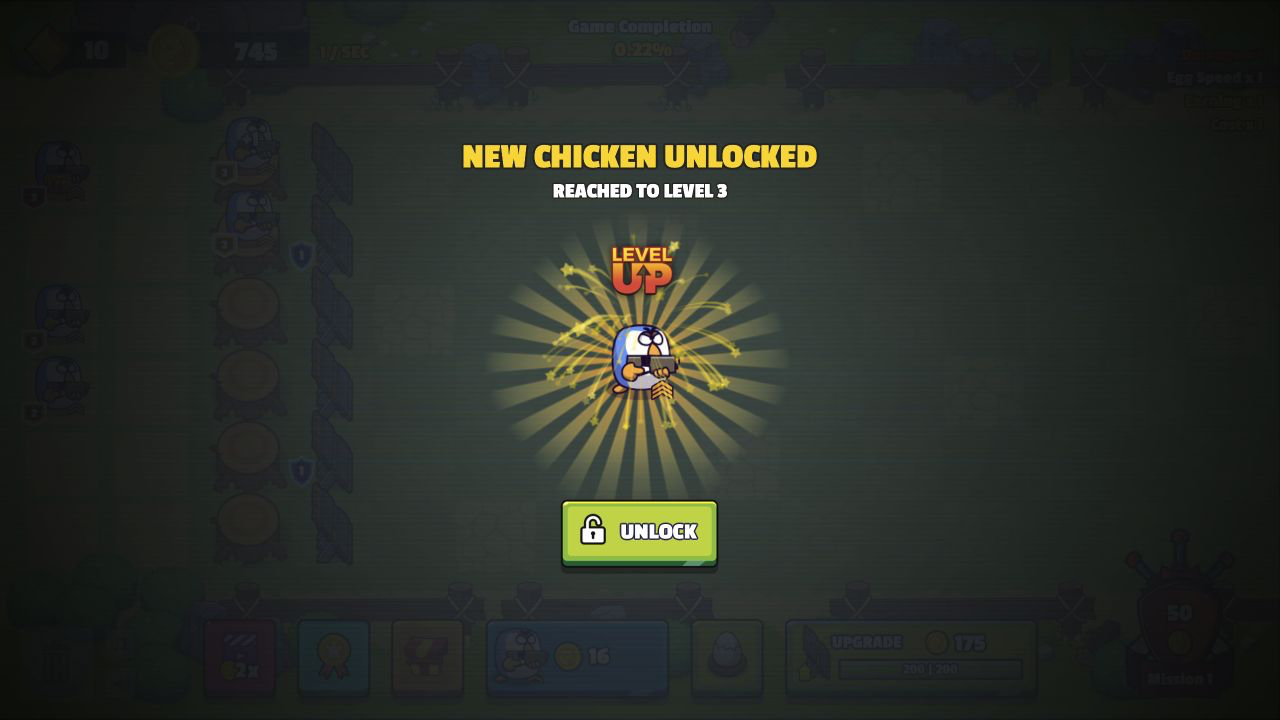
For the retry, I kept the original two Level 2 defenders, placed the two Level 3 birds in the middle rows, and recruited four more Level 1 birds to make two additional Level 2 defenders. The finished formation read 2, 2, 3, 3, 2, 2 from top to bottom. Filling all six stumps raised passive earnings to 2 per second and ensured that every enemy lane had a shooter before Mission 1 began again.
A 175-Coin Wall Upgrade Raised Durability from 200 to 450
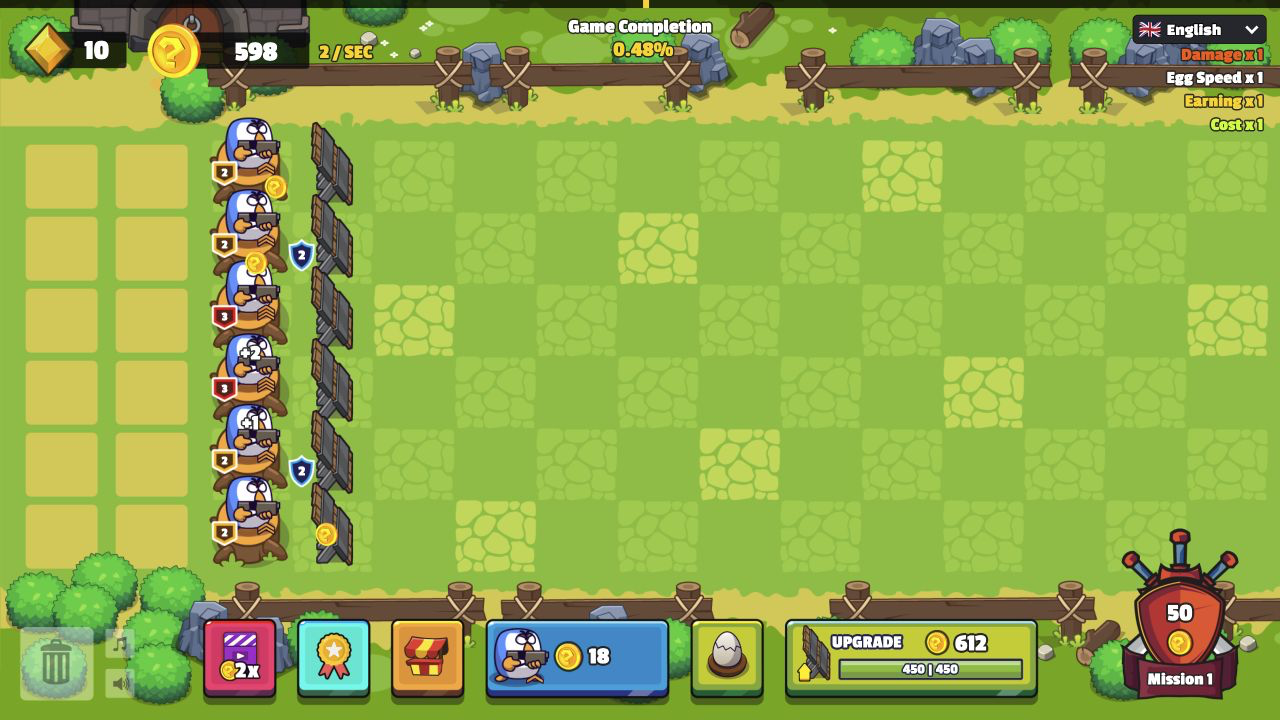
The wall upgrade was the clearest single purchase in the run. Spending the displayed 175 coins changed its shield badge from 1 to 2 and lifted health from 200/200 to 450/450. The next price jumped sharply to 612, so the first purchase is generous but repeated defensive scaling will compete with recruitment. Game completion also rose to 0.48%, showing that infrastructure contributes to overall progress alongside new chicken levels.
This upgrade was insurance, not the entire solution. An extra 250 health would have delayed the first collapse, but four empty lanes still would have allowed a large crowd to reach the fence. The successful order was stronger because it solved both problems: fill all six firing positions first, add two Level 3 units, then buy the affordable first wall tier with the remaining balance.
The Retry Earned Three Stars, 50 Coins, and an Optional Video Offer
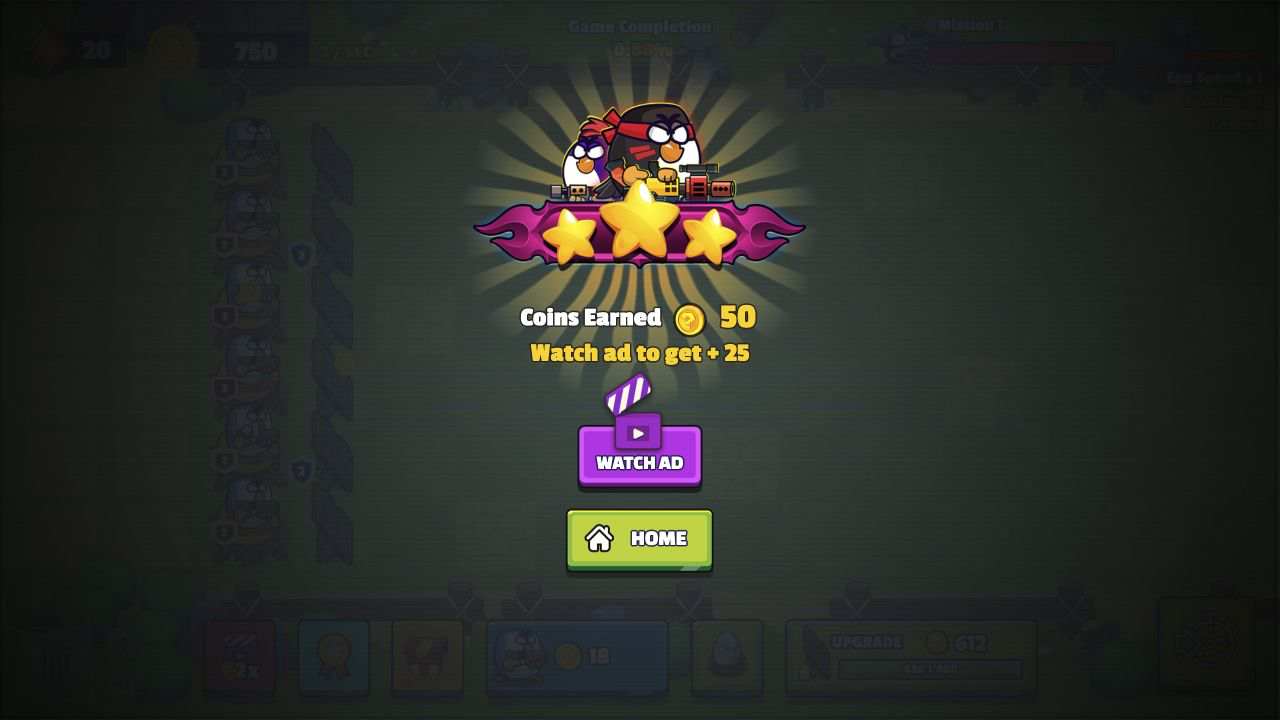
The rebuilt defense cleared the same mission without the wall losing its 450-point display. The victory panel awarded three gold stars and 50 coins. A purple Watch Ad button offered an additional 25, but the normal Home button remained immediately available. I took the standard result path and did not open the video offer. A separate x2 video icon was also visible on the home screen, making the monetization easy to recognize without blocking either desktop attempt.
Chicken Merge is a good fit for players who like merging as preparation rather than as the whole game. The satisfaction comes from turning a messy reserve into a readable six-lane formation and then watching that plan survive a crowded wave. It is less appealing for someone who wants precise real-time targeting or constant manual action; the battle mainly validates choices made beforehand. Its strongest early lesson is simple: cover every lane, merge evenly until the wall is safe, and treat the first 175-coin wall tier as support for a complete formation rather than a substitute for one.
The Declared Mobile Version Reached the Merge Step, but the Full Loop Was Blocked
The catalog declares Android and iOS support and a horizontal orientation, so I also opened the local game page at 390 by 844 and entered its fullscreen mobile player through the Play button. The visible back control confirmed the modal boundary. Touch-style taps on Recruit worked: the balance moved from 800 to 790 after the first bird, completion advanced to 0.02%, and the second tap reached the instruction to merge two chickens.
The next action could not be completed honestly in that fullscreen flow. In portrait, the reserve grid and both recruited units sat outside the visible left edge even though the recruit button remained centered. Rotating the emulated viewport to landscape brought the grid back, but it also crossed the page breakpoint and returned the player to the inline layout with recommendations visible around it, which no longer satisfied the fullscreen mobile path. Because an equivalent touch mission could not be completed, this review makes no best-device claim and does not treat mobile performance as verified. Desktop is the environment in which both the failed and successful Mission 1 loops above were completed.
